
A cotton candy rental for a Penticton event starts with a supplier who can serve the venue. BC Event Makers primarily serves the Lower Mainland and Fraser Valley. Penticton is outside that usual area, so get written confirmation for your address and date before you plan around a BCEM machine. This station checklist also works with a local supplier.
Begin with when you intend to serve the treat. A birthday celebration may have a short serving window after games, while a school fair may spread demand through the afternoon. Share the expected guest count and timing when enquiring; neither attendance nor the rental duration alone describes how busy the station will become.
1. Separate the cotton candy rental from its supplies
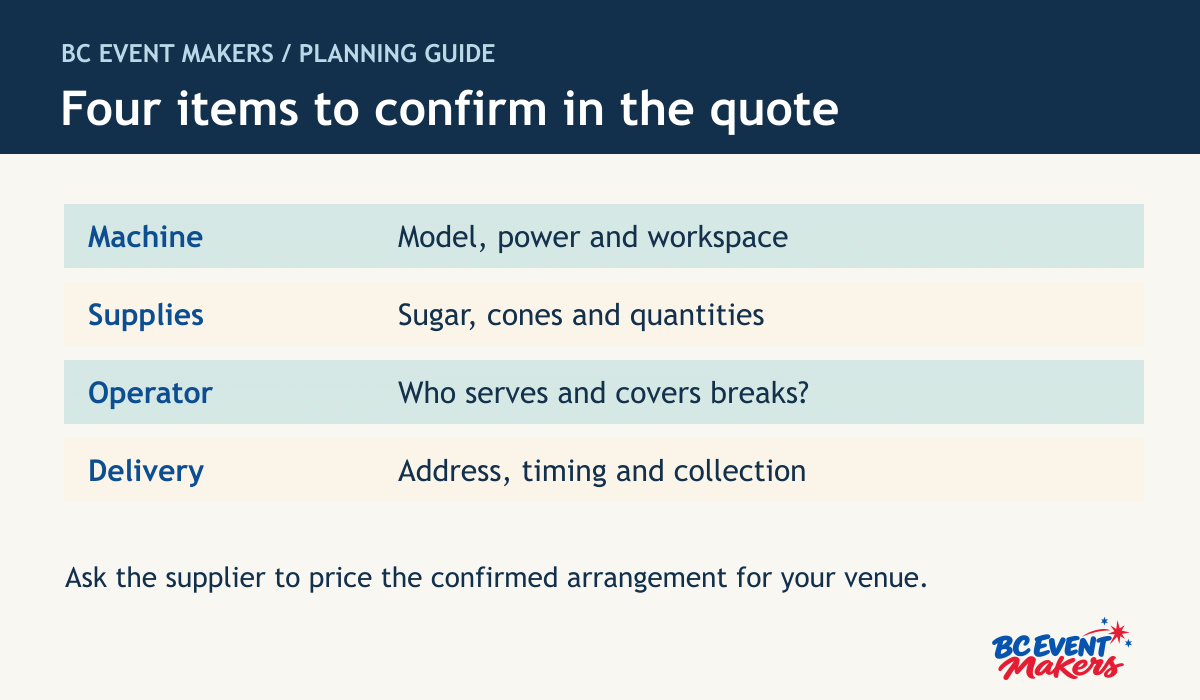
BC Event Makers lists the Cotton Candy Machine and its supplies separately. Ask which supplies are included in your particular quote and which need to be ordered. Confirm the available flavours and serving materials before adding them to invitations or event signs.
Plan for the people who will actually choose cotton candy, allowing for your other refreshments. If you are unsure how to estimate demand, explain the event format and ask for guidance. Avoid treating a supply listing as a promise that every guest will receive a particular portion.
If guests have ingredient questions, obtain the information for the products you will use. Keep labels available at the serving point. A colour or flavour name is not enough information to make a dietary promise.

2. Give the operator a workable space
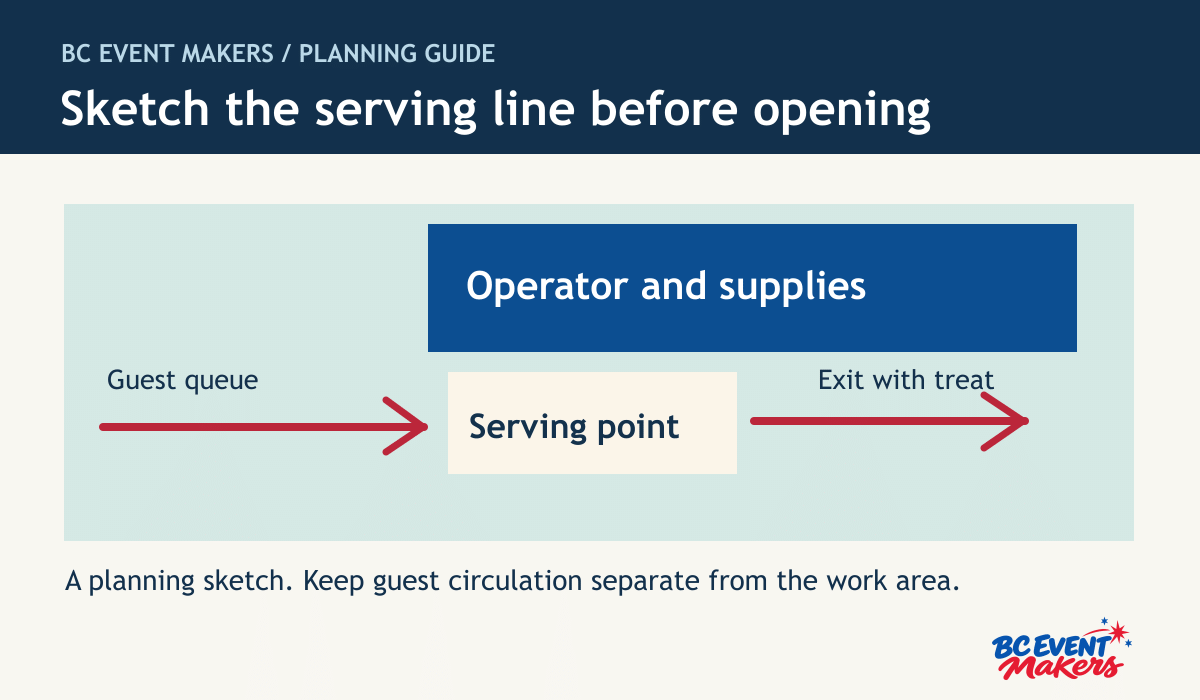
Ask about the machine’s electrical requirements and the surface it needs. Check those requirements with the venue before confirming a location. Keep the operator’s working area separate from the guest approach, with somewhere to store supplies that will not obstruct access.
For an outdoor event, discuss how weather affects the proposed station and what shelter, if any, is appropriate. Do not assume a park booking allows concession equipment or that an available outlet is suitable for the machine. The venue should approve the arrangement you intend to use.
If the event is open to the public, share the menu and service plan with the organizer. Interior Health’s food premises guidance explains how to contact the regional office about temporary food service. Ask what applies to this event and who will handle any required arrangements.
3. Decide who runs the station
Clarify whether your enquiry is for equipment rental or an operated service. If your own team will run it, ask what instructions and handover are provided. Assign someone to the station for the serving period and plan how that person will take a break.
Position the queue so guests can wait without crowding the machine. Place waste collection nearby and allow room for people to leave with their treat before stopping to talk.
For a fair, picture the first ten minutes after a stage performance ends. Where does the line form, and where can a guest with a treat leave it? For a smaller party, decide whether the station opens before cake or afterward. That choice helps the supplier understand when the busiest part of the cotton candy rental will be.
4. Confirm the Penticton logistics in writing
Ask BC Event Makers whether delivery to your Penticton address is possible for the event date. Confirm travel costs, setup responsibilities and collection timing as part of the quote. Send those details through the enquiry form with your serving schedule. Resolve the practical arrangements before promising a cotton candy station to your guests.
What to put in your first enquiry
“We’re planning a cotton candy rental at [venue and address] on [date]. We expect [guest count], and we’d like to serve from [start] to [finish]. Can you confirm whether you serve this location and which supplies, operator arrangements and collection terms your quote includes?”
If the address is outside the supplier’s coverage, keep the same brief and approach a supplier closer to the venue. Hold off on describing the treat station in an invitation until someone has confirmed the machine, the serving plan and the site.
How to compare two suppliers’ replies
A lower machine price might describe a different arrangement. One cotton candy rental quote could include collection at the supplier’s shop, while another includes a trip to the venue. Ask each supplier to list delivery, supplies and any operating service separately. Then check which responsibilities your volunteers would still need to cover.
Give the person receiving the equipment a copy of that reply. At handover, they can confirm where the supplies go, who receives the operating instructions and how to reach the supplier if the room or serving time changes. That is a useful last check before putting the cotton candy rental on the event schedule.
Penticton treat-station workbook: from an idea to a confirmed offer
Use this section with a supplier who can confirm the actual Penticton venue. It is a planning exercise, not a statement that BCEM delivers the equipment there. If you are evaluating a cotton candy rental from outside the usual service area, settle the address and travel arrangements before spending time on the serving plan.
Start with a complete address and a yes-or-no delivery question
A city name is not enough for an equipment provider to confirm a trip. Give the street address, the part of the venue where the station would operate, the day of the event and the access window. If the site has a separate loading entrance, include that information as well. Ask the provider to say whether it can serve the address and what travel and collection arrangements would apply.
If the answer is uncertain, keep a local alternative open. You can use the same brief with another supplier rather than changing the party plan each time you make an enquiry. A written refusal or an explicit “we do not serve that location” is more useful than an unanswered assumption; it lets the host make the next call before printing a menu or selling tickets.
| Detail | What to provide | What to ask for |
|---|---|---|
| Venue | [address, room or outdoor position] | Written coverage confirmation. |
| Arrival | [earliest site access, intended opening] | Delivery window and receiver’s job. |
| Departure | [latest room handback] | Collection time and responsibilities. |
| Quote | [guest estimate and serving period] | Machine, supplies, operating arrangement and travel terms. |
Worked example: a school fair with one busy release
Imagine a fair with games open all afternoon and a school performance ending midway through the programme. Some families visit the snack area a few at a time; others all come out of the performance together. If you tell the supplier only how many people attend the fair, it cannot see that difference. Mark the performance end on the service schedule and describe how many people might arrive together.
Now decide what the helper at the end of the line can tell families. Will the station open before the performance finishes? Is there an agreed last serving time? Where can friends stand to watch without blocking pickup? A cotton candy rental can draw spectators as well as people waiting for a treat. The person controlling the line needs room for both.
Run the same example with lower demand. If fewer guests choose the treat than expected, who handles unopened supplies and who tells the closing helper what remains? Ask the provider how its order and return terms actually work. Do not assume that leftover food or serving materials will be credited just because the rental machine itself is collected.
Worked example: a family party where the operator is also a relative
A family member may volunteer to run the station and still expect to join the birthday meal or photos. Write down when they can be at the machine, then ask who can cover a break. If nobody can take over after the supplier’s handover, choose a defined serving window and tell guests when it ends. An agreed pause is better than leaving the station unattended while everyone looks for the operator.
Give that volunteer a way to refer a question. Product ingredients belong with the labels or the responsible food provider. Equipment operation belongs with the supplier’s instructions. Changes to the party schedule belong with the host. A helper who knows which person handles each question can answer guests honestly without improvising a dietary or equipment claim.
Consider where children and adults will wait together. Someone holding a finished treat may stop at the counter to look for a parent or take a photograph. Leave an exit route beyond the pickup point and put the place for conversation farther along it. Check that the layout still works when another family joins the queue.
Worked example: a community gathering with another concession beside it
When two food counters share a hall, the space between them often looks generous before opening. After a game finishes, one line may stretch toward the neighbouring counter just as its helper brings in fresh supplies. Sketch the direction of both queues, mark both pickup points and walk the provider’s supply route during the busiest planned period.
If the routes cross, decide which change causes the least disruption. Moving a waste bin or sign may help; moving a machine can affect site approval, power and access. Ask the venue and both providers to review any equipment change before the organiser promises it will solve the problem. Keep the final layout with the current quotes.
Read a machine-only quote and a staffed quote side by side
Suppose one provider quotes equipment for pickup and another offers to deliver and operate the station. The second offer may include a different set of jobs rather than simply charging a higher price. List what each proposal supplies and what your own team still has to arrange. Use the same address, serving period and guest estimate for both so you can compare the answers fairly.
| Question | Equipment-only offer | Staffed or delivered offer |
|---|---|---|
| Who transports and receives the equipment? | [confirm pickup and return] | [confirm delivery and collection] |
| Who supplies sugar, cones and serving materials? | [list inclusions separately] | [list inclusions separately] |
| Who operates the machine and takes a break? | [named event helper] | [provider’s confirmed scope] |
| Who confirms the venue position? | [venue and equipment contacts] | [venue and equipment contacts] |
| What changes if the programme moves? | [contact and revised terms] | [contact and revised terms] |
Leave unknown fields blank until the right person answers. If the written offer covers only equipment, give your volunteers a clear list of the remaining jobs. If it includes service, ask the provider what the host must still supply. A cotton candy rental is easier to compare when nobody assumes another party is handling an unassigned task.
Prepare the handover at the counter
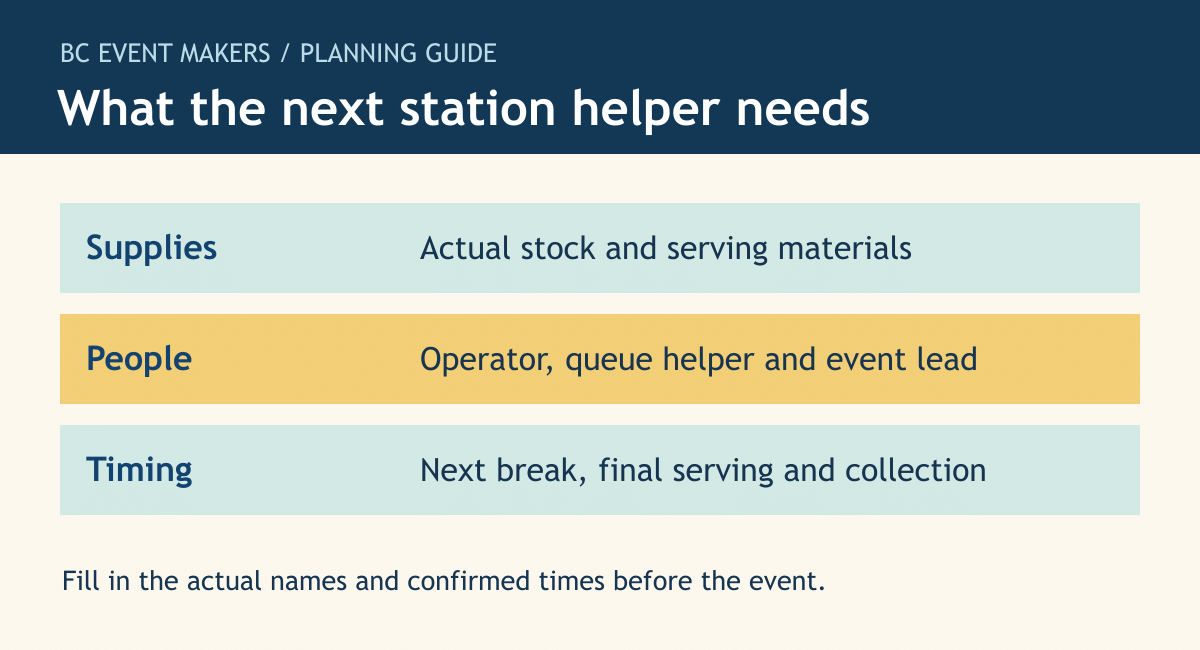
At delivery, the receiver needs the confirmed machine location, the supplier contact and the name of the person attending the equipment handover. If the room is locked or the planned counter has moved, call the venue contact before changing the setup. Keep the access notes and any operating instructions where the next helper can find them.
“[Name] received the cotton candy rental and completed the supplier handover. The supplies are at [location]. We start serving at [time] and pause at [time or programme cue]. [Name] handles the queue. Ingredient questions go to [responsible contact]. The equipment is collected at [confirmed point and time].”
Use the handover as a conversation. Ask the incoming helper to point to the supply location and identify the person they will contact if the product runs low. If one flavour is no longer available, update the sign and tell the queue helper together. Guests should hear the same answer at both ends of the line.
Make a realistic plan for changes
If the party moves indoors, do not assume that the new room works for the machine. Ask the venue about the proposed position and whether it permits the equipment there. Ask the supplier whether the access, surface and electrical arrangements suit its specific unit. Then redraw the queue and pickup area. A weather change can affect guest circulation even when the machine itself has not changed.
If the provider cannot make the trip, remove the unconfirmed item from the public programme. A local provider may be able to help, or the host may choose a different treat. Ask any replacement provider for its own ingredient information, servicing terms and setup needs. An earlier supplier’s answers do not automatically apply to a new machine, product or team.
Finally, record two observations after the event: when the queue actually became busy, and which handover required a phone call. Those notes give next year’s organiser a practical starting point. They are more useful than a made-up serving estimate or a blanket claim that every cotton candy rental will work the same way.
Read the guest-facing offer one last time
Compare the final poster, invitation or ticket description with the confirmed proposal. If the poster promises a specific flavour, make sure the provider has confirmed that product. If it says treats will be served throughout the event, check the operator’s actual shift and any planned breaks. A small edit before printing can save the person at the counter from repeatedly explaining why an advertised option is unavailable.
Give the host and queue helper the final version. If the serving time changes, update the same places where guests first learned about the station. Keep any revised timing conditional until the operator and venue agree. That last conversation is especially important when a Penticton provider is travelling to the site: the schedule should reflect what is possible at the real address, not the estimate used when the idea first came up.
Check the station from the guest’s side of the counter
Walk up to the point where the line begins and read the sign from there. Can a guest tell what is available before they reach the operator? Is there room for a family to step aside if someone has a question? Ask the venue where a seated guest or a person with a mobility aid can wait without losing their place. Use the actual entrance and pickup point when checking the answer.
Then look at the same area from the helper’s position. Can the helper reach serving materials without walking between guests and the machine? Where can the operator point someone who needs confirmed ingredient information? Who changes the sign when a supply runs out? A layout that appears straightforward from across the room can feel quite different to the person handing out the treats.
Write the agreed adjustments on the station sketch and send that version to the supplier and venue. If a guest-facing question remains unresolved, name the person who will answer it and the latest point at which the host can still revise the menu. Give that person the actual question rather than a vague reminder to “check the concession.”