
Fun food rentals work better in Pitt Meadows when the host gives each station a purpose. A meal line, a sweet treat after a game and a quick drink draw people at different times. Decide which job each counter must do before placing two machines beside the same hall entrance.
Open the worked examples and planning sheet
Start by deciding what the food is meant to provide. Is it a small treat between activities or the main meal? That answer affects serving times and the alternatives guests need. It also helps you describe demand more accurately when asking about rental equipment.
1. Fun food rentals: give each food station a job
BC Event Makers’ catalogue includes popcorn and cotton candy machines, a Hot Dog Machine and other concession options. Discuss the specific choices you are considering and confirm availability for the date. Equipment rental does not by itself establish a complete catering service.
Ask which supplies come with the proposal and which are separate. Include serving materials in that conversation. If you are combining several stations, decide whether they will open together or at different points in the event, and explain that plan to the supplier.
2. Check the venue’s conditions
Obtain the power and working-space requirements for the selected equipment. Confirm them with the venue before deciding on a location. Ask which food preparation and serving arrangements the property permits and who is responsible for any required approvals.
For an outdoor area, discuss the conditions the equipment can operate in and the protection needed for supplies. Do not assume a canopy makes every machine suitable for outdoor use. The arrangement should be reviewed for the actual equipment and site.

3. Leave room to collect and move away
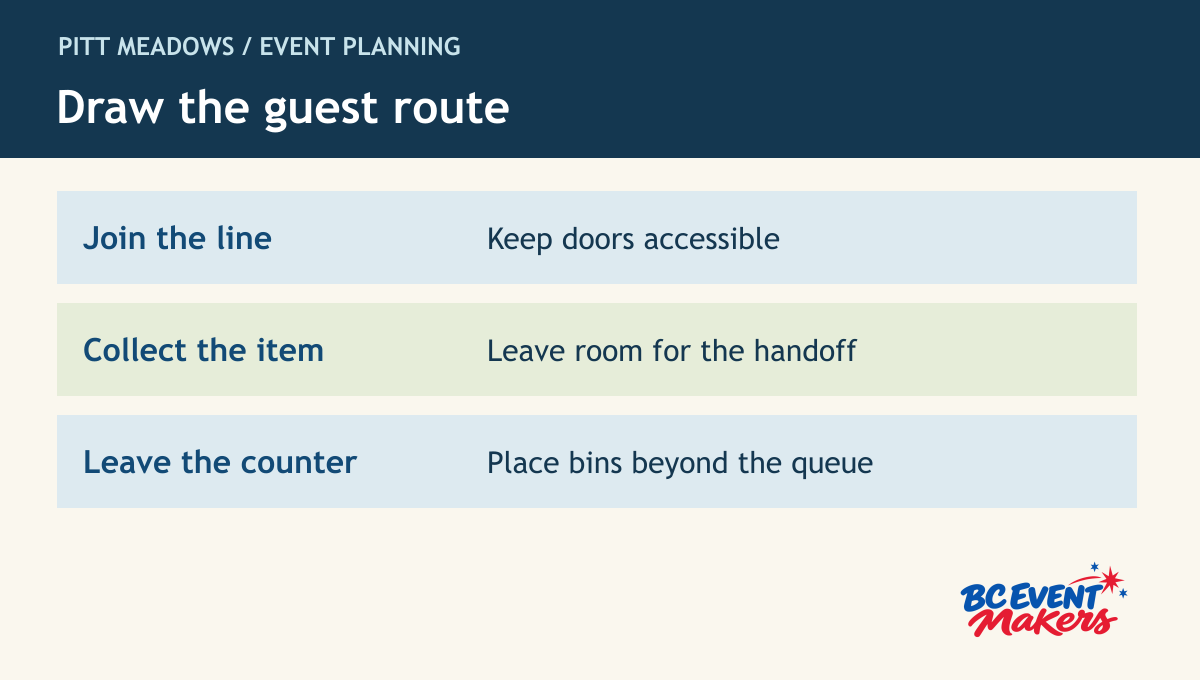
Draw the serving point and its queue on the event layout. Give guests somewhere to step aside with food before stopping to talk. Keep the route away from active games and the entrances to other attractions.
Place waste collection where it is useful without obstructing the station. Include a plan for clearing the food area during the event, especially if the serving window overlaps with the busiest entertainment period. A tidy station depends on assigned tasks as well as a place to put waste.
4. Know who does the work
Clarify whether the proposal covers equipment only or includes an operator. If volunteers will run the station, ask about the instruction they need and plan coverage for breaks. Name someone who can deal with supplies and questions without leaving equipment unattended.
Keep ingredient information available for the products being served. Offer guests accurate information rather than assuming that a familiar snack suits all dietary needs.
Include your Pitt Meadows address, attendance and serving schedule in a quote request. Ask for the equipment and supplies to be described clearly, together with delivery and collection arrangements. A defined food plan makes it easier to coordinate the rest of the celebration.

Choose a food zone by watching the whole programme
Picture a school fair where families leave a stage performance and head toward lunch. A hot dog counter and a cotton candy counter may look tidy when they sit side by side, but one may be serving meals while the other gathers people who want to watch. Walk the route at the time both queues would be longest.
Give the slower counter space for people to wait with their group. Put collection on a side that allows a family with food to move away without pushing back through the queue. If an entrance or washroom route crosses both lines, try a different position on the floor plan before requesting another machine.
Put the event timetable next to the venue sketch. Mark the end of the main activity and the first planned meal or treat break. Those marks show when waiting guests, helpers and suppliers may all be moving at once. Use them to choose which fun food rentals open first and which side of the room needs more waiting space.
Now walk the same route as someone who is sitting out the next activity. Can they collect food without crossing an active game? Can a parent stop to help a child without blocking the operator? If a counter position works only while the room is empty, ask the venue to consider another layout before adding a second station.
Questions to settle before the event
Should we put all our fun food rentals in one row?
Only if the room supports it. Mark queue entry, food pickup, waste and the operator’s supply route for each counter. A menu can work well on paper while forcing guests through competing lines.
Can the same person run the meal and treat stations?
Describe both jobs to the supplier and ask what supervision each machine needs. If customers arrive at the same time, plan separate coverage or stagger the service periods.
What fun food rentals information does the venue need?
A simple sketch showing people as well as equipment helps. Include counters, expected waiting space, the supply route, entrances and the time each machine must arrive and leave.
Where can the organizer check public food-service requirements?
Describe the proposed menu, service format and event to Fraser Health. Ask which requirements apply and who will coordinate any necessary arrangements. A rental confirmation covers the agreed equipment and services; it does not settle the venue or organizer’s responsibilities.
Work through a Pitt Meadows snack break
Decide what happens during the busiest break
Draw the five minutes after the main activity ends. People leave the game, collect children, look for a drink and decide whether to join a food queue. Where will they naturally stop? A neatly spaced row of food stations can still create a crowded doorway if every guest reaches it from the same direction.
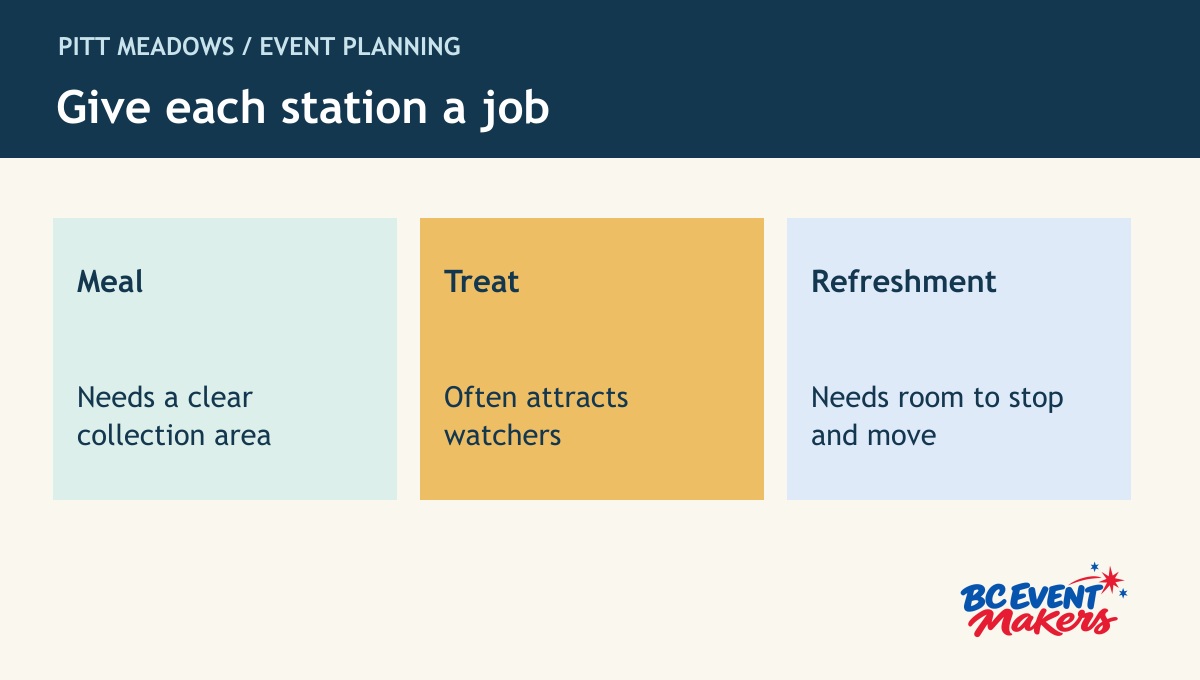
Give each counter a clear role. A meal station serves people expecting something substantial. A treat station gives guests a small optional stop between activities. A drink point may attract somebody who has no interest in the rest of the food. Put those roles on the map before selecting fun food rentals so the organiser can see which guest routes meet.
Tell the supplier the real rush pattern. “Most guests will reach food immediately after the awards” is useful even if the total attendance is modest. Ask the provider to review the selected equipment, supplies and staffing for the actual service arrangement. Keep any estimate about speed or output tied to the provider’s confirmed plan rather than a guessed number of portions.
Compare a meal line with a treat line
Imagine a Pitt Meadows school event with a shared meal followed by games and a short celebration. The committee wants hot dogs, popcorn and cotton candy. Each may be a reasonable menu idea, but their jobs in the programme differ. Ask when people are expected to collect each item and which person is responsible for the actual food service.
| Station | Question for the menu lead | Question for the venue contact |
|---|---|---|
| Meal | Who supplies, prepares and serves the agreed food? | Where can guests collect it and move to seating? |
| Treat | Is this open throughout the event or during a specific service window? | How does its queue relate to other stations and activities? |
| Drink | Can a guest reach it without joining a food queue? | Does the route work when the meal break is busiest? |
| Information | Who can answer a question about the actual menu or ingredient information? | Where can a guest ask without holding up the collection point? |
Compare the named equipment and service rather than grouping everything under one “concessions” line. A Cotton Candy Machine is one actual catalogue reference to discuss. Ask which supplies and serving materials come with the proposal and which duties belong to the organiser. A menu that looks simple on a poster can require several different handoffs behind the counter.
Example. The awards run late
The meal break was meant to begin after the awards, but speeches run longer than expected. Some families leave the seating area to look for food, while others wait for the final announcement. The menu lead needs a confirmed answer about when each food station can serve and who will tell the host what is ready.
Ask the provider responsible for the food what can change within the actual arrangement. Do not promise an earlier or later service window merely to make the run sheet look tidy. The host can tell guests which options are currently available and when it expects the next update. Keep that message aligned with the food station sign and the welcome desk.
If a treat station can open independently, make its role clear. It may give people a short activity or a snack while they wait, but it should not be described as the meal they were expecting unless the organiser has genuinely changed the offer and informed guests. A parent planning dinner around the invitation needs accurate information.
Example. The same volunteer is on two counters
A committee member assigns one helpful parent to watch the popcorn and welcome guests at the meal station. During the quiet period the arrangement looks possible. At the meal break both counters need attention, a guest has an ingredient question and another volunteer needs a supply handoff.
List the jobs that coincide at the rush. Ask the food provider and organiser which duties each station actually requires and who is authorised and prepared to cover them. Give a volunteer a clear role with relief when needed. A person standing between two counters may be unable to carry out either job as it was agreed.
If staffing cannot support the whole menu at once, review whether service windows can be separated or the menu simplified. Ask the responsible provider and venue contact to assess the revised arrangement. Then update the guest message. A smaller confirmed offer served well can be easier for families to use than several stations advertised as open when no one is ready to handle them.
Example. A group stops beside the collection point to talk
Guests often make their own meeting places. The space beside the food station looks convenient because everyone is heading there eventually. A few people stop to chat, and the next family cannot see where to collect its order or leave with plates.
Walk the guest route with the venue contact. Can you identify an appealing place to meet beyond the collection point? Does the seating or standing area have a clear way in and out? Move signs or furniture only within the arrangement the venue and providers have reviewed. Keep the working side of the station available for the people preparing and serving food.
The solution should help a guest who has never seen the map. A sign that points towards a clearly named picnic or social area may work better than asking every family to keep moving without showing where to go. Tell the welcome volunteers the same directions so the new meeting point becomes part of the event rather than another rule to remember.
Keep menu information with the actual food
Give the menu lead current information from the provider for what will actually be served. A package, topping, flavour or supplier change can change the answer to a guest’s ingredient question. Tell volunteers where confirmed information is held and whom to ask. Avoid guessing from the name of the machine, a photograph or a menu used at another event.
If the answer cannot be verified, tell the guest that and refer them to the responsible provider. Use only supported menu and dietary descriptions on the public sign. Keep a guest’s personal information out of general volunteer messages. Where an alternative is available, describe what has actually been confirmed about it rather than giving a broad safety assurance.
For questions about the proposed public food service, ask Fraser Health about the exact menu and arrangement. Identify who is handling the food, who controls the premises and who will coordinate the relevant event requirements. The organiser’s equipment order is one part of this discussion.
A handoff for opening and closing the food area
Before guests arrive, the menu lead should know which providers are present, which food stations are ready under their arrangements and which items remain provisional. The venue contact should know the agreed service and collection routes. The host then needs one accurate list of what guests can collect and when.
At the end of the service window, stop offering anything that can no longer be delivered under the agreed plan. Tell the guest entrance and any ticket or contribution point what remains available. Keep the supplier’s collection access clear and name the person who will receive the area back on behalf of the venue.
Record an outstanding guest question with the lead who can answer it. Keep payment records and personal contact details inside the organisation’s approved process. The public sign needs only the current food offer, collection directions and a clear way to ask for help.
Send a menu-and-layout brief
We’re planning fun food rentals for [date] at [Pitt Meadows address]. The main meal break is [time], and guests will arrive at the counters [pattern]. We are comparing [named equipment or food services]. Attached is the layout showing the food stations, guest route and collection access. Which equipment, supplies, serving materials and staff roles does each proposal include, and what does our team need to confirm?
Put any venue decision still pending on the same sheet. If the committee changes the menu, ask the provider and venue contact to review the new arrangement before changing the invitation. A different food station can affect ingredients, access, queue direction and volunteer tasks. A clear brief lets everyone make a decision from the same current information.
After the event, ask where the meal break actually put pressure on the plan. Was it the first rush, a supply handoff, a confusing collection point or the route to seating? Keep that observation with the map and menu used that day. The next event can improve the specific issue while reviewing its own guests, food providers and venue requirements.
A message to send with the venue details
We want fun food rentals for a Pitt Meadows event on [date]. Our busiest break is [time], and these are the meal and treat options we are considering. What equipment, supplies and staffing does each option require, and what will the quote include?
Put each food item on its own line in the quote request. Mark the equipment, ingredients, serving materials and staffing needed for that line; do not assume that a machine price includes all four.
In a shared hall, compare the proposed fun food rentals with the activities already using the room. Guests may come out of a game carrying prizes, plates or drinks. A visible gap on the plan can become the place families naturally stop to talk, so keep it out of the working side of the counter.