
A hot dog machine rental for a Mission event is one piece of the meal plan. Guests still need a place to order, receive food, choose condiments and move away from the counter. Map those steps against the actual break before deciding where the machine goes.
Begin with the menu and expected attendance. Decide whether hot dogs are the main food offering or one choice among several. Consider guests whose dietary needs require another option, and identify who will provide that food before finalising invitations or ticket information.
1. Hot dog machine rental: define the rental scope
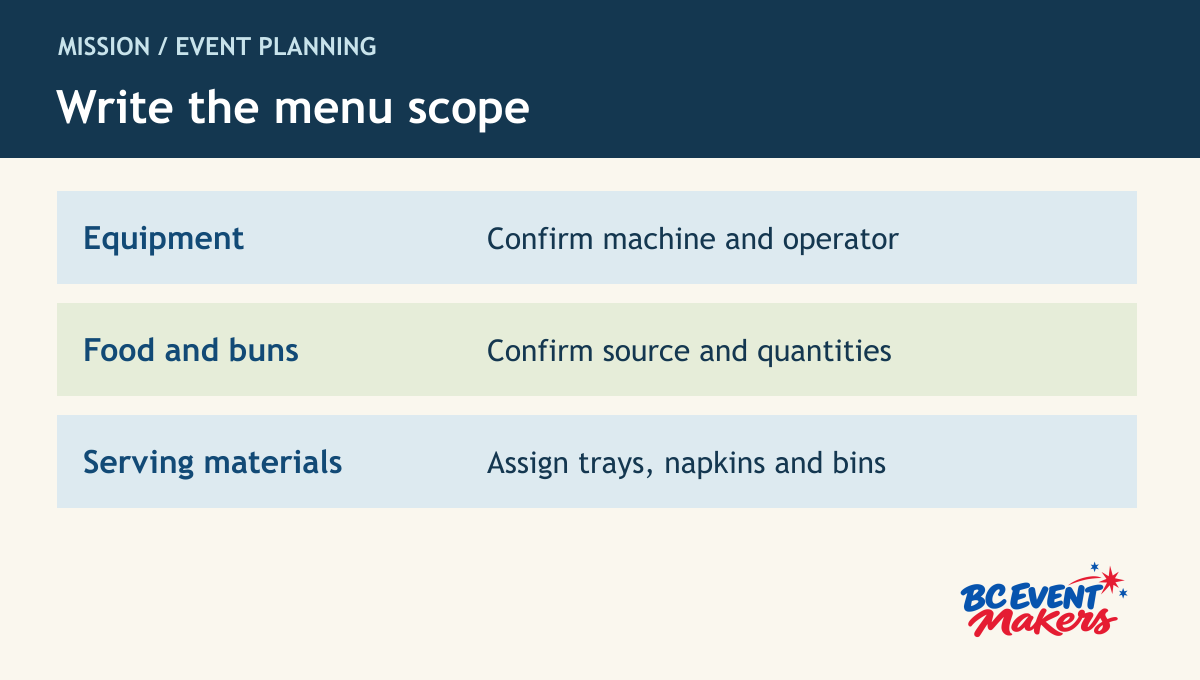
BC Event Makers’ catalogue includes a Hot Dog Machine. Ask about the specific machine and its requirements, together with what is included in the quote. Do not assume food or serving supplies come with equipment rental.
Confirm who will source the food and who will operate the station. If your own team is responsible, ask what instructions are provided for the equipment and what training or arrangements the venue requires. Use the guidance appropriate to the food and machine rather than relying on habits from a home barbecue.
2. Plan around the busiest period
Tell the supplier when you expect guests to eat. A scheduled meal break can bring many people to the station at once, while a longer serving period may spread demand. Discuss the format without assuming a particular machine output or turnaround time.
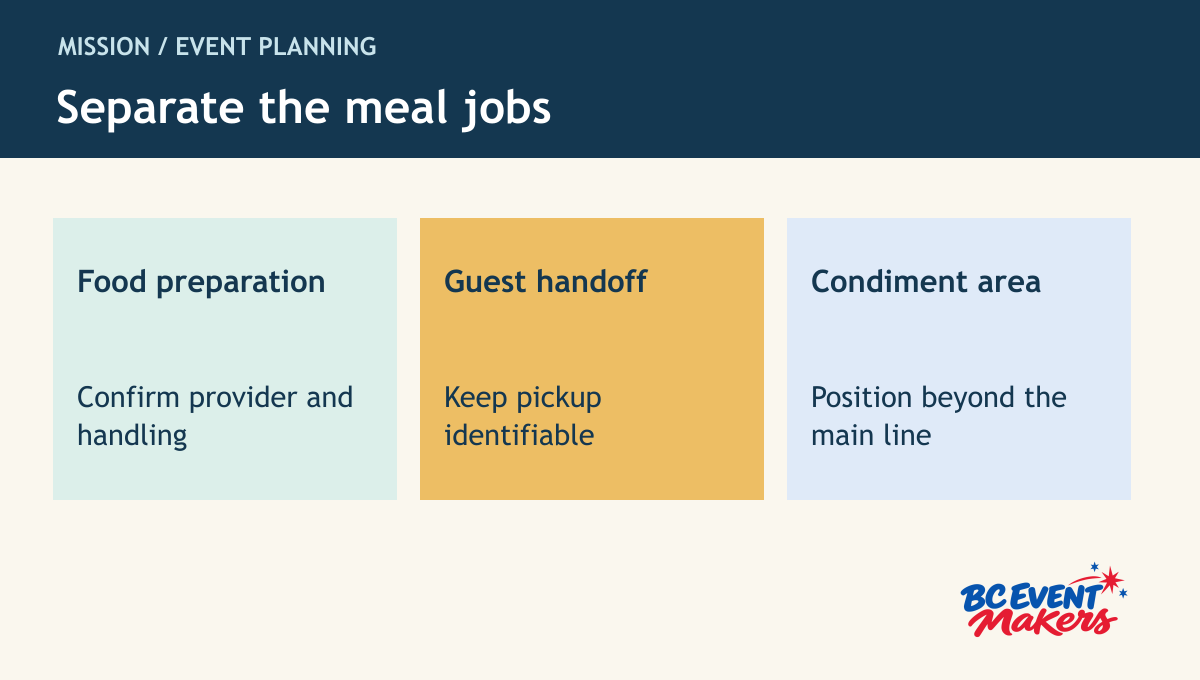
Place the station where guests can queue without blocking games or the entrance to the event. Allow a clear route away from collection, with condiments arranged so guests can use them without holding up the serving point. Keep room for the operator’s working area and supplies.

3. Confirm the venue arrangement
Ask about the machine’s electrical and space requirements, then check the proposed setup with the property owner. Confirm what food preparation and service the venue permits. Resolve storage and handling arrangements with the people responsible for food before the event.
Keep ingredient information available for the actual food being served. Volunteers should know where to find it and who can answer questions. Avoid making a dietary promise based only on a label such as “hot dog” or on what was served at a previous event.
4. Assign the closing tasks too
Plan who will cover the station for the full serving window and how breaks will work. Confirm the procedure for closing the station, along with cleaning and collection responsibilities. These tasks need time within the venue booking rather than being left until guests have gone.
Include the Mission address, event date and meal schedule in your quote request. Add the venue access times and explain who you expect to operate the equipment. Ask for the proposal to make those responsibilities clear so the food plan can be coordinated with the rest of the day.
Test the meal break with three imaginary guests
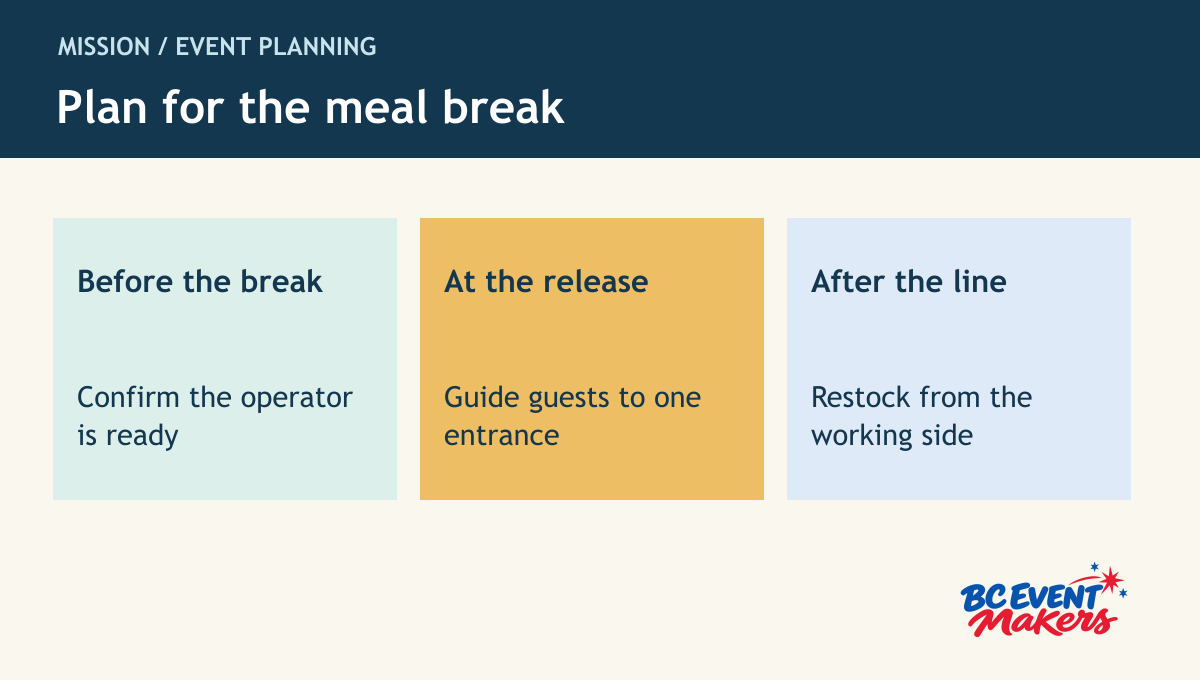
At a team event, a lunch whistle can send nearly everyone to the same counter. Picture one guest collecting food while another stops to choose condiments. If both jobs happen at the machine, the operator may have to wait while the queue grows. Move the condiment choice away from the handoff where the room allows.
Ask the food provider to describe the service process it can support for the proposed menu. Give the venue the resulting counter and power requirements. If all guests will arrive at once, discuss staggered breaks or a different food service with the organizer rather than promising a particular throughput the machine has not demonstrated.
One person has already received food and is choosing condiments. A second is asking what is in the bun. A third is returning to the activity area with a plate. Walk those movements before choosing the pickup point. If every person pauses beside the machine, leave room for a separate handoff or ask the organizer to move one of the jobs.
The hot dog machine operator’s instructions belong to the actual unit and food service arrangement. Give the team a separate sheet for the event decisions: the service window, ingredient contact, location of supplies and the name of the person who can change the menu. A guest should not have to interrupt the operator for every practical question.
Questions to settle before the event
Does a hot dog machine booking include food?
Confirm food, buns, condiments, serving materials and operation as separate lines. The BCEM listing describes a machine; the event quote identifies what has actually been arranged.
Can we set the condiment table beside the operator?
Try the route with a guest carrying food and another person replenishing the counter. A line can appear to fit until people stop to choose toppings. Ask the venue to confirm the final positions.
What if the break is shortened?
Tell the food provider and event lead as soon as the programme changes. Ask whether the confirmed arrangement can handle the new window. Change the serving plan rather than promising a faster output without evidence.
Where can the organizer check public food-service requirements?
Describe the proposed menu, service format and event to Fraser Health. Ask which requirements apply and who will coordinate any necessary arrangements. A rental confirmation covers the agreed equipment and services; it does not settle the venue or organizer’s responsibilities.
A message to send with the venue details
We are considering a hot dog machine rental in Mission on [date]. Our meal break is [time] for [people]. What machine is offered, who operates it, and which food, buns, serving materials and collection responsibilities are included in the written quote?
Send the programme contact the final opening and closing times, the pickup point and the person to call if a team finishes early. Give staff and guests one explanation of where the meal begins.
Before the venue signs off on the floor plan, show it where a volunteer will bring replacement buns and serving materials during the break. A hot dog machine rental may fit between two tables while leaving no useful route for the person carrying supplies. A different table position can solve that problem without changing the menu.
Turn the meal break into a service plan
Before confirming a hot dog machine rental in Mission, give the planner and venue contact a one-page view of how the meal fits the event. Record the time the food area opens, when the main group is expected, the last call, and when the station must be cleared. Note whether people arrive together or in smaller groups. These details help the supplier discuss the service window and let the venue assess the space. They are planning inputs, not a promise about how many guests any machine can serve.
Write down the menu decision separately from the equipment decision. Identify who supplies hot dogs, buns, condiments and serving materials; who confirms ingredients; and who answers guest questions. Mark undecided items as open. Do not let a volunteer interpret an unconfirmed quote as an included food package.
Walk the guest route before setting tables
Use the venue-approved plan and walk the path from menu to queue, food handoff, condiments, eating area and return to the activity. Then walk the route for a volunteer carrying supplies and the person responsible for waste. This shows whether workers and guests cross at the counter or block a door. Ask the venue to approve the setup area and record its access rules.
Sketch the machine, operator work area, pickup point, condiment table and waste location as separate boxes. Add queue direction and the route away from the counter. The diagram need not invent measurements; use it to identify questions for the property contact and supplier. If the condiment table belongs elsewhere, record who moves it and when. If the layout cannot fit, ask the organizer to revise it rather than narrowing an exit or walkway.
Compare three meal-break formats
| Format | Check | Decision owner |
|---|---|---|
| Everyone released at once | Arrival wave, approved queue location, separate condiment and pickup steps | Programme lead and venue contact |
| Groups released in waves | Release order, time between groups, guest directions | Programme lead |
| Longer serving period | Staff coverage, breaks, replenishment route, last service time | Event lead and supplier |
Choose the format that suits the event schedule and venue. Ask the supplier whether the selected equipment and agreed staffing fit the proposed window. If this cannot be confirmed, review the schedule or menu with the organizer. Do not calculate output from attendance alone; a crowd count does not establish a machine’s capacity or the service a volunteer team can support.
Make the quote request answer open questions
Send the booking lead the same event details so the written scope can be checked in one place. Include the Mission venue, date, approved access window, meal period, expected attendance, proposed menu and station location. Ask which hot dog machine is offered, what setup and operator arrangements apply, and which food or serving materials are included. Confirm collection and cleaning responsibilities for this booking. Keep unconfirmed items visible on the organizer’s sheet.
- Venue and event date: [details]
- Supplier access and collection approved by venue: [times]
- Meal open, expected arrival wave and last service: [times]
- Equipment and operator responsibility: [confirmation]
- Food, buns, condiments and serving supplies: [provider and status]
- Ingredient information and guest-question contact: [person]
- Approved setup, guest route and supply path: [location or attachment]
- Event lead and programme contact: [names and contact method]
Plan volunteer coverage around the actual duties
Assign roles according to the confirmed service arrangement. The event lead can hold the venue, supplier and programme contacts together. The operator should receive and follow the instructions for the selected equipment. A queue helper can direct guests and point out the menu, while another volunteer can replenish from the agreed location if the venue permits. These are event-planning roles, not a substitute for equipment training or food-service guidance.
Schedule a short overlap at each volunteer change. The outgoing helper can name the current menu, confirmed supplies, next break, guest message and any open question. The incoming helper should identify the event lead, locate supplier instructions and know who resolves ingredient or booking questions. If someone is absent, ask the lead to decide whether a briefed replacement is available; do not assign an unbriefed volunteer by default.
Prepare guest wording and a change plan
Put only confirmed service times and menu details on the sign. Include directions to the order point, pickup and condiment area when these are separate. Avoid listing ingredients or dietary suitability until the responsible source has verified the information. Give volunteers a calm sentence for a delay, such as: “We are checking the next service time; please ask the event lead for an update.” Make sure the lead can reach the programme contact and supplier.
If the meal break moves, attendance changes or venue access is delayed, the event lead should compare the new plan with the written booking and contact the supplier. Record what changed, who confirmed it and what volunteers should say. Review whether the layout, staffing overlap and closing time still work. Do not promise faster service or change operating arrangements without confirmation for the actual equipment.
Run one change scenario before opening
Take a realistic schedule change and talk it through with the event lead, venue contact and supplier. For example, a programme item runs late and lunch begins twenty minutes after planned. The lead checks whether the approved access and collection windows still fit; the programme contact chooses whether groups will be released in waves; and the queue helper receives the exact guest update. Ask the supplier whether the new service window works for the equipment and booking. If the answer is pending, keep the pause message in place rather than assuring guests the original timing still applies.
Repeat the exercise for a late delivery or absent volunteer. Identify who may speak with the supplier, how the venue can be reached and which duties may be reassigned only to someone who received relevant instructions. Record a decision and owner, not just concerns. A brief written plan helps the next shift respond consistently when the lead is away from the counter.
Keep a simple decision log
| Question or change | Who confirms it | Record location |
|---|---|---|
| Equipment, operator and included service | Supplier and booking lead | Written quote or booking notes |
| Setup area, guest route and access window | Venue contact | Approved floor plan |
| Menu and ingredient information | Food provider or responsible event lead | Current menu and guest response note |
| Meal break or release order | Programme lead | Run of show and volunteer briefing |
| Collection, close and cleanup | Supplier and venue contact | Closing checklist |
If information changes, note the time, confirmer and who received the update. Remove outdated guest-facing wording so volunteers do not repeat an old service time. The log gives the organizer a quick way to see which meal-break decisions are confirmed and which need a call.
Close the station with a clear handoff
Before service starts, identify who announces last call, accounts for remaining supplies, handles approved cleanup and meets the supplier for collection. Check venue instructions for waste, access and when the room must be clear. Reserve time in the programme instead of treating cleanup as an afterthought. At the end, give the organizer a short record of the actual service window, open supplier questions, changes and follow-up for the next event.
Final pre-event review
- Compare the written quote with the equipment and services expected.
- Confirm food, buns, condiments and serving materials with their actual providers.
- Walk the approved setup, guest route, pickup point and supply path with the venue.
- Match volunteer coverage to the service window and equipment instructions.
- Give each shift the event lead, supplier contact and guest update wording.
- Confirm close, cleanup and collection against the venue booking.
For public information about food-service requirements, describe the proposed menu, service format and event to Fraser Health and ask which requirements apply. The event organizer remains responsible for verifying arrangements relevant to their event.
Copy a station card for each shift
Keep this short card with the event folder so a volunteer can find the current plan without sorting through the full booking:
- Today’s confirmed service and meal-break times: [times]
- Food menu, source and verified guest information: [details]
- Equipment instructions and who has reviewed them: [location and name]
- Operator, queue helper, restock person and event lead: [names]
- Approved setup area, guest route and supply location: [details]
- What to say if timing changes or service pauses: [message]
- Who may contact the supplier and venue: [names and method]
- Last call, cleanup and collection handoff: [time and names]
At shift end, write what actually changed: the service time, supply note, guest question or contact still needed. Leave open issues clearly marked for the next person. After the event, the organizer can compare the planned meal-break format with what happened and decide whether a future event needs a different schedule or station location. Keep observation separate from a claim about machine capacity; one event’s queue does not prove a standard service rate.
Check the written plan against the booking
Before you confirm a hot dog machine rental in Mission, compare the written booking with the choices in the event plan. The hot dog machine rental should identify which machine is supplied, the service and operator arrangements, the access window, and who handles collection. List food and serving materials separately so it is clear whether the food provider or organizer supplies each item. If a detail is missing, ask the supplier and record the answer rather than filling a gap with an assumption.
Compare the service window with the programme, venue access and the time guests can eat. A hot dog machine rental may be booked for the meal break, but that phrase alone does not confirm how the line will work or what the quote includes. Walk the guest route with the venue contact and identify who can approve a change to the setup area. Keep the approved floor plan with the volunteer station card.
Use the final review before guests arrive: one person checks the booking, one confirms the room arrangement, and the event lead briefs each shift on the confirmed menu and guest update. If the hot dog machine rental, route or timing changes, contact the person responsible and note the verified change for the next shift.