
Dunk tank rentals work best at a fundraiser when the organising team can answer three questions before the queue opens. Who has freely agreed to participate? What exactly does a guest receive for a contribution? Who can close the line without leaving someone holding an unused ticket? Use these four checks to write a plan your Richmond volunteers can follow.
BC Event Makers lists a Dunk Tank in its catalogue. Ask for availability and the requirements for your proposed site. Use the equipment discussion to confirm water arrangements and operating responsibilities, rather than treating them as details to settle on event day.
1. Start dunk tank rentals with a willing roster
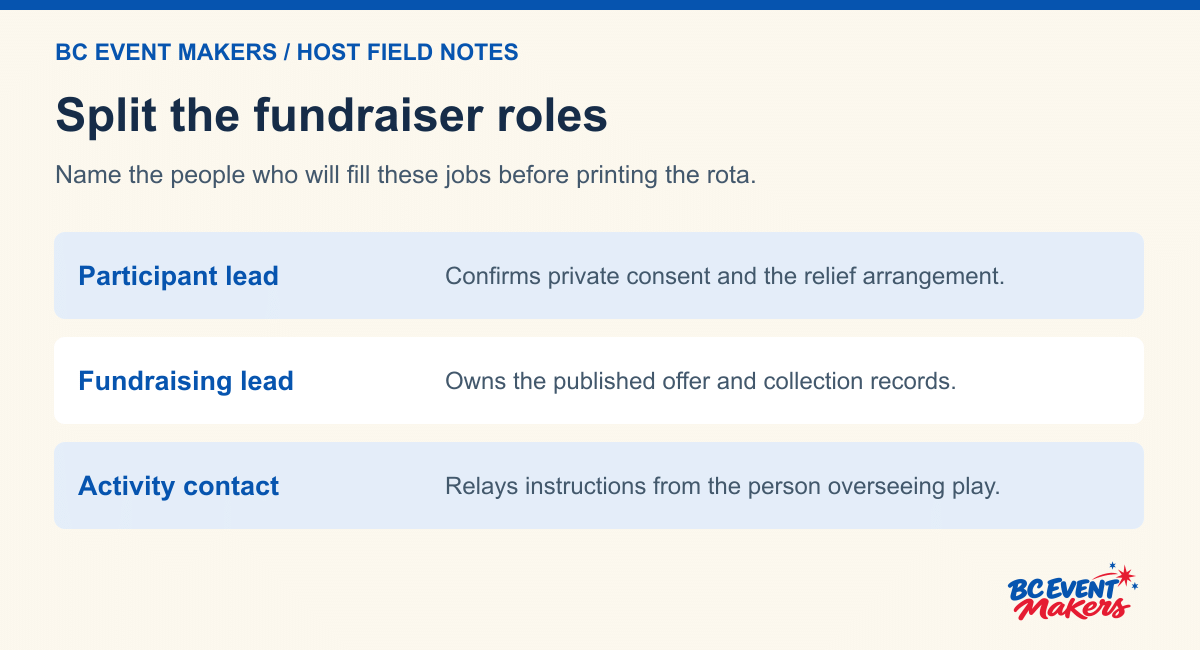
Invite volunteers privately and explain what participation involves. Give them a clear opportunity to decline. If someone is well known in the school or workplace, their participation can be part of the event’s promotion only after they have agreed.
Plan changes between volunteers and allow time for them to prepare. Ask about the selected tank’s participant requirements before choosing the roster. Do not assume that an enthusiastic volunteer is automatically eligible to use the equipment.
2. Write the fundraiser offer in one sentence
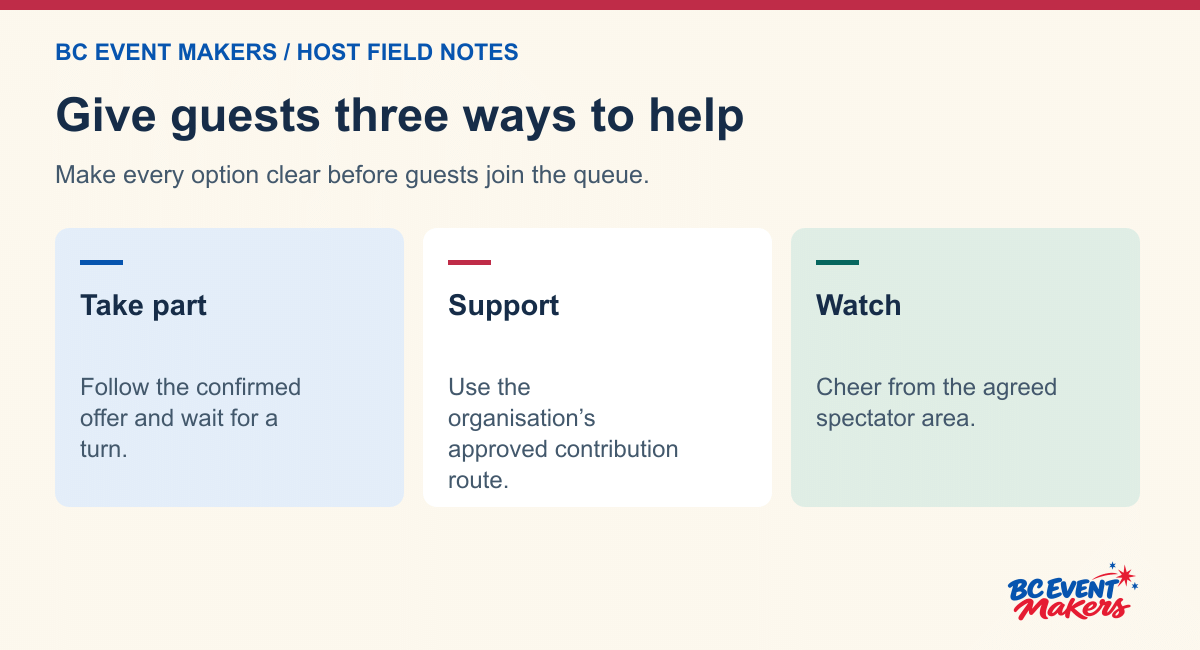
Decide how throws will be allocated and how payments or donations will be handled. Display the arrangement beside the queue so guests know what to expect. Assign someone to manage the fundraising process while the activity’s supervision remains clearly allocated.
Keep records appropriate to the organisation receiving the funds. Ask its organiser how proceeds should be collected and reported. If you plan extra prize or draw elements, confirm the relevant requirements separately before adding them to the promotion.
3. Give the water plan an owner
Ask about the tank’s filling and emptying requirements for the actual unit. Identify the approved water source and discuss the route between it and the setup position. Check disposal arrangements with the site owner. A nearby tap does not answer every question about preparing and closing the activity.
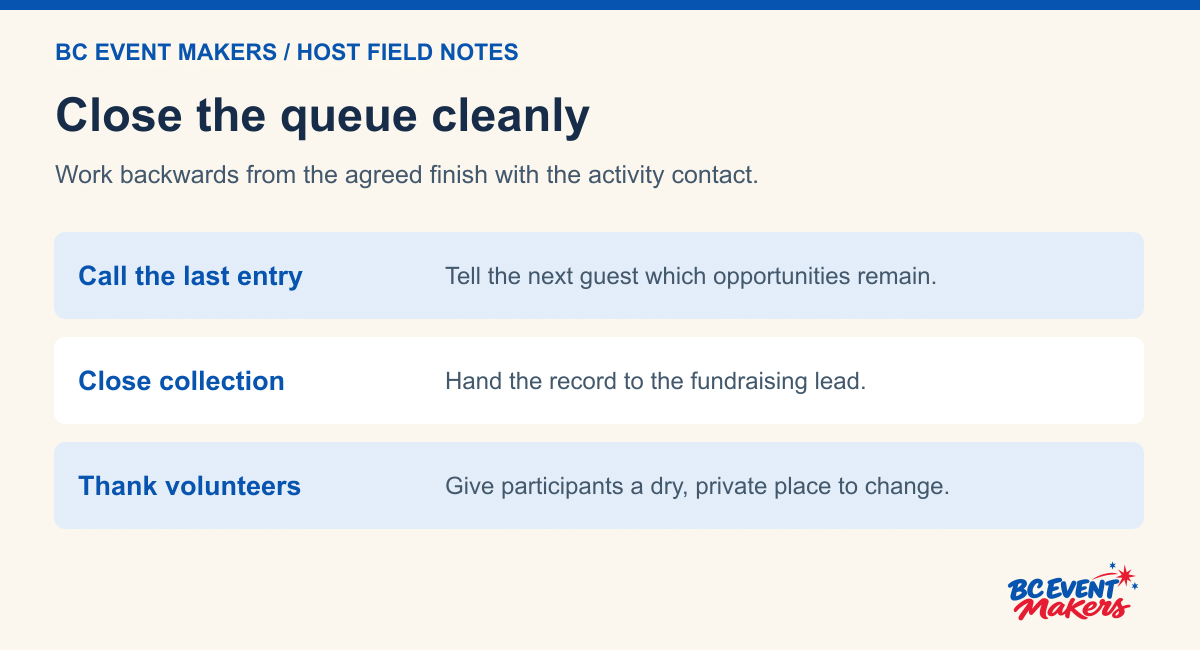
Think about the surrounding wet area and the route participants will use after leaving the tank. Provide somewhere appropriate for volunteers to change and keep belongings dry. Arrange the queue so other guests do not walk through the throwing area.
4. Close the queue while the team can still deliver
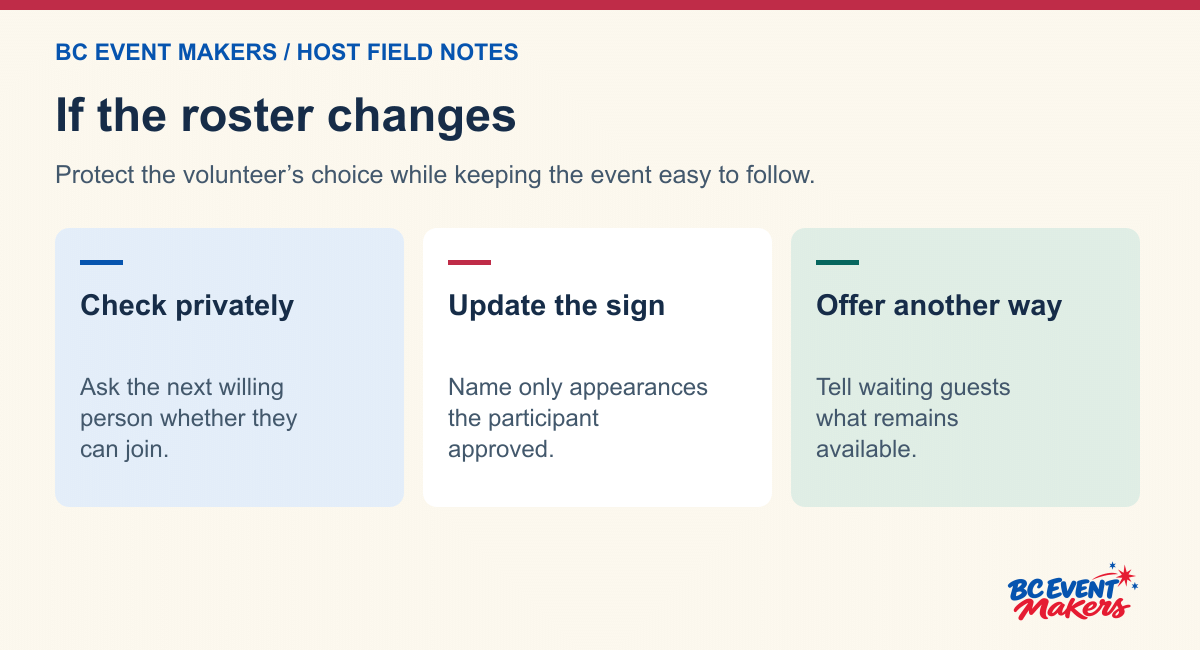
Schedule volunteer appearances around the rest of the fundraiser. Someone taking part should not also be responsible for a simultaneous presentation or another station. Have a plan for announcing breaks and the end of the activity so guests do not join a closing queue.
Browse the catalogue and request a Richmond quote with the venue, event hours and water information. Confirm the exact equipment instructions and staffing scope before publishing the participant schedule.
Run a five-minute rehearsal at the committee table
Pass one pretend ticket from a guest to the volunteer selling turns. Now follow it to the person running the queue. What has the guest bought? Who marks the ticket as used? Can they return later? What happens if the attraction closes while they are away? These are questions the fundraising organisation can answer before it accepts money.
Do the rehearsal again from the viewpoint of the person in the dunk tank. Where do they change, who confirms the handoff, and whom can they tell privately if they want to finish early? A participant should be able to change their mind without having to explain themselves to a crowd. Give the volunteer lead that responsibility on the day sheet.
Then try the guest who wants to support the cause and skip the throwing line. Ask the organisation receiving the funds what approved contribution route you can offer. Put that route on the guest sign if the organisation wants it public. Someone who simply wants to watch should also be able to enjoy the event without an awkward sales conversation.
Write the offer before printing the ticket
A one-sentence offer gives the welcome volunteer a usable answer. For example, “One activity ticket gives one guest [confirmed arrangement] during the open session, subject to the agreed event conditions.” Have the responsible organiser fill in and approve the wording. Do not promise a chance to dunk a named person at a particular time unless that appearance and the underlying arrangement have been confirmed.
If the fair already has a ticket system, establish how the dunk tank fits it. Shared fair tickets, station-only tickets and optional contributions leave guests with different expectations. A guest who can use the same ticket at several booths may be content to choose another activity if the queue closes. Someone who paid specifically for this station will need the organisation’s answer about unused turns.
Put the agreed offer on the sign and in the welcome volunteer’s notes. Put the policy for an interrupted session in the same notes. Leave the money-handling procedure with the fundraiser lead and follow the organisation’s approved process. A volunteer supervising a busy queue should know who can resolve a payment question without leaving their post.
Give the participant a private invitation
Try wording such as, “Would you consider taking part in the dunk tank at our fundraiser? I can explain the plan privately. It’s completely fine to decline.” Follow up with the proposed time, what the activity involves, the operator’s participant requirements and the chance to ask questions. Only use a person’s name in publicity when they have agreed to the particular appearance and wording.
Separate a yes to the activity from a yes to a photograph or social post. Someone may be comfortable doing a shift and prefer to keep their picture off the school’s social channels. Agree on the organisation’s photography arrangements before advertising a photo opportunity. The easiest guest sign identifies the activity and the cause, leaving names and personal details off it unless there is a clear reason and agreement to include them.
Name a relief contact who can take a call away from the crowd. A willing backup still needs to meet the actual requirements for the equipment. If there is no confirmed replacement, give the host a short programme update they can use. Keeping a person in the seat purely because their name appeared on a poster puts avoidable pressure on the volunteer.
Build a volunteer rota around decisions
Many fundraiser rotas list time slots and names. Add the decision each person owns and the person who will relieve them. “Jordan welcomes the next participant privately and tells the host when the handoff is confirmed” gives a volunteer a better brief than “Jordan helps with the dunk tank”. Use real names on the private version once people have accepted their roles.
| Role on the rota | Decision to own | Handoff before a break |
|---|---|---|
| Participant lead | Who has agreed to appear, and can their name be used? | Tell the relief lead what is confirmed and what is private. |
| Fundraiser lead | Which contribution or ticket arrangement has the organisation approved? | Hand the approved record and outstanding guest questions to the next authorised person. |
| Queue host | Is entry open, paused or closed, according to the activity contact? | Point out the agreed queue end, guest sign and update route. |
| Venue contact | Is the agreed site and water arrangement available? | Make the collection window and handback contact known to the event lead. |
A single person can sometimes fill two roles, but test the timetables side by side. The volunteer due in the seat during the welcome speech may also be the person holding the ticket float. A relief volunteer may be available in the evening but still teaching a class during setup. Resolve those overlaps at the meeting rather than looking for someone to take over in front of a line of guests.
Ask the supplier which operating responsibilities are included and what the host must provide under this booking. Keep the venue’s water and access decisions on the same sheet. For a municipal site, consult the City of Richmond’s event application guidance about the exact location and activity. A volunteer rota helps the host manage people. The supplier and venue still review their own requirements for the particular event.
Three situations that change a fundraiser
The guest has a ticket, but time is running out
Imagine a school fair where general tickets are sold near the entrance. The dunk tank is scheduled to close before the rest of the fair. A family buys tickets five minutes before the attraction finishes and then walks over to join a long queue. If the entrance team and the station have different information, the family discovers that difference at the worst possible moment.
Give the queue host a way to reach the fundraiser lead. When the activity contact says the queue must close, update both the station sign and the sales point. State whether the same ticket can be used elsewhere under the organisation’s approved terms. If a guest needs an individual decision, direct them to the authorised person who can make it. Don’t ask a volunteer to improvise a refund or make a promise that the organisation has not approved.
Review what the guest sign says while the event is open. “Last ticket sales at [time]” and “last entry when the queue host calls it” describe different decisions. Pick wording that matches the actual system. If there is uncertainty, make the promise smaller and clearer. The fundraiser can still offer a good experience without promising a precise number of turns before the team has reviewed the available operating time.
The advertised guest of honour withdraws
The fundraiser lead gets a private message that the person listed for the next appearance no longer wants to participate. Thank them, update the private volunteer rota and speak to the activity contact. Remove the name from public signage or scheduled announcements where you can. You can tell waiting guests that the programme has changed without sharing anyone’s reason for withdrawing.
Check whether an already confirmed person can take the slot willingly. Have the operator or responsible supplier contact confirm suitability. If that cannot be settled, pause that part of the programme and offer the confirmed alternatives. A general invitation to support a good cause should leave room for a volunteer to decline without becoming the subject of an announcement.
Call the welcome desk as well. Someone might have heard about the original appearance and travelled specifically to see it. Give the desk the same wording as the queue host. A clear update such as “The named appearance has changed; the fundraiser is still running and the next confirmed activity is [detail]” prevents several volunteers from offering different stories.
A payment question and a change of participant arrive together
At a busy fair, a guest may question the ticket arrangement at the same moment the next participant is due to enter the activity area. Diverting the operator or participant lead to settle the ticket question leaves the other handoff unattended. Assign the question to the fundraiser lead, and ask the queue host to help everyone else understand what is happening now.
Write down what the guest actually needs resolved. Is it the number of turns, use of a general ticket, an interrupted session or where to make a contribution? Those questions have different answers. Keep personal details or payment information within the organisation’s approved process. The guest sign only needs the agreed public offer and where to ask for help.
After the event, ask which question came up more than once. A clearer sign next time may be worth more than adding another fundraising station. If a rule proved hard to explain, bring that evidence back to the organising committee. The next event’s plan can change with the organisation’s approval rather than relying on an improvised exception that only one volunteer remembers.
Agree on the close before opening the line
Start with the venue handback and work backwards. When does the supplier need the collection route? Who confirms the last entry? When will the person responsible for contributions stop offering turns? Ask the activity contact to agree these decisions with the host. There is a difference between the advertised closing time and the moment when another guest can reasonably enter the queue.
Give the station two signs. The open sign names the confirmed offer and the queue entrance. The closing sign tells a new arrival what they can still do. If an approved contribution route remains open after the station closes, point guests to it clearly. Never imply that a person will get another turn as a reward for contributing after entry has finished.
On the private sheet, name who checks for unused tickets or unresolved guest questions. Ask the fundraiser lead how these should be recorded and handed over. The receiving organisation decides how contributions are recorded and reported. An event organiser can prepare a clean handoff without promising tax receipts, accounting treatment or permissions that have not been established.
What to tell sponsors and supporters
Agree on the sponsor acknowledgement before the event. A thank-you can identify the supported cause and recognise a contribution without saying that the sponsor operated the equipment or that the organisation has raised an amount it has yet to reconcile. Ask the fundraiser lead to review any public figure before it appears in a post or announcement.
If the committee is considering a separate draw or prize, treat it as another planning decision with its own requirements. The simple dunk tank activity does not supply approval for another promotion. Keep the station offer understandable on its own, and let the responsible organisation confirm any additional element before asking volunteers to sell it.
A short brief to send to the rental team
We’re planning a Richmond fundraiser on [date] at [venue]. Guests will arrive [in groups / throughout the fair]. The organisation is considering [confirmed ticket or contribution arrangement]. Our participant lead will invite volunteers privately. The venue has confirmed [water and access details], and [questions] are still under review. Please identify the requirements of the specific dunk tank, the staffing scope and the information you need before we finalise the rota.
Add the proposed guest hours, setup and collection access and the time when another event needs the same area. If the fundraiser is part of a larger fair, name the activity next door and when its queue is likely to grow. The total headcount helps, but the pattern of arrivals often explains the staffing decision more clearly.
The day-after note that helps next year’s team
At the debrief, ask three people for one observation each. The queue host can report the point where guests needed better directions. The participant lead can report whether the relief arrangements worked while keeping private discussions private. The fundraiser lead can record the questions that arose about tickets, contributions and the end of the session.
Keep those observations separate from the organisation’s financial record. “People kept walking to the sales desk after the queue had closed” is an actionable layout or communications issue even before anyone reconciles proceeds. Put the proposed change beside the observation, such as asking the sales desk to replace its sign as soon as the queue host calls the last entry.
Finally, thank participants for what they actually agreed to do. Some gave their time in the seat, some covered a quiet but essential handoff, and some supported the cause from the sidelines. Use the organisation’s agreed contact channel for a follow-up. A respectful invitation this year makes it easier for next year’s committee to start a real conversation with the people it hopes will volunteer.
Share the confirmed location, guest hours and volunteer plan through BC Event Makers’ quote form. Include any venue or fundraising decision that is still open.