
A zip line in Revelstoke should appear on the guest programme only after a supplier confirms service to the precise address, the equipment and the date. A travelling event adds real questions about arrival, collection and the site contact. Use this guide to compare written proposals before committing to a named attraction.
BC Event Makers lists Zipline among its Adventure Attractions. Availability for a date and delivery feasibility to Revelstoke require a specific enquiry. Use the booking discussion to establish what can be offered and when you will have enough information to make a decision.
1. Request a location-specific quote for a zip line in Revelstoke
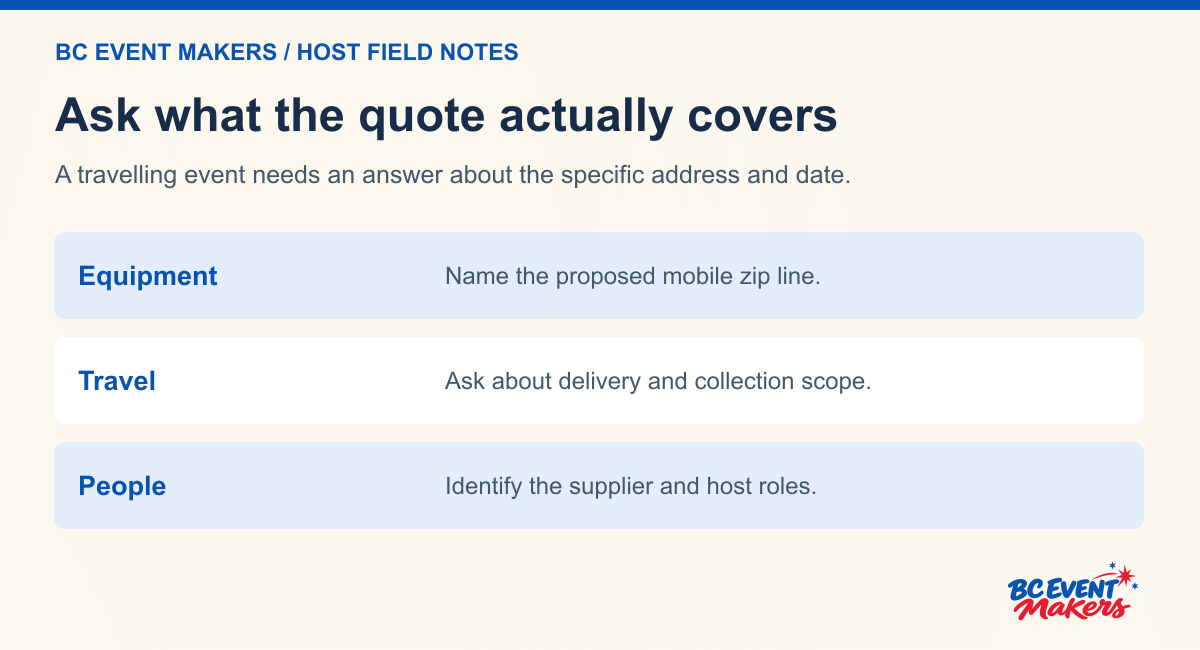
Include the venue address, event date and expected operating hours. Explain when the site is available for setup and when it must be clear afterwards. A short operating period can still involve substantial preparation and collection arrangements.
Add photographs of the proposed area and delivery route. Name the site contact who can answer access questions. If you are comparing several venues, say so; changing the location later may change the equipment and travel assessment.
2. Read the travel proposal line by line
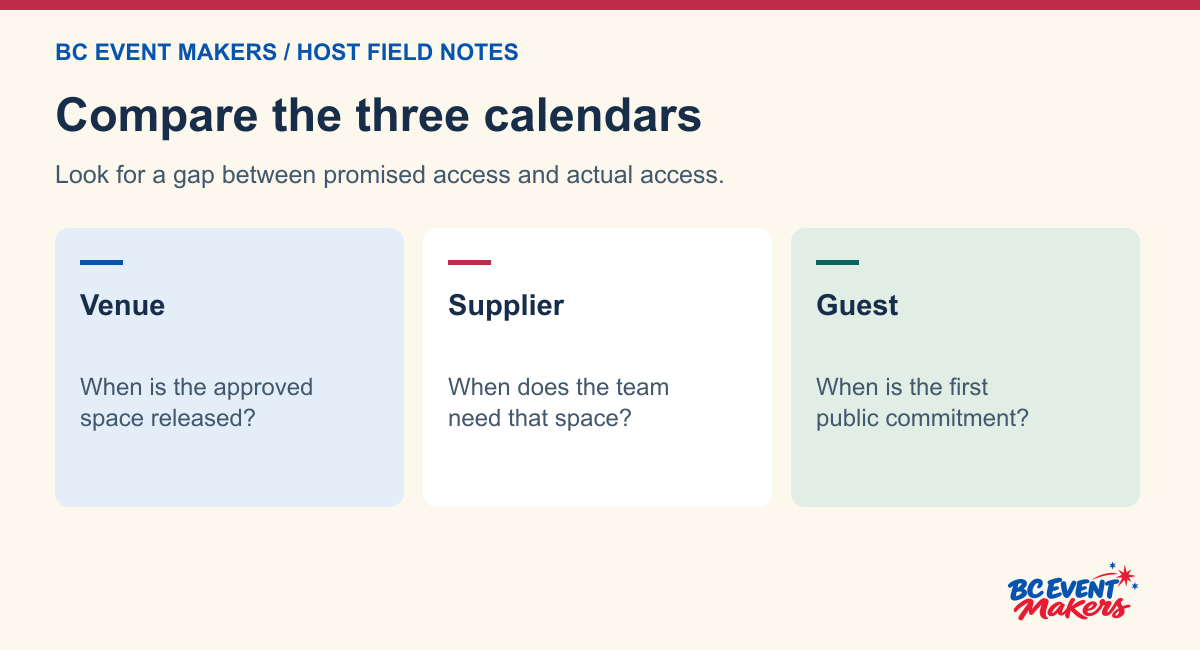
Request a clear description of equipment and staffing scope. Ask how travel and delivery are reflected in the proposal and whether there are separate site requirements for the organiser. Avoid comparing proposals using a single equipment price without understanding the rest of the arrangement.
Confirm who will provide participant information and when it will be available. You need the selected equipment’s requirements before describing eligibility in invitations. Ask about signage and briefing responsibilities as part of the event plan.
3. Match the access window to the other suppliers
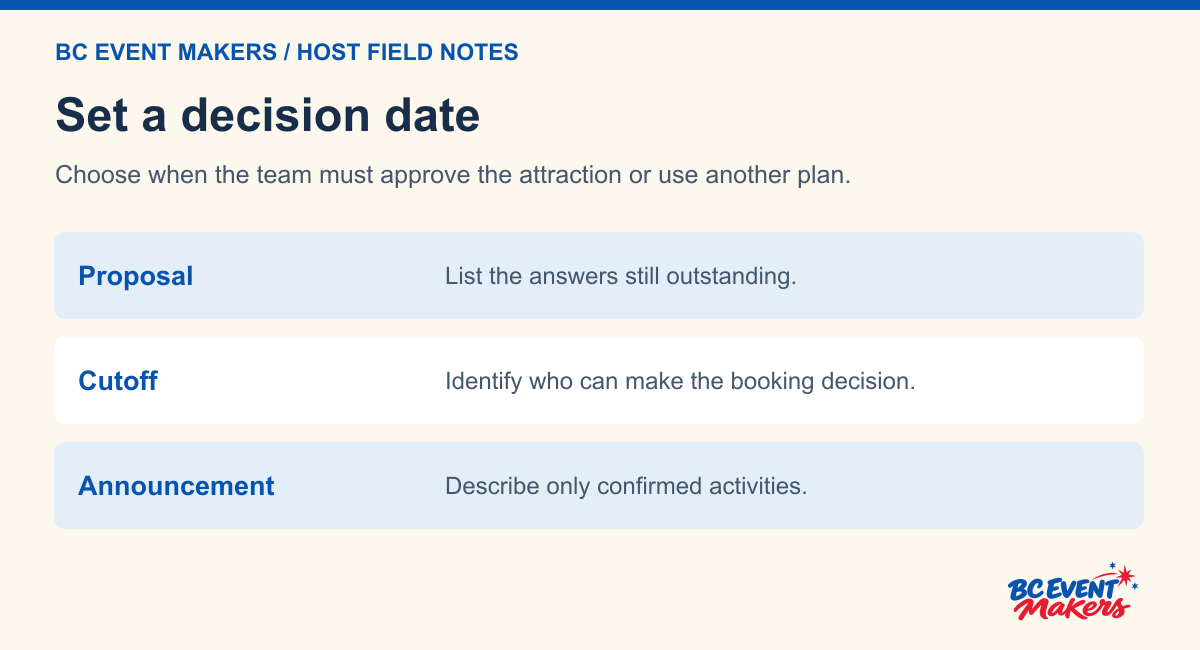
Share any site access windows controlled by the venue. Coordinate them with tent installation and other deliveries so the agreed route remains available. Identify who has authority to change the setup order if the event is running behind.
Build guest activities around the confirmed operating period. Visitors need something to do if they choose not to ride, and the event should continue during a pause. Consider those alternatives while the programme is still flexible.
4. Decide when a provisional attraction becomes public
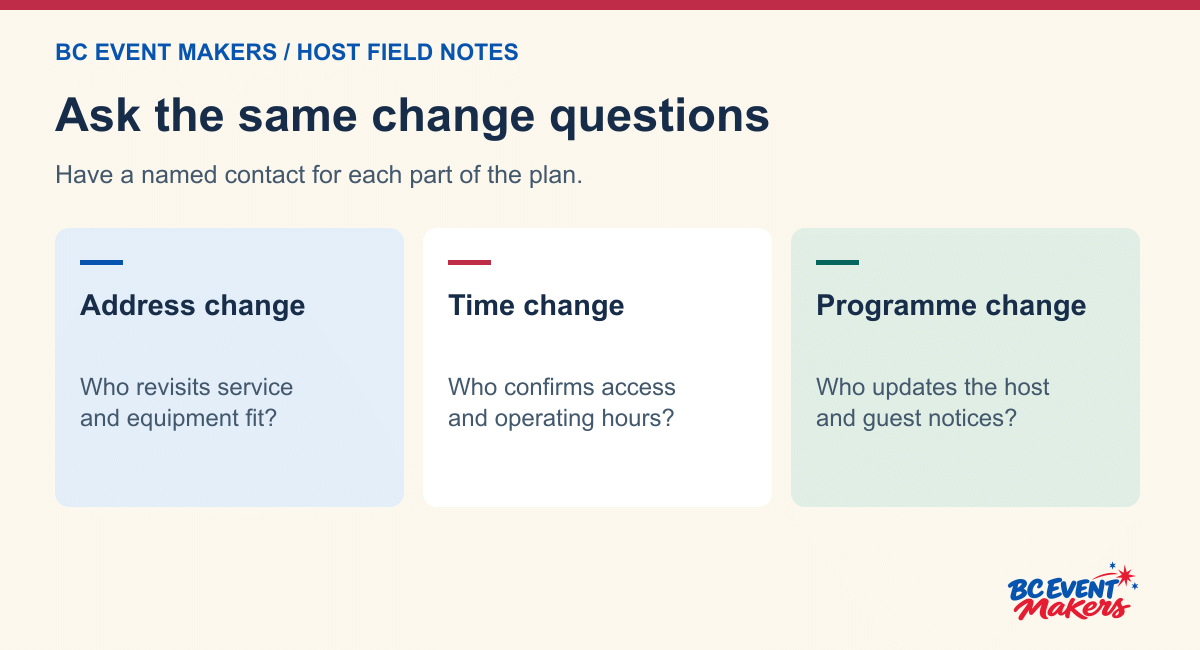
Ask what information is needed before the supplier can confirm suitability and availability. Establish when you need to commit to a programme for publicity. Do not label the attraction confirmed while site or travel questions remain unresolved.
Discuss how weather or site changes would be handled and where those terms appear in the booking. Explore Adventure Attractions, then send your Revelstoke brief. A complete enquiry makes it easier to assess the proposed zipline alongside the rest of the event.
Read a travel proposal as the person who will receive the team
Start at the first line where a decision could go wrong. Does the proposal identify a zip line in Revelstoke at your particular venue, or is it an initial description of equipment generally available elsewhere? A catalogue page can help an organiser describe the activity it is considering. A written service answer for your date and address is the starting point for planning the travelling booking.
Mark each piece of the travel proposal as confirmed, awaiting information or outside the quoted scope. If the supplier needs site photographs before it can assess service, put that task beside the name of the person taking the photographs. If the property has yet to confirm collection access, give that question to the site contact. Keep the open decisions visible when the committee discusses the proposal.
For an event using City property, identify the applicable booking contact through Revelstoke’s special event application information. A private property has its own approval process. Give the venue and supplier the same event date, address and proposed activity so their answers describe the same plan.
Write the decision in ordinary language
“Can you bring a mobile zip line?” leaves the supplier guessing about the date, site, participants and access window. A more helpful first sentence is “We need to confirm whether your team can supply the proposed mobile zip line to [address] on [date], with delivery and collection possible only during [venue windows].” Include anything the venue or organiser is still checking.
Say what the committee hopes the activity will do. Maybe it wants one recognisable attraction between sessions at a community gathering. Maybe it wants groups to visit during specified windows. These are different booking questions. A supplier can discuss the exact unit and the shape of a suitable session once it knows the guest pattern and site.
If a zip line in Revelstoke is essential to the event’s identity, establish what the committee will do if no provider confirms it. If the wider event can succeed with several activities, name one confirmed alternative and the date when that choice must be made. Keep the equipment request and the promise made to guests in the same decision record.
Six questions to put beside each quote
Which exact unit and service area are included?
Ask for the proposed unit name and a written answer about the actual Revelstoke location. BC Event Makers’ core service area is the Lower Mainland. If you receive a travel proposal, check what it says about the address and date, the supplier team it covers and anything still subject to review. Keep an appropriate local provider or another programme in consideration until these answers are complete.
An enquiry about a different municipality is not evidence that the new address can be served. Tell the provider whether the event is at a public park, privately managed site or other venue. Give it the exact location even if several properties share a similar name. Write the unit and site together in the decision sheet before comparing equipment photographs.
When can the team arrive and leave?
The access window should cover more than the hours printed on the invitation. Ask the venue when the approved route is available for delivery, which site contact can meet the supplier and when collection can take place. Give the supplier those times and ask whether the proposal can work within them. A guest event that lasts three hours can still require a different access period for the supplier.
Put another line on the sheet for competing access. Does a caterer unload at the same entrance? Does a market vendor collect stock along the return route? Are guests expected to enter through a place the delivery team may still need? These are practical questions for the venue, not details to leave to a volunteer who happens to be present when a vehicle arrives.
Who does the host need to provide?
Read the travel proposal for equipment responsibilities, operator arrangements, arrival contact, guest queue help and announcements. Ask which roles are included and which remain with the host. A phrase such as “staffed” may still leave the organiser responsible for welcoming groups, directing spectators and explaining changes to the rest of the event.
Assign a real name to each host role on the private run sheet. Check whether one person has been asked to meet the supplier at the same time as introducing the opening speaker. If the programme depends on both tasks happening together, assign relief in advance. Keep technical questions about the mobile zip line with the person responsible under the booking.
What does the guest receive?
Describe who attends and how people arrive. A group of families dropping in throughout the day presents a different waiting pattern from a tour group arriving all at once. Ask how the proposed booking handles arrivals, where participants obtain confirmed information and what other guests can do while they wait or watch. Avoid including a guaranteed number of turns or a guaranteed wait in publicity unless the responsible provider has expressly confirmed the commitment.
Give the host an accurate one-sentence description for the guest programme. If the travel proposal only confirms a preliminary review, the internal sentence can say “mobile zip line under review”; the public invitation should describe the programme that is actually confirmed. Once equipment and venue decisions are settled, the guest version can name the attraction, entry point and agreed public window.
Who revisits the proposal if the site changes?
A replacement venue can change the distance, route, available hours and equipment review. Ask the supplier how it handles a change of address or access window under the actual booking terms. Ask the venue who can confirm the new site and when the organiser will receive a written response. Keep the decision about an alternative site separate from a general preference to keep the show on schedule.
If the change is smaller, still describe it precisely. “The collection access window ends earlier” gives the supplier a clear issue to assess. “We moved things around a bit” can conceal a revised delivery route, a nearby stage or a guest entrance now sharing the same area. The event lead should circulate the current site brief after a change is approved.
Who owns the end-of-day handback?
Ask when the public queue must close, who communicates that decision and who ensures the agreed collection route stays available. The last guest activity and the final venue handback are different moments. Put both on the run sheet and ask the relevant contacts to review the space between them.
A site contact may leave early if nobody has asked them to remain for collection. Establish who can open the gate and receive the property back. Give that person the supplier’s confirmed collection contact through the private event channel. Leave personal numbers off guest signs and public event listings.
Try the comparison with two realistic proposals
Imagine that Provider A can review a travelling mobile zip line subject to site approval. Provider B can confirm local game stations for the same event. Neither answer is inherently better. The committee needs to know whether the guest experience it wants depends on the zip line, when it must publish the programme and which unresolved questions could prevent either option from operating at the venue.
| Question | Provider A’s travelling attraction | Provider B’s local programme |
|---|---|---|
| What is actually confirmed? | Record the named mobile zip line, service answer and outstanding site review. | Record the specific local activities, date and remaining property questions. |
| What does the public see? | One activity with a reviewed queue, viewing place and return route. | Several activity points with routes between them. |
| What does the host arrange? | Record the site contact, access window, guest queue and communications duties. | Record station helpers, common ticket or admission arrangements and guest directions. |
| When does the committee decide? | Identify the deadline for written service and site answers. | Identify the deadline for holding the alternative or confirming the local programme. |
Give the committee a recommendation it can act on. For example, “We can keep the mobile zip line under review until [date]. The site contact will confirm collection access by [date]. If the provider cannot confirm service at that point, we will decide whether the named local activities still meet our guest brief.” A note like this states the next decision without pretending a provisional proposal is a booking.
A late arrival from a different supplier
Suppose another supplier asks for the same access window after the travel proposal has been prepared. Do not resolve the conflict by telling either team to arrive earlier without asking the venue. Bring the schedules to the site contact, identify which entrance and period each team needs, and ask the suppliers to confirm a revised plan in writing.
Update the person meeting the vehicles and the host managing early guests. A change that works on a shared spreadsheet still needs to reach the actual person at the gate. Check that the proposed guest route stays separate from the supplier activity at the revised time. If the conflict changes the attraction window, update the programme only after the supplier and venue confirm the effect.
A committee member wants to post the teaser today
Read the teaser as a guest deciding whether to attend. A picture of a zip line, a promised ride time or the name of the provider can all create a clear expectation. If the core travel or site decision remains open, announce the confirmed gathering and the date of the next programme update. Use an image that reflects what is currently confirmed.
Once the travel proposal is accepted and the responsible parties confirm the arrangement, ask the event lead to approve the guest wording. Check the website, social post, sponsor material and venue map together. The welcome volunteer should be able to describe the same offer that a guest saw before travelling to the event.
A quote follow-up you can send after the venue answers
Our site contact has confirmed [access window and route] for [date] at [exact Revelstoke address]. We are considering a mobile zip line for [guest purpose]. The remaining question is [specific decision]. Can you confirm whether this changes service, equipment, staffing or collection arrangements in your travel proposal? Our committee needs to decide by [date] before the programme goes public.
Attach the current drawing and label what changed since the first enquiry. A supplier who receives several similar venue plans should be able to identify the one being reviewed. If the committee changes its equipment shortlist, put the new unit name in the message and ask for the applicable site review rather than carrying over assumptions from the previous option.
Close the file with the final guest wording, the accepted proposal or alternative, and the name of the person who can confirm a later change. A future organiser can then see why the committee selected the arrangement and which facts belonged only to that particular date and property. That is more useful than a note that simply says “zip line booked” without an address, access window or supplier scope.
What if the proposal expires before the venue answers?
Ask the supplier which part of the proposal can still be held, until when, and under which written terms. Give the provider the date the venue expects to settle the outstanding access question. A committee member should be able to say whether the equipment is held, merely under discussion or available to be booked by others. Avoid circulating a quoted figure or an earlier availability message as proof of the current arrangement.
Set a short internal review before that deadline. If the venue answer has arrived, circulate the current proposal and decide. If the answer is still pending, identify whether the supplier can extend the review or whether the local alternative needs a decision. This keeps the organiser from committing the public programme to an attraction while the underlying travel proposal is no longer current.
Review the BC Event Makers Zipline listing and send the event brief for confirmation of the date, equipment and address.