
A Wheel of Fortune rental in Surrey can give a casino themed evening a different gathering point from the card tables. Guests can watch the spin and join the activity between conversations. For a local event, plan its role in the room before choosing a format.
BC Event Makers lists Wheel of Fortune and describes table-top, medium and large options to ask about. Confirm which option is available for your date and how it would be supplied. The name alone does not establish the size or operating arrangement.
Decide how it fits the evening
The wheel might form one station in a broader casino programme or a featured activity at a particular point in the night. Explain that intention when requesting a proposal. A scheduled feature needs an announcement and a place for guests to gather.
If it operates alongside tables throughout the event, consider how visitors will move between activities. A wheel positioned beside a main entrance may attract a crowd exactly where arriving guests need room. Put its proposed location on the complete room plan.
Compare Wheel of Fortune rental formats against the Surrey venue
Ask for the requirements of the option being proposed, including equipment support and operating space. Allow for spectators and any person running the activity. A smaller format still needs a practical place in the room.
Check sightlines from the approach so guests understand where to join. Keep the activity separate from food collection and any route the venue requires to remain clear. Share the layout with the supplier before finalising neighbouring tables or decorations.
Write the rules in plain language
Decide how guests participate and ask which instructions fit the supplied equipment. If the event uses play materials, explain how they are obtained and used. Keep the same explanation in arrival information and beside the activity.
Discuss the wheel with the full-service casino package, which includes trained dealers, play chips and setup and takedown. Confirm the activity format and any prizes separately in your quote. The casino format uses play chips with no real-money wagering. If payments or fundraising are involved, check the relevant requirements before advertising that arrangement.
Coordinate the operating window
Share the dinner and presentation schedule. Agree when the activity opens and how play will finish before the event closes. Name the organiser who can communicate timing changes so the supplier does not need to search for the host during the evening.
Explore casino night options or request a Surrey proposal. Include the venue, guest count and intended role for the wheel. Ask which format, equipment and staffing arrangements are available for the plan you have in mind.
Write a simple wheel activity brief
Describe whether the wheel will operate continuously or at a scheduled moment. Name the person who will explain the activity, the estimated guest group and the start and finish times. Ask which wheel size is proposed, how it is supported, how much clear space it needs and whether an operator is included. A written answer is more useful than assuming every Wheel of Fortune option works the same way.
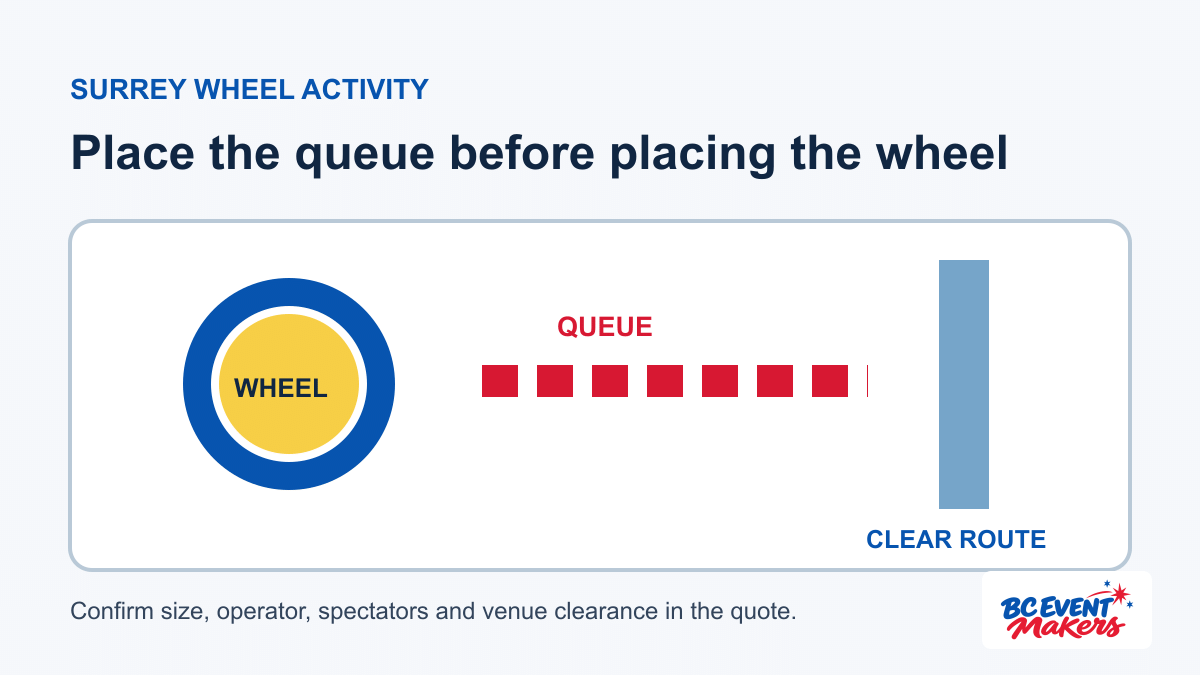
Mark the expected standing area on the room plan. Consider where guests will enter a queue, where observers can watch and how people leave without crossing the food line. The venue should confirm its required clear routes, and the supplier should confirm the equipment footprint and access needs for the specific format.
Keep the invitation aligned with the confirmed activity
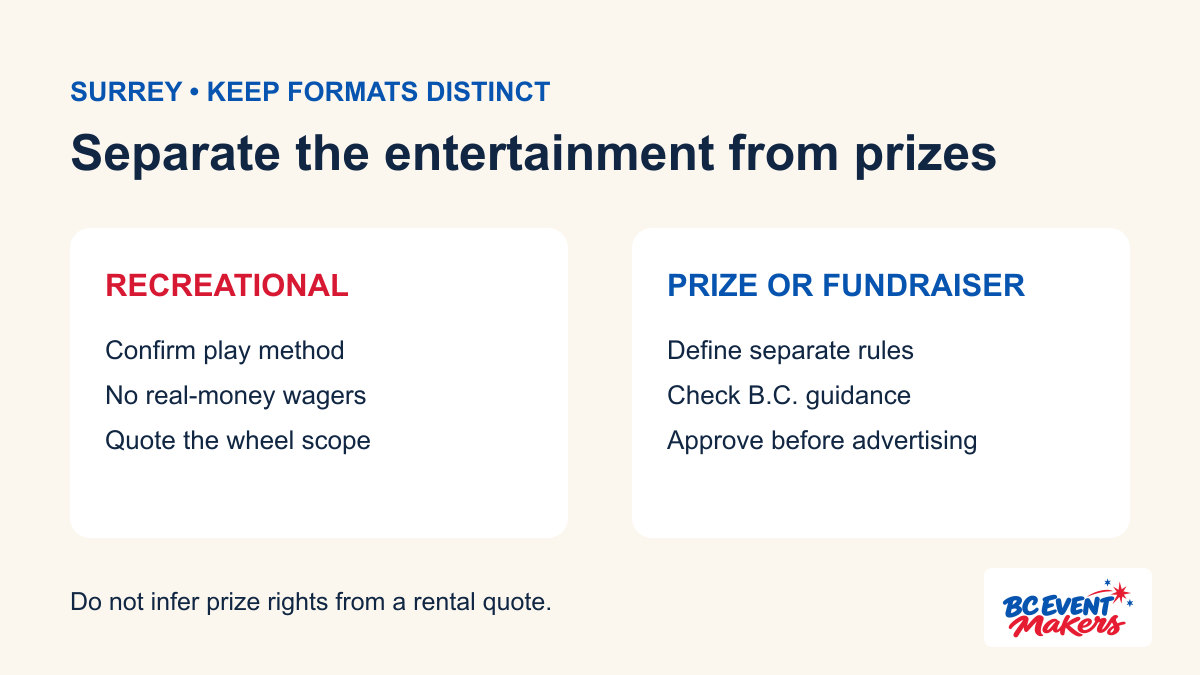
Decide whether guests will take a free recreational spin, use event play materials or participate in another format. Confirm the actual mechanics with the supplier before writing rules. If the event also includes a draw, fundraiser or prize, treat that as a separate plan that may have legal requirements. The Province of B.C. provides gambling and fundraising guidance for organisers to review before advertising such an activity.
Once the quote states the wheel size, operating scope and times, use those terms in the host briefing. If an item is unavailable for the date, adjust the invitation and room plan rather than depicting an unconfirmed wheel.
Confirm the specific wheel before choosing its place
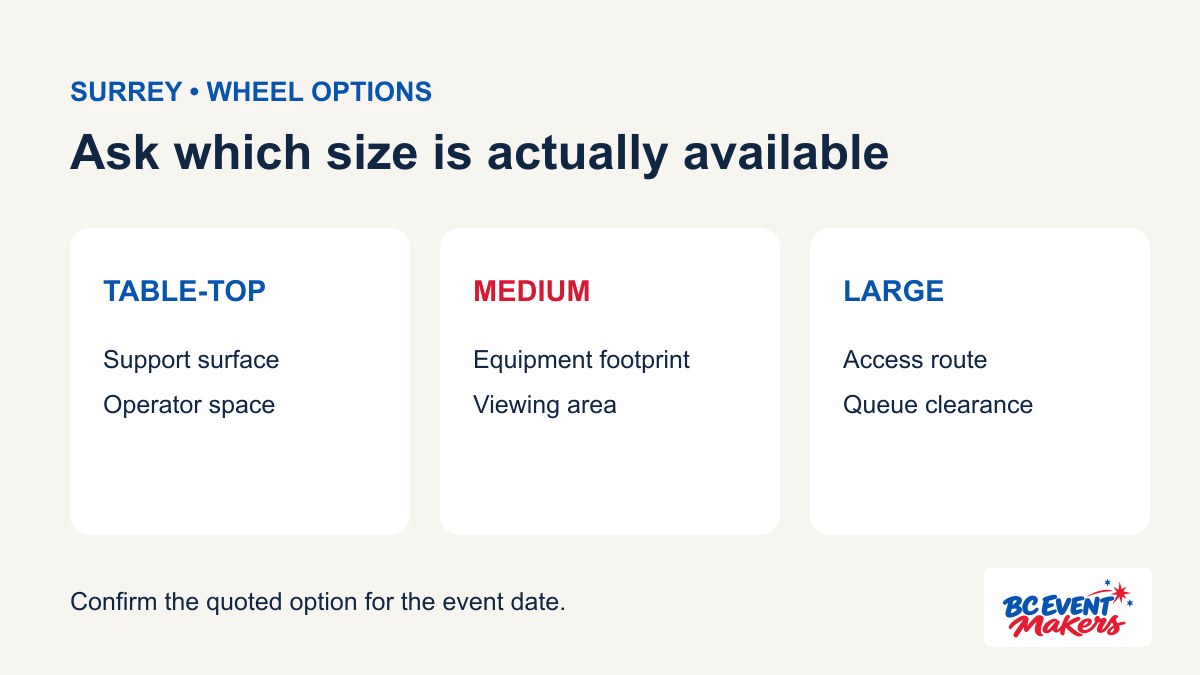
BC Event Makers lists table-top, medium and large Wheel of Fortune options to ask about. The names do not establish which one is available on your Surrey date. Request the proposed size, support requirements, equipment footprint and operator arrangement in writing. A table-top version needs a suitable support surface and guest access; a larger version may require a different route into the room and more viewing space.
Put the proposed wheel on the full venue plan with nearby tables, food, seating, doors and required clear routes. Draw where a queue begins and where observers stand. A crowd around the wheel can be part of its appeal, but it should not close a corridor or make the venue’s service staff cross an active activity area.
Give the host four simple cues
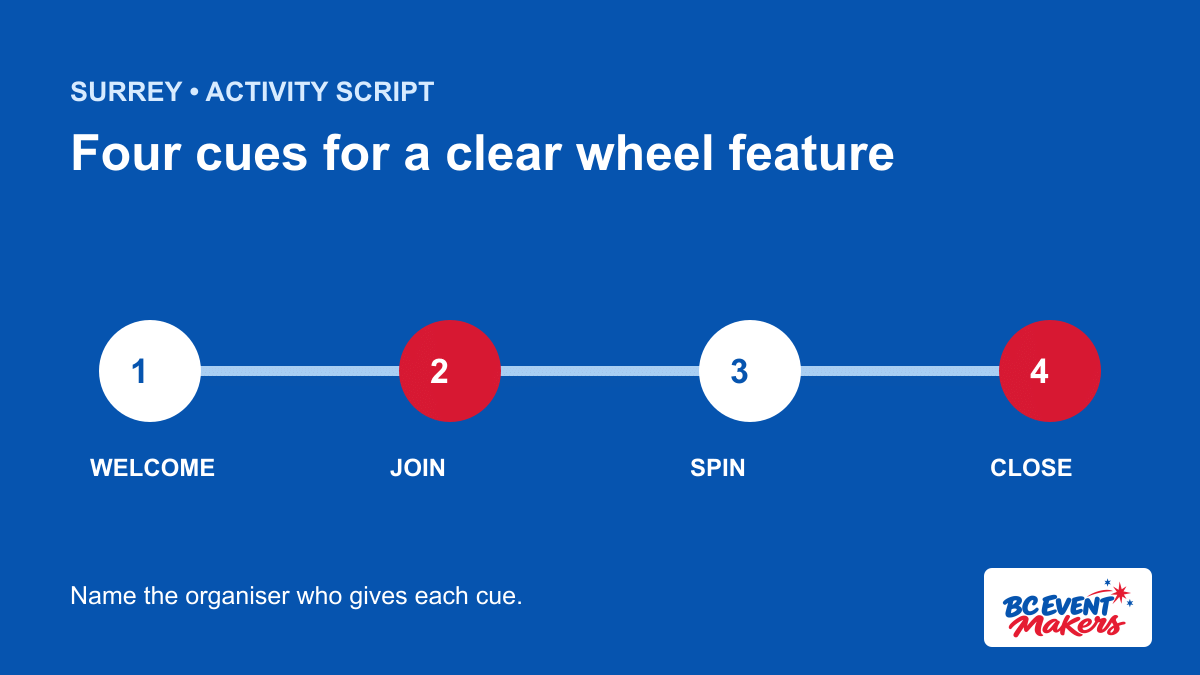
Welcome: Explain that this is a recreational activity and point guests to the wheel. Join: Tell them how a turn is offered under the confirmed event format. Spin: Let the person operating the equipment explain the actual mechanics. Close: Announce when the last turns will happen. Ask the supplier to check this sequence against the quoted wheel and staffing before the host presents it as a rule.
If the wheel runs continuously beside casino tables, the host’s cues may be brief and repeated. If it is a featured moment, protect a clear time in the running order and ensure guests can gather without blocking food or exits. The venue and supplier should agree on how the activity opens and closes.
Keep prizes separate from the wheel rental
A wheel can be used in different event formats, but the equipment rental itself does not establish a prize or fundraising scheme. If the organiser wants a separate draw, payment or fundraiser, define that plan separately and check the applicable provincial requirements before advertising it. Use the B.C. gambling and fundraising guidance linked above as a starting point, not as a substitute for a specific approval.
In the invitation, describe only the confirmed recreational activity, the actual operating period and any separate element that has been approved. Do not use a generic “spin to win” promise if the prize plan is undecided. The host and supplier should agree on the wording before guests arrive.
Compare the three size questions, not just names
Table-top
Ask what surface supports the proposed wheel and who supplies it. A small format may still need an operator, a place for the next guest to wait and space for people to watch. The venue can confirm whether the surface is stable and where the activity may be placed without interrupting service. The supplier should confirm the actual dimensions and setup needs in the quote.
Medium
Ask how the medium option is supported, how it reaches the room and how many people can gather around it without blocking a route. The category name does not tell you the exact footprint. Put the proposed equipment on the room drawing and ask the venue whether the position works beside tables, dining and any bar.
Large
Ask about the loading path, doors, lift or stairs, required floor area and how an operator will work around the wheel. A visually prominent activity can draw a crowd. Give that crowd a defined standing and queue area rather than assuming the open floor will remain clear during the event. Confirm whether the larger option is actually available on the date before using its photograph or name in invitations.
For each size, ask which parts of the activity are included: equipment, setup, staffing, play materials and removal. The written proposal should settle those details for the Surrey venue rather than relying on a generic product category.
Walk the queue from entrance to exit
Start at the guest entrance. Can someone see where the wheel is and where a line begins? Does the queue cross a route to food, seating or a required exit? Where does a participant go after a turn, and can a spectator watch without standing in the operator’s space? Draw those paths on the floor plan with the venue contact.
If the wheel runs beside casino tables, consider the two queues together. A table may have spectators and players while the wheel draws a separate group. Leave a clear corridor between them. The supplier can confirm operating space; the venue controls its required routes. If a position does not work, move the activity on the plan before signs and decorations are final.
Decide whether the wheel is a station or a featured moment
As a station, the wheel may be open during a broader playing window. Guests can move between it and other activities, subject to the confirmed joining method. Ask who explains the turn and who watches the queue if several guests arrive at once. The host still needs to announce when the station closes.
As a featured moment, the activity has a defined time when guests gather. Put that time in the running order and ask whether the venue has space for the audience. The host should introduce the wheel, the operator should handle the equipment and the organiser should know what follows the last turn. Do not assume that a dealer assigned to a table can also run a separate wheel; confirm staffing in the quote.
Prepare simple instructions, then have them checked
Guests should know where to join, what a turn involves and when the activity finishes. Keep signs brief and use only the rules confirmed for the supplied wheel. If play chips are used as part of the broader casino event, ask whether they are relevant to the wheel; do not impose a table rule on a different activity. If a guest arrives late, a short sign or host can repeat the joining instructions.
Use clear words for the recreational format and avoid language suggesting wagering with real money. If the organiser wants a prize or fundraising element, keep that plan separate, confirm who is responsible and review the applicable provincial requirements before advertising it.
Two Surrey venue examples
A wheel beside a reception
When guests arrive over time, the wheel can act as a visible gathering point if the quote supports that use. Place its line away from the entry route so new arrivals can reach the room. Keep food service and a route to seating open. The host can briefly point guests to the wheel, while the person operating it explains each turn. Ask the supplier how long the station will be staffed and when the final turns begin.
A wheel as one announced feature
If the venue has a tight reception area, a short featured activity may fit better than an all-evening station. Put its exact time on the programme and identify where guests can gather. The venue should confirm crowd space and any sound or sightline limits. After the feature, the host needs a cue that moves guests to the next part of the evening without leaving a queue expecting more turns.
Review the quote and room drawing together
Check the proposed wheel size, support method, equipment route, operator or staff, setup time, guest operating window and removal time. Ask whether the quoted activity includes any play materials. Add the position and queue to the same room drawing that shows casino tables, food and seating. If the proposed wheel moves, review the queue again rather than assuming the old sign and floor plan still work.
A change to the guest count may affect the line, but it does not automatically change the wheel or staffing. Ask the supplier what the confirmed setup can accommodate. If the wheel option is unavailable, revise the invitation and visual material before advertising a substitute. A different size may require a different support surface or venue access route.
Day-before host and venue handoff
Give the host a one-page activity brief: wheel location, opening and final-turn times, how guests join, who operates the equipment and whom to call if the schedule changes. Give the venue contact the loading route and removal time. The supplier should have the latest floor plan and on-site contacts. This lets the activity run within the agreed scope rather than relying on a promotional description of a Wheel of Fortune rental.
At the event, confirm the queue and required clear routes before inviting guests over. If the room setup differs from the drawing, agree on a revised position with the venue and supplier. Keep any separate prize or fundraiser approval with the organiser; the wheel rental quote does not decide that question.
A sample operating brief to adapt
“Guests may join the wheel from the marked side of the room. The person at the station will explain how a turn works. Please keep the route to food and the exits clear. We will announce the final turns before the station closes.” This is example wording for the host, not a promise about a particular booking. Replace it with the actual joining method, opening time and operator name confirmed by the supplier.
If the wheel is a short feature rather than an open station, the host can instead announce its specific start and end. Ask the person running the equipment how they want guests to approach, then use the same language on the sign. Keep any rule about play chips, points or prizes out of the message until the format is confirmed separately.
What if the queue blocks the room?
Have a plan before guests gather. The host can direct waiting people toward a wider standing area or ask them to return at a stated time, but only if the supplier says the operating period can support that approach. The venue contact should identify any route that must remain clear. Never move the wheel after setup without checking the operator’s space, equipment support and safe guest path.
If the line remains too long, a later feature or a second entertainment option may be discussed, but do not promise extra staff or equipment that is absent from the quote. Make one clear announcement so people know whether more turns are possible.
What if dinner runs late?
Check whether the operating window can move within the quoted staff and room access times. If the wheel is a scheduled feature, a late meal may reduce the time available for guests to gather and participate. Ask the supplier and venue before the host announces a new start. If the end time cannot move, explain the shortened period honestly rather than leaving a line that cannot be served.
After the event, note whether the chosen size, queue position and host cues worked for the room. Keep the final quote and floor plan with those observations so a later organiser can compare an actual arrangement instead of assuming every wheel option behaves the same way.
Confirm the final equipment and guest instructions in writing before using them in Surrey event signs or invitations.