
Casino dealers in Richmond need a brief that covers the guests, playing window and venue as well as table selection. Guests need to know how to join a game, and the team running the tables needs a clear event schedule. A useful brief connects those details before the party begins.
BC Event Makers’ full-service casino package includes tables, solid-colour play chips and trained dealers, with setup and takedown. Confirm availability for your date and the exact staffing arrangement in the quote. A written event brief gives the team the context it needs to plan the service.
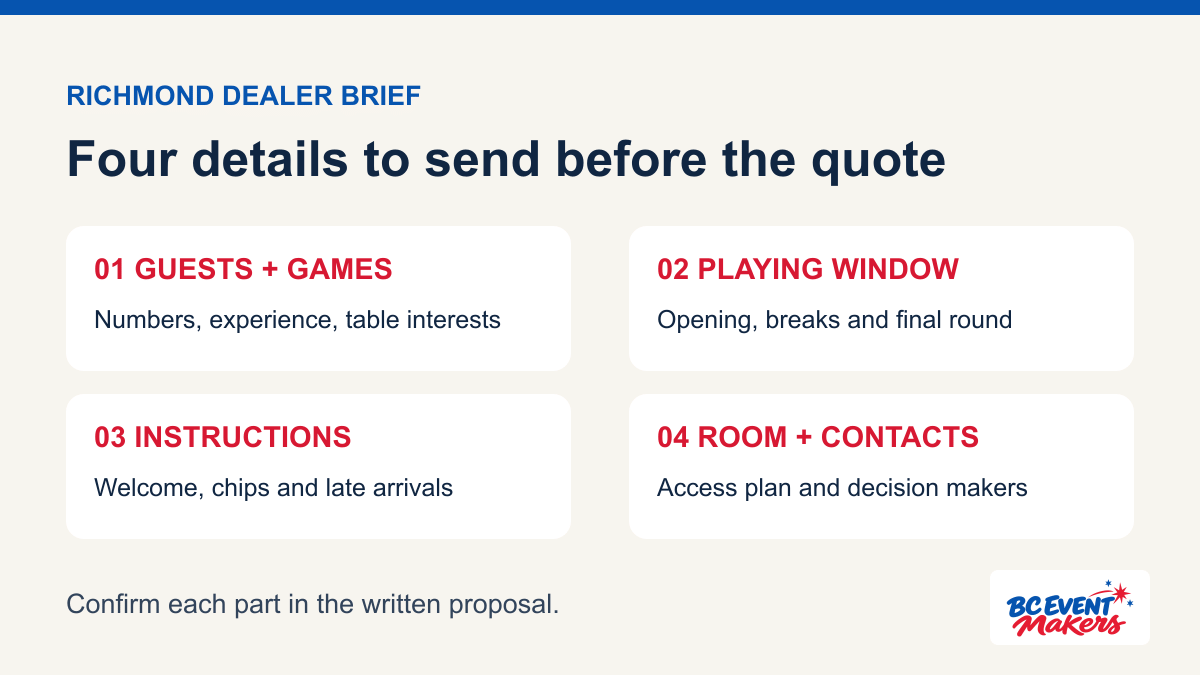
Casino dealers in Richmond: describe the guests and games
Tell the supplier how familiar your guests are with casino-style play. A group with many beginners may need an approach that allows time for explanations. If guests have requested a particular game, such as poker, identify it early so you can discuss an appropriate table and service arrangement.
Browse the casino night collection as a starting point, then discuss the games you would like at your event. Ask how the table mix will work for the group and confirm the final selection in the proposal. This keeps the equipment plan aligned with the people attending.
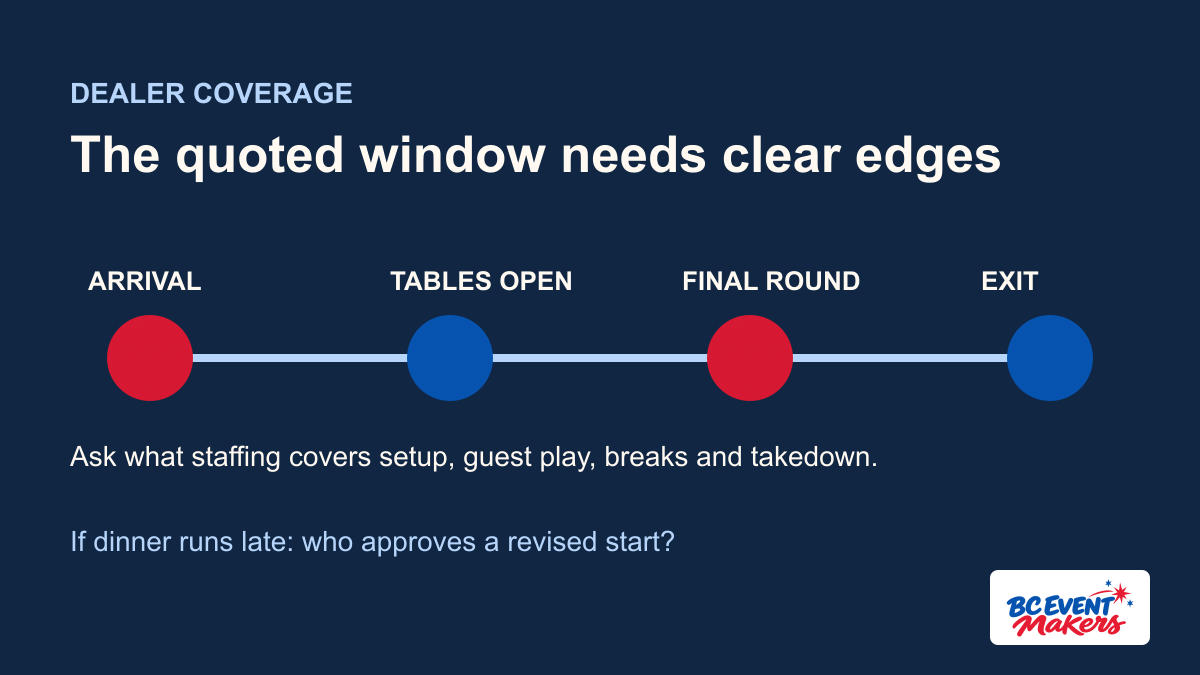
Set the playing window and confirm dealer coverage
Share the full programme, including dinner and speeches. State when you expect tables to open and when play will finish. A dealer’s time at the event may need to account for preparation and other duties, so ask how the proposed service period is defined.
Discuss breaks and table coverage with the supplier. If a table will close temporarily, know how that will be communicated to guests. The host should have one current schedule that reflects the agreed arrangement.
Agree on guest instructions
Explain that the casino is recreational, with no wagering involving real money, and describe how the event chips will work. Ask who will introduce the activity and who will answer questions outside the games. Assign announcements and wider event hosting explicitly so dealers can concentrate on table play.
If you plan prizes or fundraising, describe the idea separately and review the Province of B.C. gambling and fundraising guidance before advertising or seeking approvals for that distinct arrangement. Keep invitations consistent with the final format rather than using vague promises about winning money or prizes.
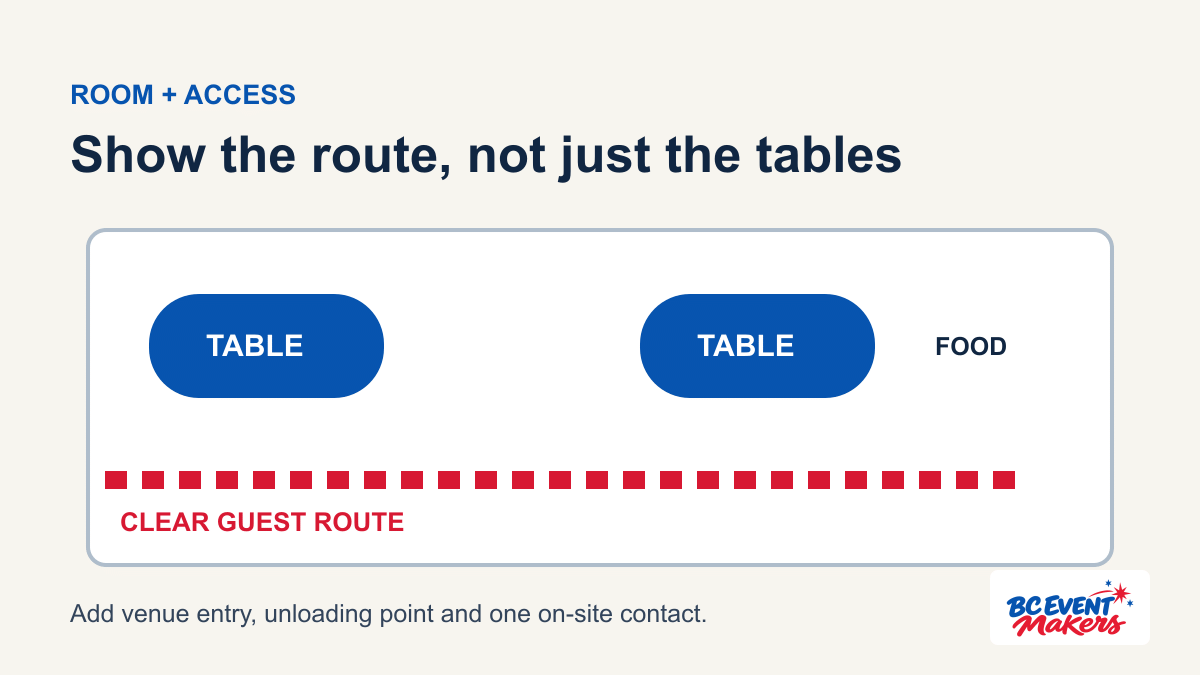
Include the room and access details
Provide the Richmond venue address and a floor plan showing the tables in relation to food service and the main guest areas. Leave room for guests to watch without obstructing players or circulation. Keep the noise level suitable for instructions to be heard.
Ask the venue when equipment can enter and when removal must finish. Confirm who the casino team should contact on arrival and who can approve changes during the event. Use the quote form to share the brief, then ask for the proposed staffing and table arrangements in writing. That gives everyone a common plan to work from.
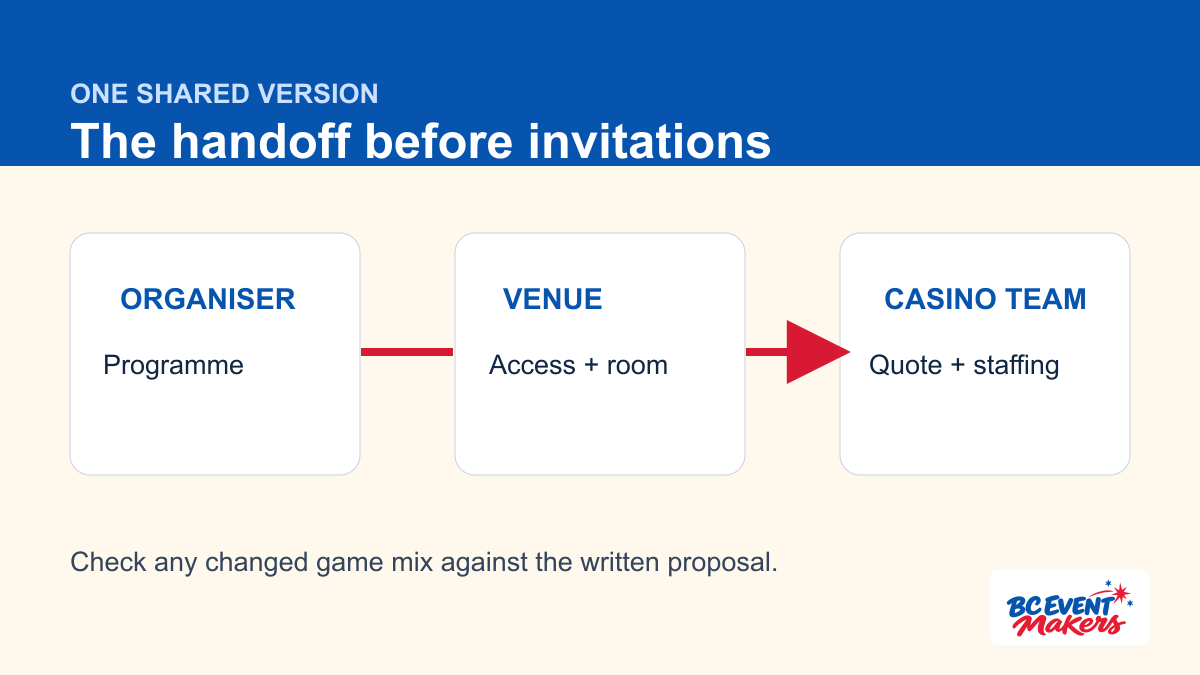
A four-part brief you can send with an enquiry
- Guests and game mix: State the estimated attendance, which games interest your group, and whether most people will need an introduction. Do not assume one dealer can cover several tables at once; ask how the proposed staffing matches the chosen mix.
- Playing window: Give the proposed table opening and closing times, plus dinner and speech times. Ask whether the quoted staffing period includes setup, guest play, breaks and takedown, and who announces the final round.
- Guest instructions: Describe how you want play chips distributed and who will give the initial welcome. Ask which explanations dealers can provide at the tables. Confirm separately who handles event-wide announcements and late arrivals.
- Room and contacts: Attach the floor plan, loading instructions and venue access times. Name one event contact who can confirm schedule changes and one venue contact for physical access.
Send the same version of this brief to the supplier and the venue. When the proposal arrives, compare it with each part of the brief. Where a detail is missing, ask for it in writing before using the plan in an invitation or run sheet.
Questions to settle before the event
What if dinner runs late?
Agree in advance who can approve a revised playing start and whether that change affects the quoted operating period. Tell the host and casino team the decision together, then update the guest announcement. The casino team can then confirm whether the revised playing window changes the agreed dealer coverage.
What if a guest asks for a game that is not in the quote?
Only advertise the games actually confirmed. The dealer brief can identify interests, but the equipment and staffing proposal determines what will be supplied. If the mix changes, update your floor plan and guest information accordingly.
How to use the brief after the quote arrives
Read the proposed table list and staffing details against the guest count and the playing window you supplied. If the quote names games but does not say how many tables will operate, ask for the table count and proposed dealer coverage. If the operating time is unclear, ask whether the stated period refers to guest play or the team’s entire time on site.
Next, compare the quoted access time with the venue’s loading rules. A venue may have a different entry point for equipment than for guests. Share both contacts in one run sheet so the crew knows whom to call at arrival and the organiser knows who can resolve a room issue. Keep a copy of the confirmed proposal with the event plan.
Finally, send the host only the guest-facing instructions that the supplier has confirmed: which games are present, how chips are received, when the tables open and when they close. If you change the schedule or the table mix, make that change in the proposal and guest information together. This small check prevents an old invitation from promising a game or playing period that is no longer in the event plan.
Keep the dealer brief short enough that the organiser, venue and casino team can all use it. An annotated room plan and a one-page running order are often easier to check than several separate email threads. Record any agreed change in the same shared version.
Two schedule scenarios to discuss with the casino team
Reception first, dinner later
If the casino opens during a reception, ask whether tables pause for dinner or remain available. A pause changes the dealer coverage plan and may create a second guest welcome when play resumes. Write the proposed opening, pause, restart and closing times on one line of the run sheet. Tell the host where guests should return after dinner. If people receive chips at the start, confirm whether they keep them during the meal or receive new play materials when the tables reopen.
Ask the venue whether the dinner queue crosses the gaming area. If it does, show the queue route on the room plan and discuss a different table position or service sequence. The supplier can confirm what equipment and staffed tables are practical; the venue controls its own service routes.
Dinner first, then a short playing window
If play follows dinner, the guest briefing should happen when people can hear it, rather than during service. Ask who gives the one-minute welcome, where chips are handed out, and which tables are ready at the agreed opening time. An organiser should be available at the transition so dealers are not asked to resolve the venue’s furniture move or meal timing.
A shorter window makes the final-round announcement especially important. Agree whether the host or a dealer makes it and how much notice guests will have. Keep the end-of-play cue separate from any prize or fundraising activity, which needs its own confirmed rules and approvals.
What to check on the final run sheet
Before the event, compare the run sheet with the signed proposal: table count and names, dealer arrival, setup access, the guest playing window, any pauses or breaks, chip handout, closing announcement and removal time. Place the organiser’s and venue’s current phone contacts beside those details. The event team can then resolve a change against one agreed plan instead of relying on separate versions of an email.
At the venue, do a brief walk-through before guests enter. Confirm the equipment path is clear, the table positions match the approved layout, guest circulation remains open and the welcome point is easy to find. If a venue constraint requires a change, ask the supplier to confirm how it affects the staffed plan before promising the revised experience to guests.
Who handles a late arrival?
Name one person at the welcome point who can direct late guests to the chip handout and repeat the event format in plain language. Ask whether a dealer can give a brief table explanation when a new player joins, and confirm the table arrangement can accommodate that without interrupting a round. If the playing window includes a tournament, the host must explain any late-entry rule before play begins. The dealer should follow the format confirmed for that event rather than inventing a rule on the spot.
Compare the brief for casual play and a tournament
The same dealer brief should name the event format, but the details change. At casual tables, ask how guests can approach and leave during the playing window, whether beginners can watch before joining and how depleted play chips are handled under the booked arrangement. The host needs a short welcome and a way to brief people who arrive later. Ask the casino team whether a table may pause for a speech and how that pause is communicated.
At a tournament, ask for the shared start, fixed chip allocation, confirmed rules and final-round cue. The host should know whether late entry is allowed and who explains the rule. A tournament may need a more protected playing window than a social drop-in format. Do not promise a competitive finish if dinner, speeches or venue access leave too little time for the agreed play.
In either format, the brief should state that the chips are for recreational play and that there is no real-money wagering. If the organiser supplies prizes, confirm how they fit the event and who presents them. A separate raffle or fundraising activity needs its own review; it is not automatically covered by the entertainment quote.
Three transitions to rehearse
From arrival to the first table
Who tells guests where to collect chips, and who introduces the tables? A sign near the welcome point may help, but the casino team should confirm the exact handout method. The dealer can explain the game when a new player joins, while the host handles the event-wide message. If most guests arrive together, put that welcome in the running order before tables open.
From dinner or speeches back to play
Ask whether tables close during the meal or pause only for a speech. The venue controls its service routes and furniture, and the casino team controls the table operation described in the proposal. The organiser should identify who confirms the room is ready and who gives the restart cue. If dinner runs late, compare the revised start with the remaining playing window before announcing it.
From the final round to the next activity
Give guests notice that play is closing. Agree whether the host or dealer makes the announcement and what happens to any unfinished round. If an awards moment follows, place it after the agreed finish rather than interrupting play unexpectedly. Confirm when the venue allows equipment removal and whether guests will remain in the room while the crew works.
Walk the room with the venue contact
Before finalising casino dealers in Richmond, trace the equipment route from unloading to the tables. Check door widths, stairs or lifts, allowed delivery times and any venue security procedure. Then walk the guest route from the entrance to chips, tables, food and seating. A layout that fits equipment may still leave spectators standing in a corridor or a queue crossing a service path.
Show the casino team where food staff will pass during the playing window. Confirm where a guest can watch a round without blocking a player, and where someone can sit away from the activity. Keep announcements audible enough for beginners to understand instructions. Ask the venue which routes must remain clear throughout the event.
Write down any change to the room plan and send the same drawing to the supplier and host. If a table must move, check whether dealer positions, guest flow or the available games need to change as well. The final dealer brief should reflect the actual venue, not a generic diagram.
A compact final message for the organiser
Before the event, send one note to the casino team with the confirmed game list, guest count, room plan, access time, playing window, dinner and speech timing, chip handout, host contact and venue contact. Mark the items that differ from the original enquiry. Ask for acknowledgment of the current version so the crew does not work from an older schedule.
Give the host a shorter guest-facing version: when tables open, how guests receive chips, whether watching is welcome, whom to ask for an explanation and when the final round will be announced. The casino team should confirm that this wording matches the booked format. If anything material changes, update both the crew brief and the guest message together.
Decisions to make before a change on the night
If the guest count is higher than expected, the organiser should not assume another table or dealer can be added. Ask the casino team what the confirmed equipment and staffing can handle, and keep the venue’s clear routes open. The host can direct guests to watch or try another confirmed activity while the team works within the agreed scope.
If a game must close for a break, decide who tells guests and where they can go next. The running order should identify any planned pause; an unplanned pause needs a clear host message. Do not promise a substitute game until the supplier confirms one is ready. A change to the table mix may affect the room plan and chip instructions.
If the venue requires earlier removal, the event contact should compare that deadline with the playing window and final-round cue. Tell the host and casino team the revised schedule together. The guest message should name the new finish, and the organiser should check that any prize presentation or speech still fits. Keep the original proposal and the agreed change together for the event record.
After the event, note which arrival instructions guests understood, whether dealer coverage matched the busy periods and whether the room route worked. These observations can help with a later casino party without claiming a measured outcome from one evening. File the final dealer brief, venue drawing and run sheet so the next organiser can see exactly what was booked.