
A cotton candy rental in Langley needs a named person for the machine and a different plan for the line. For a volunteer-run station, decide who opens, who brings supplies and who takes over when the first operator needs a break.
First confirm whether your proposal is for equipment rental or an operated service. If your team will use the machine, ask BC Event Makers what instruction is provided and what responsibilities remain with the organiser. Build the volunteer plan around that confirmed arrangement.
1. Cotton candy rental in Langley: give the station a defined serving window
Decide when cotton candy will be available. Serving during a school fair has a different pace from opening the station after a birthday cake. Tell the supplier about expected attendance and likely busy periods when asking about the equipment and supplies.
Avoid assigning the operator another task that regularly pulls them away. If the station needs to stay open while volunteers change over, plan the handover and explain it to both people. Ask how the machine should be managed during a break or a pause in service.
2. Confirm what arrives with the machine
The rental catalogue lists a Cotton Candy Machine and a separate supply option. Ask what is included in your particular booking and what needs to be added. Confirm the serving materials and the flavours you intend to offer.
Store the ingredient information where volunteers can find it. Guests may ask questions that the event organiser needs to answer accurately. Avoid dietary claims unless they have been checked against the actual products in use.

3. Set up a useful working area
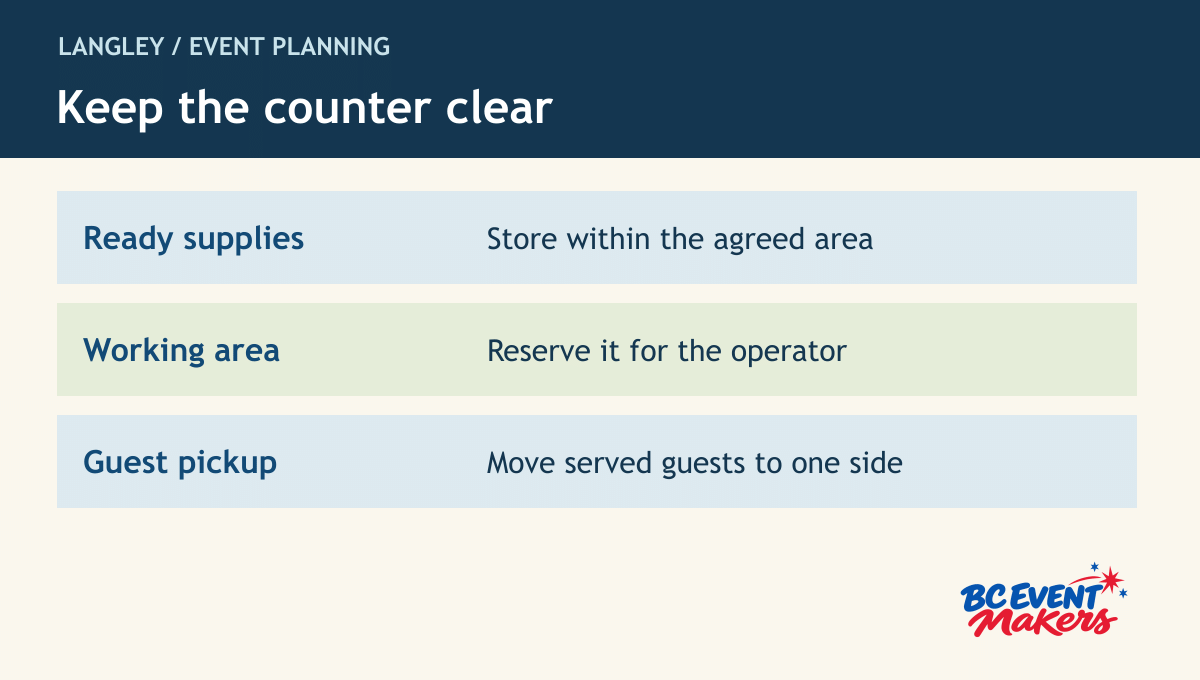
Ask about the electrical requirements and the surface needed for the selected machine. Check the proposed location with the venue before finalising the plan. Give the operator room for supplies without making guests reach across the equipment to collect their treat.
Mark a clear approach and collection point. The queue should not block another activity or gather around the operator’s workspace. Include waste collection nearby and decide who will keep the station area tidy during the serving period.
For an outdoor site, discuss weather and any suitable shelter with the supplier. Venue permission still matters for a backyard gathering at a shared property or an event in a rented park space.
4. Write a short handover note
Keep a station note with the serving times and the name of the event contact. Add the agreed supply arrangement and the instructions for getting help. Use the supplier’s operating guidance rather than making up a simplified version from memory.
Send your Langley address and event date through the quote form. Explain that you are considering a volunteer-run station and include your venue access hours. Confirm delivery, collection and cleaning responsibilities before the volunteer schedule is final.
Make the shift change a two-person conversation
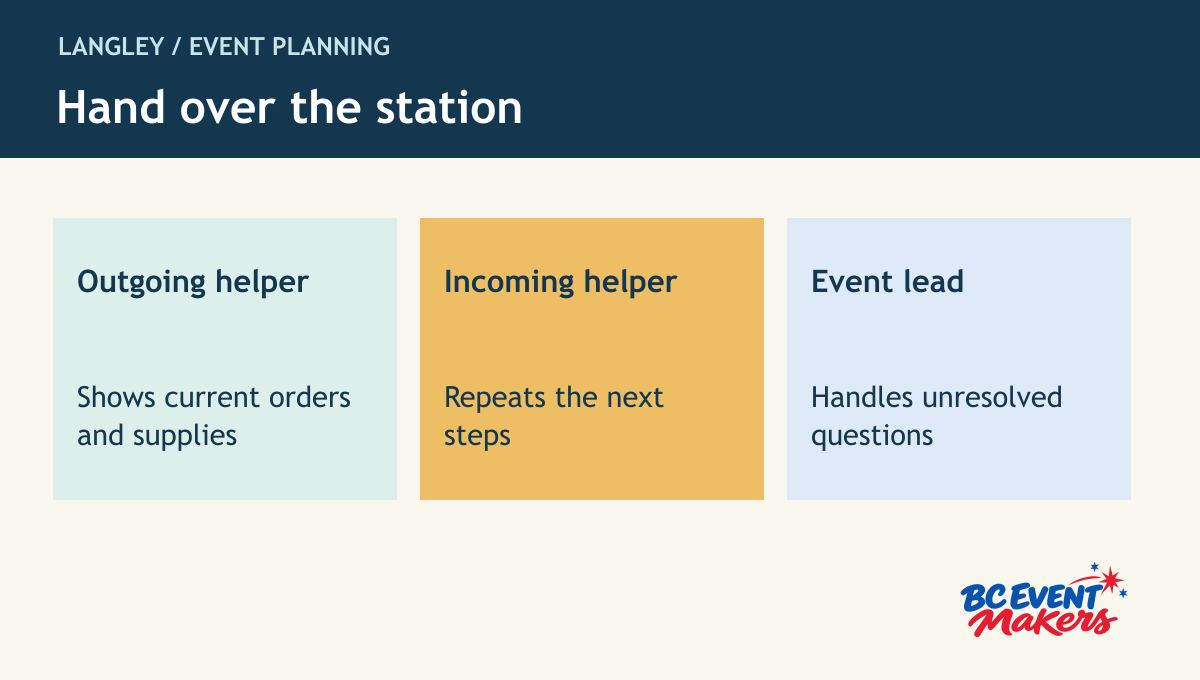
Think of a school volunteer who arrives as the first helper is leaving. If the only instruction is “take over the cotton candy,” the newcomer still has to locate supplies, find the right contact and work out what the queue has been told. Write the handover while the opening helper is still there.
A useful handover names the supplier contact, the next break, the remaining serving materials and any issue the new helper must refer to the event lead. It should not substitute for equipment instructions: arrange that handover with the supplier for the actual machine before the event.
Have the incoming helper arrive while the outgoing helper can still answer questions. The first person can point out the confirmed supplies, identify the next planned pause and show where guest questions go. The second person should be able to name the event lead and find the supplier instructions without leaving the counter.
Pass on the current situation as well as the printed plan. If one flavour has run out, the sign and the queue helper need the same update. If an ingredient question is unresolved, say so rather than passing a guess along as a fact. Have the new helper confirm what they will do if another question comes up.
Questions to settle before the event
Does reserving the machine reserve sugar and cones?
Ask what is listed in the actual quote. BCEM lists supplies separately, so give your serving-window and guest information when requesting them. Confirm what your helpers still need to bring.
Who talks to guests while the operator is busy?
Give a second person the queue and ingredient questions during a rush. Keep product labels and the responsible contact available. No helper should guess an answer about a guest’s dietary needs.
What belongs in the closing handover?
Confirm who finishes service, checks the supplier’s collection instructions and hands the station back to the venue. Record remaining supplies and any issue that requires the event lead’s attention.
Where can the organizer check public food-service requirements?
Describe the proposed menu, service format and event to Fraser Health. Ask which requirements apply and who will coordinate any necessary arrangements. A rental confirmation covers the agreed equipment and services; it does not settle the venue or organizer’s responsibilities.
A message to send with the venue details
We want a cotton candy rental in Langley for [date and venue]. Our volunteers can cover [shifts]. Which instructions will the equipment handover cover, what supplies are separate, and what should we arrange before our first helper starts?
Ask the closing helper to repeat the last agreed service time and identify the person who receives equipment at pickup. Doing that before opening is easier than searching for the right person after the fair.
If the incoming volunteer has never run a cotton candy rental in Langley or elsewhere, the outgoing volunteer should introduce them to the person responsible for operating instructions before leaving. The shift plan identifies a duty; it does not demonstrate that the person can operate the machine. Arrange this training and handover with the supplier, even if the volunteer has helped at another concession.
Build a volunteer shift plan around the event
A useful roster starts with the event schedule, not an assumed serving rate. Mark when the doors open, when a program or game creates a likely rush, when the next volunteer arrives and when service must finish. Then ask BC Event Makers what the confirmed rental arrangement requires for setup, instruction, service pauses and collection. The schedule helps you assign people; the supplier’s directions determine how the selected equipment is handled.
Separate the station roles
For a small fair, one person may cover more than one role at a quiet time. During a busy window, give each job an owner so the operator does not have to step away to find supplies or answer every guest question. The operator follows the instructions agreed for the actual booking. A queue helper welcomes guests, shares only confirmed menu and ingredient information, and directs unresolved questions to the event lead. The lead handles venue coordination, supplier contact and changes to the schedule.
Write down who is the backup for each role. If the operator becomes unavailable, the backup should contact the event lead and follow the supplier’s guidance about whether and how service can pause. A volunteer roster is not a substitute for training or permission to operate the equipment.
Plan a handover with overlap
Invite the next helper to arrive before the outgoing person leaves. The overlap can be brief, but both people should identify the event lead, the supplier contact, the posted service window, the agreed supplies and the location of current instructions. The outgoing helper can report what has changed: an item that is running low, a revised wait estimate, a question awaiting an answer or a point where guests are collecting their treats.
Ask the incoming helper to repeat the next steps in their own words. If they cannot locate the instructions or are unsure what to do, keep the outgoing person available and ask the event lead to settle the question with the supplier. This avoids treating a printed checklist as proof that someone is ready to run the station.
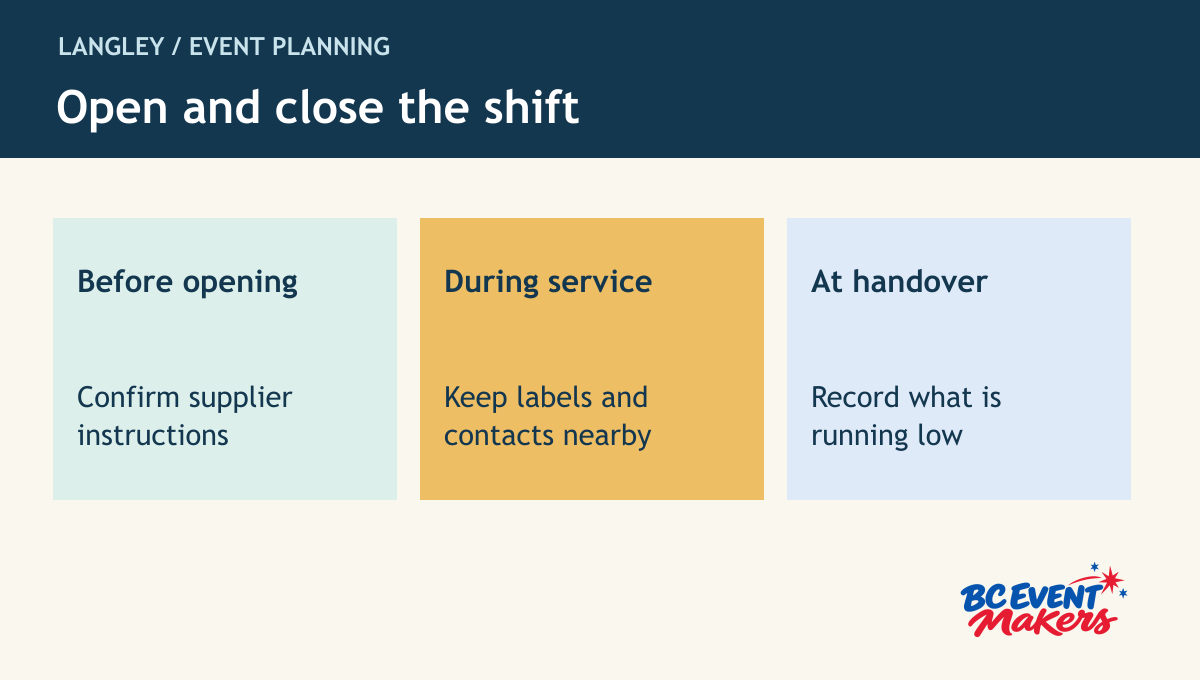
- Before opening: the lead confirms the access window and venue-approved location; the operator checks the booking-specific instructions; the queue helper checks signs, waste collection and the guest approach.
- At the changeover: the outgoing helper names the next service time, remaining supplies and any outstanding question; the incoming helper confirms their role and who they will contact.
- At closing: the lead confirms the end time and collection plan; the operator follows the agreed closeout guidance; the queue helper communicates the last service time and directs guests away from the work area.
Use a realistic rush scenario
Imagine the school’s stage program finishes just as families arrive at the concession row. The cotton candy line grows while the operator is occupied. Before event day, decide who will tell guests the expected wait, where the queue can stand without blocking an exit or another activity, and how the event lead will communicate a change in service. Use the venue’s directions for any required clear routes. Do not promise a serving pace until the supplier has confirmed what the booked setup can support.
If the station needs a pause, agree on a simple message for the sign and the queue helper. The message can give a return time only when the event lead has checked it with the person responsible for the equipment. If no return time is known, say that the station is temporarily paused and direct guests to the organizer for an update. This is clearer than letting several volunteers give different answers.
Copy a compact station card
Keep a one-page card at the station with the information volunteers need, without copying or simplifying machine instructions:
- Booked service window: [start] to [finish]
- Event lead and best way to reach them: [name and contact]
- Supplier contact and booking reference: [confirmed details]
- Confirmed supplies and where the event lead stored them: [list and location]
- Guest questions about ingredients: [responsible person and product information location]
- Next volunteer and overlap time: [name and time]
- Venue-approved guest approach and collection point: [location]
- Unresolved questions to settle before opening: [list]
After each shift, the outgoing volunteer can mark a supply as low or record a question that needs follow-up. They should not make a new dietary claim, change the equipment plan or promise an extra service period. The event lead can check those points with the actual product information, venue and supplier.
Make the plan fit the venue
Walk the proposed route from access point to station with the venue contact. Confirm where a delivery vehicle may stop, whether equipment can pass through the intended doorway, and how volunteers and guests will move around the setup. The venue’s preferred route may change where the queue helper stands or where supplies can be stored. Share those constraints with the supplier before finalising the booking.
For an outdoor school or community event, ask the venue what happens if weather changes the location or schedule. Confirm what the rental arrangement permits and who must approve a move. Do not treat a canopy, extension cord or alternate surface as automatically suitable; describe the proposed plan and follow the supplier’s and venue’s specific guidance.
Before the fair, review the proposed menu and service format with Fraser Health’s food-service requirements and ask what applies to your event. The organizer should coordinate any applicable requirements with the relevant authority and venue. These planning questions help volunteers communicate consistently; they do not certify a food-service setup or replace current instructions.
Use the final volunteer briefing to close gaps
At a short briefing, ask each helper to name their role, the person they report to and the next handover time. Review what is confirmed and what still needs an answer. If a booking detail, ingredient question or venue arrangement remains unresolved, assign a named event lead to follow up instead of leaving it for the station volunteer to guess during service.
A strong plan lets helpers focus on their assigned work while giving guests a consistent answer about timing and where to ask questions. It also gives the event organizer a clear record of the booking, the volunteer shifts and the items that need a supplier or venue decision before the station opens.
Keep a change log for the final week
School fairs often shift as the venue confirms access, the program changes or volunteer availability moves. A small change log lets the event lead keep the quote, floor plan and volunteer briefing aligned. Record the date of the change, what was confirmed, who confirmed it and which people need the updated information. Mark an item as pending when you still need an answer; do not let an assumption quietly become part of the station plan.
Recheck the details that affect the station
If the serving window moves, check whether the booking and volunteer shifts still cover it. If the delivery entrance or room changes, tell the supplier and venue contact before redirecting equipment or supplies. If the menu or ingredients change, update the product information volunteers use to answer guest questions and review the new plan with the relevant authority where required. If a scheduled helper is absent, reassign the queue or organizer contact first; do not assume that any available volunteer can take over the equipment role.
Choose one person to send updates to the supplier, venue and school organizer so that the same version reaches everyone. Keep the confirmed service window visible to volunteers and guests. When an item is uncertain, give the event lead a deadline to follow up and identify what the team will communicate if it remains unresolved.
Decide how a pause will be communicated
Before opening, agree who is authorized to tell the queue that service is paused or has ended. The message should reflect the supplier’s direction and the organizer’s current information. A helper can point guests to the event lead without speculating about the machine, a restart time or an ingredient. If service cannot continue, the organizer can update the sign and the schedule instead of leaving volunteers to explain different versions.
For example, if the venue asks the station to move because a walkway is needed, the queue helper can hold new guests and direct existing questions to the lead. The lead checks the new location with the venue and supplier, then tells the team whether the station can reopen and when. The volunteers do not move equipment based on a guess or keep serving while the route is being worked out.
At the end of each planning check, distinguish three things on the card: confirmed, waiting for an answer, and assigned to follow up. That simple record helps a volunteer team keep the event plan accurate when different people are working different shifts.