
A fun casino in New Westminster should be easy to join even for guests who have never played a casino game. At a reception or staff celebration, a clear introduction can make the tables feel more welcoming. Plan that introduction along with the equipment rather than expecting guests to work everything out on arrival.
Describe the recreational format in the invitation and event briefing, making clear that there is no wagering with real money. Explain how the event chips will be used and who guests can ask for help. Keep the explanation consistent with the arrangement confirmed for the evening.
Choose games with your guests in mind
Explore the BC Event Makers casino night collection to compare table options. Roulette, blackjack and poker offer different experiences, so ask which mix suits a group with many beginners. Personal favourites are useful to mention, but they should be considered alongside the wider guest list.
BC Event Makers’ full-service casino package includes tables, solid-colour play chips and trained dealers, with setup and takedown. Confirm the exact booking inclusions and staffing arrangement in your quote. Let the team know that welcoming newcomers is a priority for the evening.
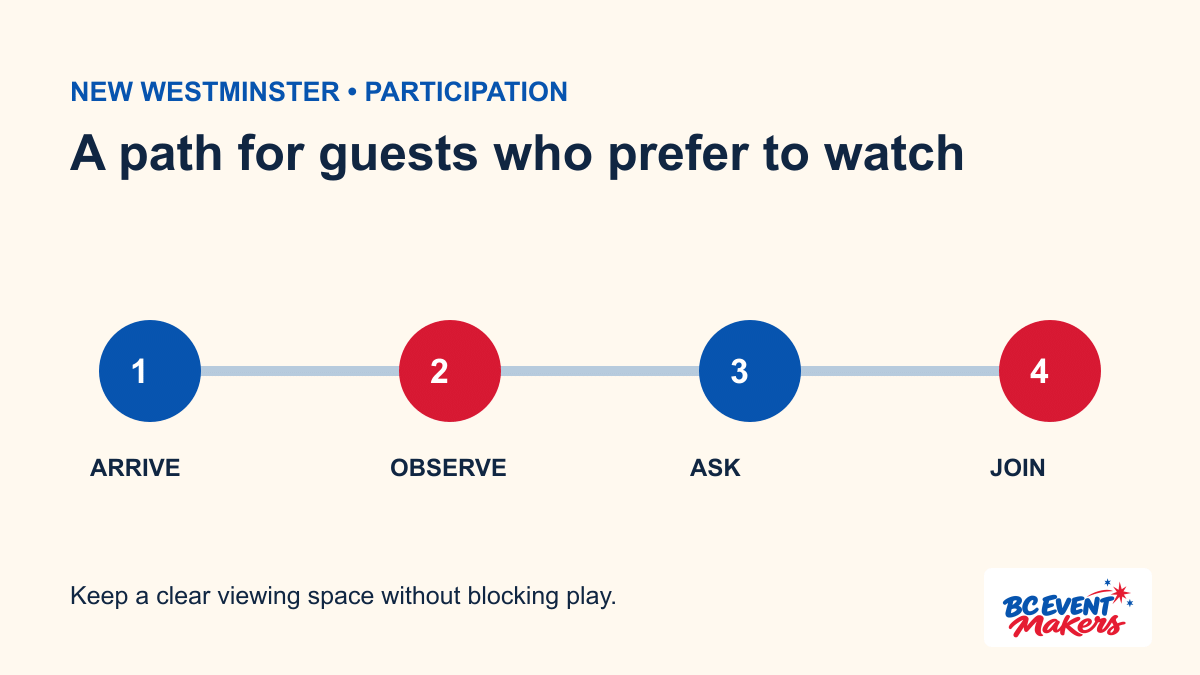
At a fun casino in New Westminster, give beginners permission to watch
Leave room for guests to observe before taking part. Watching a round can be a comfortable way to understand a game, provided spectators are not crowding the players or blocking circulation. Ask about the full space requirement when planning the tables.
Include seating away from the activity for people who prefer conversation. Keep participation optional, especially at a workplace gathering. A casino theme can provide the setting for the evening without becoming the only way to enjoy it.
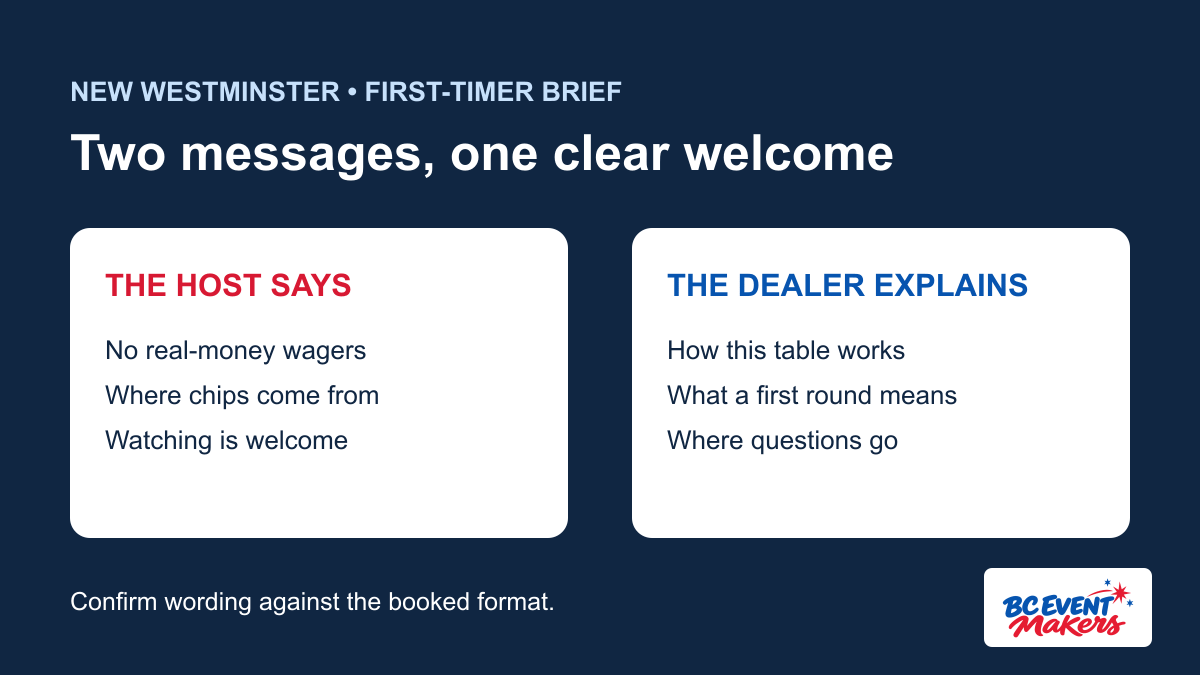
Put explanations where they are useful
Ask how newcomers will receive instructions and whether the proposed playing window allows for that approach. Keep any event signs short and consistent with the games being supplied. Avoid printing your own version of game rules without checking it with the team responsible for play.
Keep music at a level that allows table conversations and instructions to be heard. The W3C Making Events Accessible checklist also recommends clear language, usable venue routes and limiting distracting background noise; use it when planning the welcome and room. Coordinate announcements with the casino team so a speech does not compete with an explanation or interrupt the closing of a game.
Define the end of play
Agree when tables will open and close, and tell the host how the final playing period will be announced. If the event includes prizes or fundraising, discuss the arrangement separately and obtain the approvals needed for that format. Do not leave guests to infer the rules from a promotional phrase.
Send your New Westminster address and draft programme through the quote form. Include guest numbers and your expectation that many players will be new to the games. Confirm the table mix and staffing scope before finalising the room layout and guest instructions.
A short arrival message for first-time players
Before guests enter the games area, the host can say that participation is optional, the chips are for recreational play and the evening does not involve real-money wagering. Point out where to receive chips, which tables are open and whom to ask for a first explanation. Confirm those details with the casino team so the welcome matches the supplied format.
Put the same information on one small sign near the entrance. A late arrival should be able to understand the next step without searching for the organiser. If a table is busy, make it clear that guests may watch a round or return later. The sign need not describe every rule; the dealer can explain the game at the table if that service is included in the quote.
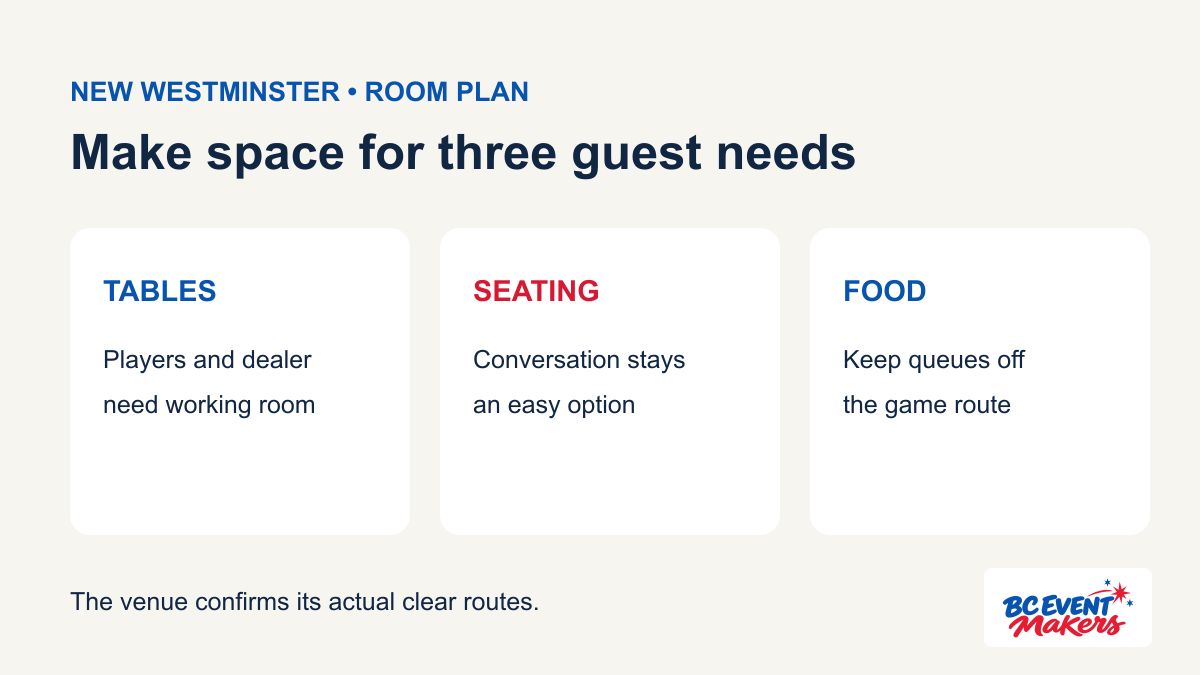
Check the room from a newcomer’s viewpoint
Walk the proposed path from the entrance to the chip handout and then to the tables. Identify where a guest can stand to watch without blocking play, and where someone can sit and talk without being pressed into participating. Keep food service and the main circulation route separate from the table queue if the venue layout allows it.
Ask the venue and casino team to confirm the practical layout before finalising signs or invitations. If a table is moved or the game mix changes, update the welcome instructions at the same time.
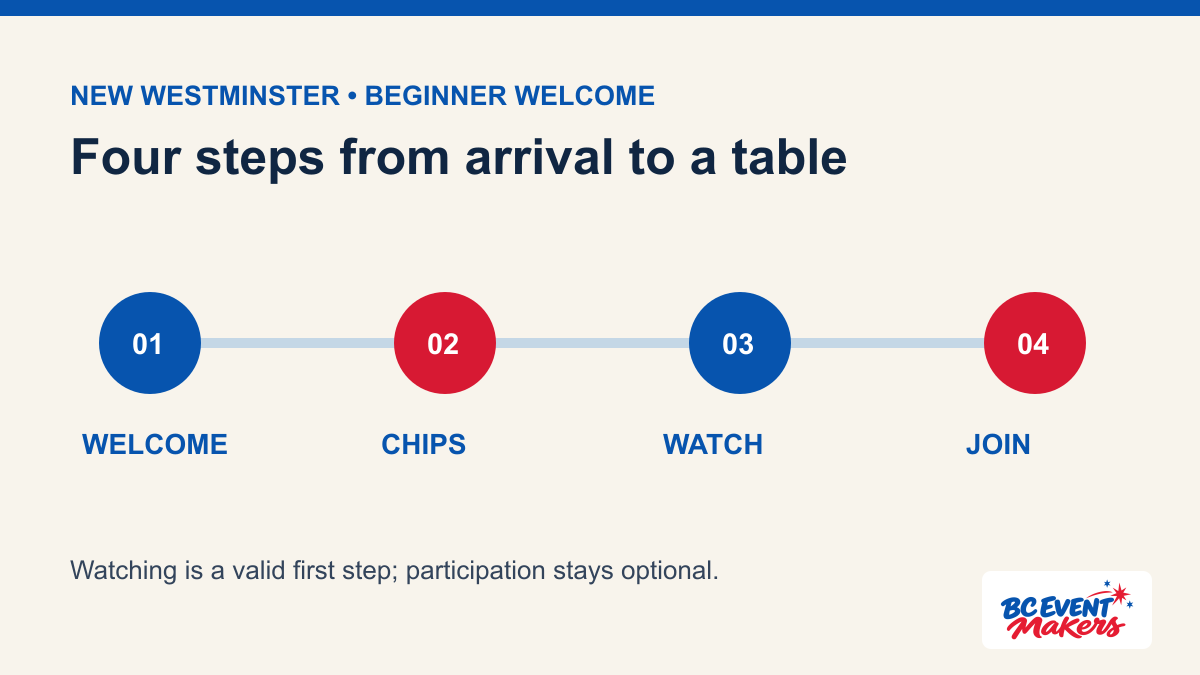
Four steps from arrival to a first table
- Welcome: Tell guests that the activity is recreational and does not involve real-money wagering.
- Chips: Show the confirmed handout point and explain how the event’s play materials are used.
- Watch: Leave enough space to observe a round without standing in the dealer’s working area.
- Join: Point to a table where a newcomer can ask a dealer for an explanation.
The exact chip and joining arrangements depend on the booked format. Ask the casino team to review the wording before you print a sign. A small step-by-step guide helps a late arrival as much as a first-time player at the initial welcome.
Separate the host message from the dealer explanation
The host should describe the whole evening: where games are, when tables open, how chips are received, whether watching is welcome and when play will finish. The dealer should explain a particular table as guests join. That division keeps the introduction brief while still giving new players a place to ask detailed questions.
Do not make the dealer responsible for dinner timing, music or a speech cue unless that wider role is explicitly agreed. The host and venue should own their parts of the running order. If the supplier’s quote names a particular introduction or staffing arrangement, use that exact scope when planning the welcome.
Give watching guests a real place to stand
A person may want to see one round before deciding whether to join. Mark a viewing area on the room plan, then check that it does not block another table, a food queue or a required circulation route. A clear route from the entrance to seating matters for guests who decide not to play at all.
If the activity sits beside a loud bar or speaker, ask whether instructions can be heard at the tables. The venue can help position music and seating; the casino team can identify where the dealer needs space to explain play. Keep any event sign short, high contrast and consistent with the approved game list.
Plan for two kinds of late arrival
Someone may arrive after the first announcement but before tables open; another may arrive while games are already underway. The welcome point should have the current chip instructions and table opening time in both cases. Ask the supplier whether the format permits a guest to join mid-event and how that would work. A tournament can have different entry rules from casual play, so the host must not improvise an answer.
Ask who will repeat the brief during the event. This could be a host, a sign or another agreed staff member. The dealer can explain a game, but a newcomer may first need to know where the correct table and chip handout are. Put that route in the run sheet and keep it unchanged unless the room plan moves.
Choose the format before writing the welcome
Ask whether the evening is casual play or a tournament. Casual play may suit a New Westminster reception where people arrive over time, watch a round and join when they are ready. A tournament has a shared start, fixed chip allocation and agreed competitive structure. The casino team should confirm which format is booked and how it is introduced. A generic sign saying “come and play anytime” could be wrong for a tournament.
Tell the casino team the guest count, estimated number of newcomers and the time available around dinner or speeches. Ask how dealers will help beginners at the proposed tables. Experienced players may know the terminology, but the host’s first message should use ordinary words. A newcomer needs to know the practical next step, not every rule before the game begins.
Build the room plan around optional participation
Show the entrance, chip handout, tables, food, seating and exits on one room plan. The path to the tables should be easy to find without forcing guests through a crowded queue. Leave a place to watch a round; people who do not wish to play should have a comfortable place to sit and talk. Check that a spectator does not need to stand in the dealer’s working area or in a venue circulation route.
Ask the venue to identify its required clear routes and any access constraints. Ask the casino team to confirm the equipment footprint and the space needed for a dealer and players. A layout can look spacious before guests arrive yet become awkward when food service and several observers gather. Walk the room plan from the viewpoint of a first-time player, a server and someone heading to seating.
The W3C event accessibility checklist linked above is a useful reminder to consider accessible routes, clear language and distracting background noise. Use it as a planning aid, while the venue confirms the actual building and event requirements. A clear welcome can be spoken and repeated in a short, readable sign.
Coordinate the table opening with the wider party
Write a simple running order for arrival, food, speeches, table opening, any pause and final round. If games open during a reception, identify who gives the first welcome and who repeats it for late arrivals. If play begins after dinner, the venue and casino team need a confirmed handoff for furniture and setup. Do not announce tables as open merely because dinner has ended; wait until the area is ready for guests.
When a speech interrupts play, agree whether tables pause or continue. The host should give an announcement that matches the actual arrangement. Ask how the quoted staffed period handles the pause and whether the final round still fits the venue’s closing time. A newcomer should not find a table unexpectedly stopped with no explanation.
Give the host a practical script
The host can briefly say: “The casino area is recreational, with no real-money wagering. Please collect your play chips at the welcome point, watch a round if you like and ask a dealer when you are ready to try a table.” That wording is a sample, not an approved event rule. The casino team should adjust it to the confirmed chip handout and format before the host uses it.
For a tournament, the message needs the shared start and any late-entry instructions instead. Do not use the casual sample above without changes. If prizes are proposed, the organiser should provide and confirm them separately; the invitation should not imply a prize supplied by the casino package. A separate raffle or fundraiser requires its own check before promotion.
Make the final round easy to understand
Name the person who gives advance notice and the person who cues the last round. Tell guests where to go afterward, whether the next item is a speech, dessert or an award presentation. Confirm the closing sequence with the dealer team so a table is not stopped in the middle of a guest’s first experience. If the programme is running late, the host should ask whether the playing window can change before announcing a new finish.
A late arrival or newcomer may have only just joined; the same clear closing message should reach them. Keep the sign and host announcement consistent. If the table mix or operating period changes, update the room plan and guest instructions together.
Two short event examples
A staff reception with arrivals over an hour
Ask the casino team whether casual tables can open while guests continue to arrive. The host can point each newcomer toward the chip handout and a place to watch. The room plan should keep the food queue separate from the games so new arrivals do not have to cross a table to find colleagues. Give the venue a clear opening and closing time, even if guest movement is flexible.
Put a short version of the welcome near the entrance. If someone arrives after the first announcement, the sign should still explain the recreational format and how to ask for help. Ask the dealer team to confirm the wording and whether there are any table-specific joining limits.
A company dinner followed by games
If dining furniture shares the room with tables, ask who moves it and when the casino crew can finish setup. Protect a few minutes for guests to leave the meal, hear a fresh welcome and find the games. A newcomer who has just joined the party should get the same clear start as a guest who attended dinner. The host should not promise an immediate changeover until the venue and supplier confirm one.
If speeches follow dinner, place them in the running order before or after the table opening. A speech held while games are active may need a pause and restart cue. Confirm that with the casino team and include it in the staffed playing window.
Questions to review with the quote
Which specific games and number of tables are included? How many dealers are proposed, and what does their operating period cover? Where are play chips handed out, and what instructions apply to late guests? Does the supplier handle setup and takedown at the access times the venue allows? Who will announce the final round? These questions turn a general casino proposal into an event plan a host can use.
Read the answers with the venue’s room plan. If a table moves, update the guest route and signs. If a game changes, revise the invitation. If the quoted time changes, inform the host and the venue contact. Keep the written proposal, current room plan and guest briefing in one place rather than relying on an old email thread.
The day-before check
Confirm the event date, address, loading instructions and on-site contacts. Ask the casino team and venue to acknowledge the same current running order. Walk the planned route from the entrance to chips, watching space, tables and seating. Make sure a newcomer can choose to watch or talk without pressure. The fun casino in New Westminster should be described by the equipment and people actually booked, with no unconfirmed prize or game promise.
If the first welcome is missed
A guest might arrive while the host is giving a speech or while the casino team is helping another group. Put the current chip handout and table instructions where the newcomer can see them without interrupting the programme. Name one host or agreed staff member who can point the guest toward a table and explain that watching is fine. The dealer can then give the game explanation when the guest is ready. Keep the message short and consistent with the quote; a different sign for each table can make the arrival feel more confusing.
Ask the venue whether the welcome point can remain staffed or clearly marked throughout the playing window. A practical late-arrival plan helps a newcomer participate without making the dealer stop the whole table for a second event-wide briefing.