
When comparing food rentals in Abbotsford, start with the handover. A school fair snack station can keep serving through a volunteer change if the next helper knows what was agreed. Assign someone to the equipment, someone to watch the line and someone who can answer questions about the food actually being served.
BC Event Makers lists food equipment including a Popcorn Machine and Cotton Candy Machine. Ask about availability and the full rental scope for your event. Supplies and operation need to be confirmed separately from the equipment selection.
1. School fair snack station: name the person responsible for the station
Choose a coordinator who understands the agreed operating instructions and knows how to contact the supplier. That person can organise volunteer shifts and make sure each replacement receives a proper handover. Avoid leaving an arriving volunteer to learn the machine from a guest in the queue.
Ask what instruction the selected equipment requires and who may operate it. Record that information with the fair’s staffing plan. General event volunteers should not assume that experience with a household appliance prepares them to use concession equipment.
2. Order supplies against the serving plan
Decide whether snacks will be sold separately or included in event admission. That choice affects how the organiser estimates demand and explains service to guests. Share the attendance estimate and serving window when asking about supplies.
The catalogue lists popcorn supplies and cotton candy supplies separately. Check what the quote provides and what the school must arrange, including serving materials. Keep reserve stock in an agreed location that the station coordinator can access without leaving the activity unmanaged.

3. Fit the station into the fair timetable
Look for moments when a performance, assembly or organised game will release a group of guests at once. Decide whether the station should be ready before that moment or open during a broader period. Ask about preparation timing rather than assuming food is available as soon as the machine is placed.
Display service hours and the payment or collection process clearly. A visible menu reduces repeated questions at the counter. If the station needs a pause, give guests accurate information about when service will resume.
4. Check the working area
Confirm suitable power and preparation facilities with the school. Plan space for the operator and the queue, and keep replenishment routes clear. Check food handling requirements and ingredient information with the appropriate sources before the fair.
See the equipment catalogue, then request an Abbotsford quote. Include the school, serving times and proposed volunteer arrangement. Ask for the supplies, instruction and collection responsibilities to be stated clearly.

Write for the volunteer who missed the planning meeting
Imagine a volunteer arriving at the snack counter just as a class group leaves a school performance. The outgoing helper needs to leave, the queue is growing and the new helper has not seen the supplies. A written handover allows someone to stay with the guests while another person confirms what is ready.
Keep the handover short enough to use in that moment. Record the remaining stock, the agreed closing time, the next break and any ingredient question that needs a confirmed answer. Equipment-specific operating instructions still come from the supplier; the school’s note should identify where to find them and who received them.
Give the incoming helper a short note they can use while the queue is moving. Which item is currently being served? What has been restocked? Who can answer questions about the food? Where do used boxes and waste go? Put the event lead and supplier contact on the same sheet.
Keep operating instructions and event notes distinct. The supplier describes how its equipment is to be operated; the school records who is on duty, when the next group is released and what happens if the line needs to pause. The next volunteer should know when to stop and ask instead of guessing.
Questions to settle before the event
What should the first shift know about food rentals in Abbotsford?
Confirm who received equipment instructions, where supplies are stored and when service starts. Keep the venue and supplier contacts available; do not leave the only copy with someone who is already working another activity.
Who answers an ingredient question?
Use the information for the actual products being served. If the answer is not available, refer the question to the responsible provider or event lead. A volunteer should not improvise a dietary promise.
What happens at the end of the fair?
Agree in advance who announces the last service, handles the remaining stock and meets the supplier for collection. Give the school contact the time and route the equipment needs to leave.
Where can the organizer check public food-service requirements?
Describe the proposed menu, service format and event to Fraser Health. Ask which requirements apply and who will coordinate any necessary arrangements. A rental confirmation covers the agreed equipment and services; it does not settle the venue or organizer’s responsibilities.
A message to send with the venue details
We are setting up a school fair snack station in Abbotsford on [date]. Our busiest release is [time], with a volunteer change at [time]. Please confirm machine options, supplies, operator handover and when the equipment can be collected after the fair.
Hand the school fair snack station note to the next shift while the previous helper is still there. Ask the incoming person to identify the supply location and the person responsible for unresolved questions.
At a school fair snack station, the person at the end of the line may be the first to notice that a class is arriving together. Give that volunteer a way to tell the operator and event lead without leaving the queue unattended. Agree how to communicate a pause or a menu change in plain language so families hear the same answer at the front and the back.
Build the fair timetable before you assign shifts
A school fair snack station works best when it is placed into the school’s actual run of show. List the opening, class performances, game breaks, meal window and venue close. Mark the moments when groups are likely to arrive together, then ask the supplier how the selected food rentals fit the hours and access plan. The purpose of the schedule is to help volunteers cover the work; it does not predict how quickly equipment will serve a particular crowd.
Name one event lead who can make schedule updates and communicate them to the supplier, school contact and volunteer coordinator. If the day shifts, that person can decide whether the service window still fits the booking, inform the team and update the guest-facing sign. Give the school office or fair chair the lead’s name so they are not trying to find the right person through the queue.
Separate guest, station and organizer jobs
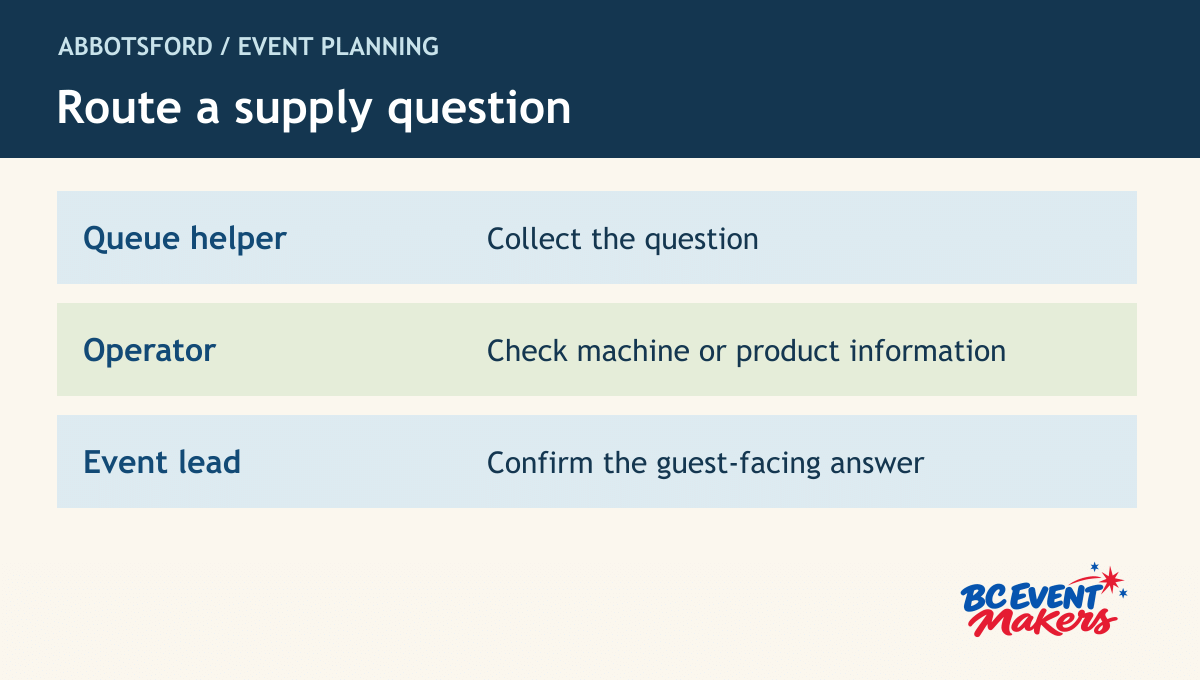
The person operating the booked machine should receive its actual instructions and know whom to contact. A queue helper can welcome guests, explain the confirmed menu and point to the payment or ticket process set by the school. A supply runner can replenish from the agreed storage spot. The event lead coordinates the venue, supplier and schedule. Small fairs may combine roles at quiet times, but assign a clear backup before volunteers sign up.
Keep the task boundary visible. A helper who sells tickets or answers questions does not automatically become the machine operator. A substitute should contact the event lead and follow the supplier’s instructions before taking that role. This is especially useful when the volunteer roster is drawn from different classes and families.
Estimate supplies from the plan, not a guessed serving rate
For food rentals, begin with what the school knows: expected attendance, how the fair will distribute or sell snacks, the length of the service window and whether there are competing food options. Share those details when you ask about popcorn supplies, cotton candy supplies or another menu choice. Ask which consumables are included, which are separate and how any remaining product or stock should be handled after the event. Use the actual quote and product information rather than assuming a machine booking includes every ingredient, cone, bag or serving item.
Make a simple stock record for the volunteer lead. It can list the confirmed quantity, where supplies are stored, who can access them and what the organizer should do if stock runs low. Avoid recording a generic serving count unless the supplier has provided one for the selected package. The record is there to communicate what was booked and observed, not to make the machine perform at an assumed rate.
Choose a menu with the fair’s setup in mind
When choosing between a popcorn machine and cotton candy for a school fair snack station, compare the practical details of the actual booking: what the children will be offered, which supplies are confirmed, where the equipment will sit, the serving and cleanup plan, and what ingredient information the school can share. Ask the supplier what preparation and instructions apply to each option. The catalogue names equipment; the quote confirms the items and supplies included in your event.
If the fair offers more than one snack, show how guests will find each line and how volunteers will tell them apart. Use menu signs that match the products actually being served. Keep a question about ingredients with the responsible event lead until it has a verified answer. Volunteers should not infer that similar product names mean identical ingredients or suitability for a particular dietary need.
Place the station so the fair can keep moving
Walk the school venue with the facility contact before the fair. Check the delivery route, door widths, approved stopping location, power access and the room needed for the selected equipment. Ask where the line may wait and where guests can leave after collecting a snack. Keep that route separate from doors, accessible paths, student traffic and other activities as directed by the school. The lead should send the supplier any access restriction before the delivery plan is finalized.
Use a visible queue start and collection point. If a class is released as one group, decide whether a volunteer will direct the line or briefly hold new guests until the counter is ready. Avoid letting family groups gather around the operator’s work area. The layout should let the person in charge reach supplies and answer a question without crossing through guests or leaving the station without coverage.
Decide where supplies and waste go
Ask the school which storage area is available and who may enter it during the fair. Put the named restock person on the volunteer card. Place waste collection where guests can find it without blocking the station or school route. Check whether the venue expects boxes, packaging or leftover supplies to leave with the organizer. These are school-specific arrangements to confirm before the day, not assumptions that come with food rentals in Abbotsford.
Plan a proper handover between school volunteers
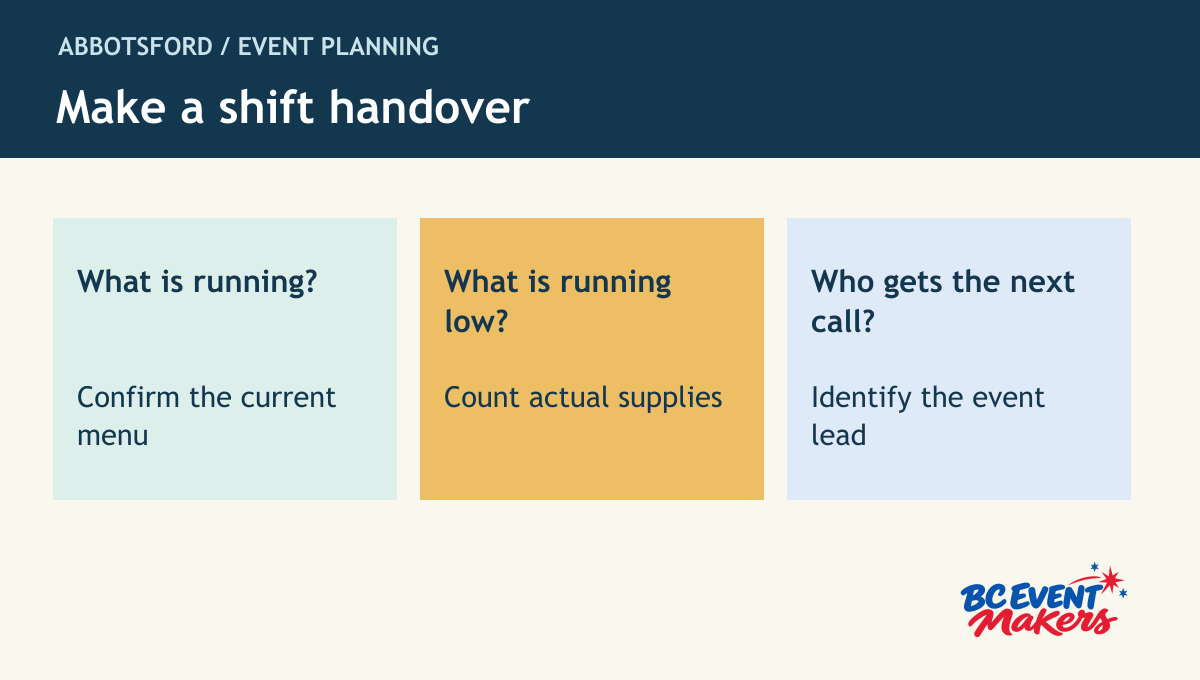
A handover should happen while both people are present. The outgoing helper can explain the confirmed menu, current stock note, guest message, next break and location of supplier instructions. The incoming person should know the event lead and where an unresolved question goes. Keep the instructions for the actual machine separate from this quick shift note, and do not replace supplier guidance with a volunteer’s memory.
When one helper leaves early, the queue helper can continue to greet guests while the incoming operator reviews their assigned role with the event lead. If the next person has not received the required instructions, ask the lead to contact the supplier and decide how the service should proceed. Do not leave an inexperienced substitute to infer what to do while a line is forming.
Copy this shift card into the school’s event folder
- School, date and confirmed service window: [details]
- Venue access, delivery route and approved station location: [details]
- Equipment and supplies listed in the quote: [confirmed items]
- Person who has received the machine instructions: [name]
- Event lead and supplier contact: [names and confirmed contact details]
- Queue helper, restock volunteer and next shift: [names and times]
- Location of product and ingredient information: [location]
- Questions waiting for an answer and who will follow up: [list]
- Closing and collection plan agreed with the school and supplier: [details]
At each changeover, the outgoing person can update the stock note and list any guest question that needs a follow-up. The incoming helper can read back the service hours and name the person to contact. This small exchange lets the school’s snack station handle a change of volunteers without losing track of what is confirmed.
Prepare a guest message for common changes
Agree on the words volunteers will use if a menu item is not available, the line must pause or the service window changes. The event lead should approve the information first and update the sign. If an answer about a product or restart time is not confirmed, helpers can tell guests who is checking and where to get the next update. This is clearer than different volunteers promising different things.
For example, imagine an assembly ends later than scheduled and a group reaches the food rentals station just as a volunteer needs to leave. The queue helper can greet families and direct unresolved timing questions to the event lead. The lead checks the school’s updated run of show, confirms what the booking allows with the supplier and tells the team whether the service hours need to change. The helper does not promise a new start time without that confirmation.
Brief the volunteers on ingredient questions
Keep the product information supplied for the actual items at the station. Choose one person who can check an ingredient question and give a consistent answer. If the school cannot verify a claim, say that it is being checked and direct the guest to the designated lead rather than guessing. For the proposed menu and service format, review current food-service requirements with Fraser Health and ask what applies to the event. The organizer should coordinate any necessary arrangements with the relevant authority and school. A rental confirmation does not decide those responsibilities.
Close the station with the same care used to open it
Before the last shift begins, tell volunteers the confirmed end time, who speaks to guests about closing, where remaining supplies will go and who will meet the supplier. Ask the school which room, waste and access procedures apply at closing. The event lead should check collection and cleaning expectations against the actual booking and hand them to the person who will stay until the equipment has been returned or collected as agreed.
Leave a short note for the fair organizer: service hours completed, supplies that remain, questions still open and any venue or supplier follow-up. Keep observations separate from assumptions. The note gives the school a usable record for next time and helps the next planning conversation begin with the details that were actually confirmed.