
A mobile zip line in Mission changes the experience of the people standing on the ground as well as those taking a turn. Plan where guests decide to join, where companions meet again and what else stays open. Use the venue and supplier review to turn those choices into a workable site plan.
BC Event Makers lists Zipline among its Adventure Attractions. Ask about availability and suitability for your proposed location. The equipment’s operating requirements should guide the layout before you choose where other activities will go.
1. Describe the mobile zip line in Mission before guests arrive
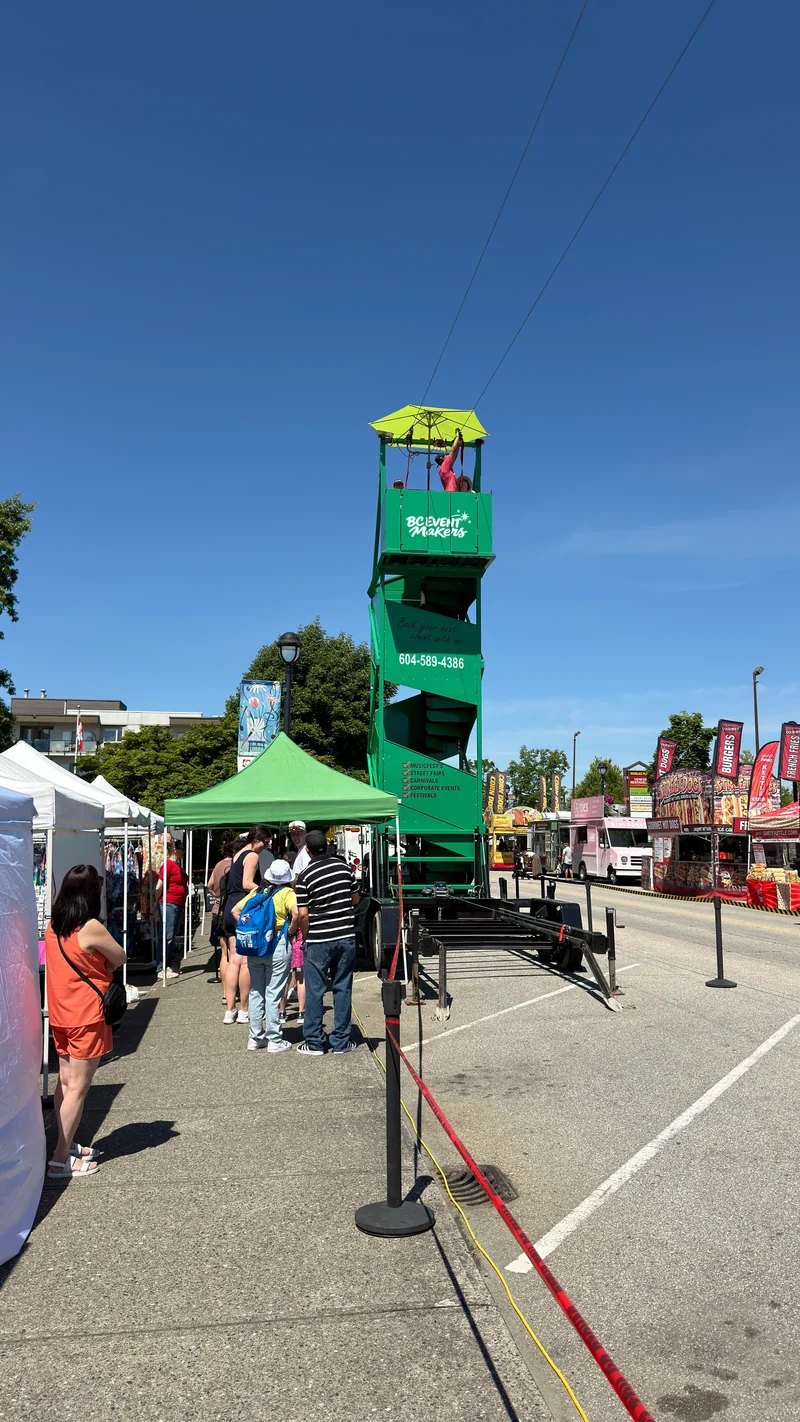
Request the confirmed participant requirements and briefing information for the selected equipment. Include the relevant details in advance event information. Avoid describing it as suitable for every age or ability without the actual instructions.
Make participation a choice. A colleague, student or family member may prefer to watch, and the programme should accommodate that without drawing attention to their reason. Explain other activities at the same time as the zipline so guests can plan their own visit.
2. Map the waiting area and meeting point
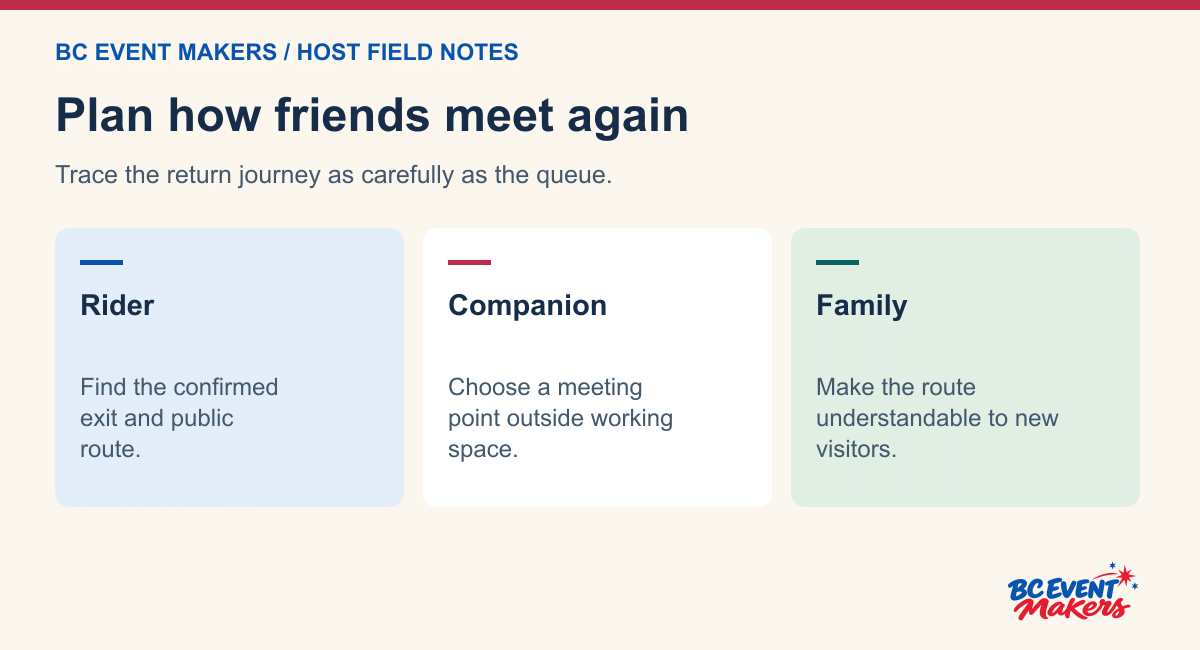
Show the queue and participant exit route on the site plan. Ask the supplier to review those routes against the required operating area. People waiting should understand where the line begins without relying on another guest to point it out.
Choose a meeting place outside the operating space for groups to gather after a turn. Keep it separate from the exit and from the route used by staff. Spectators also need a suitable position that does not encourage them to cross those paths.
3. Give guests who stay on the ground a real choice
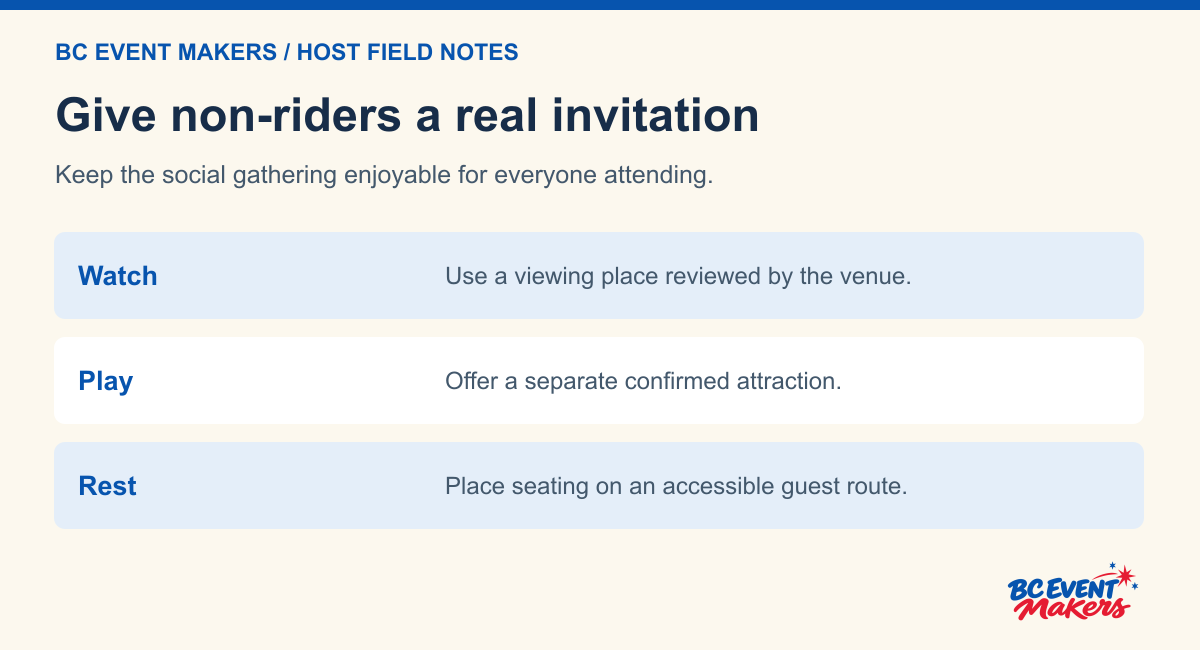
A nearby game can provide an alternative, with its own clear activity area. Choose it around the guest group and the space available. Do not treat a spare corner of the zipline layout as permission to install another attraction.
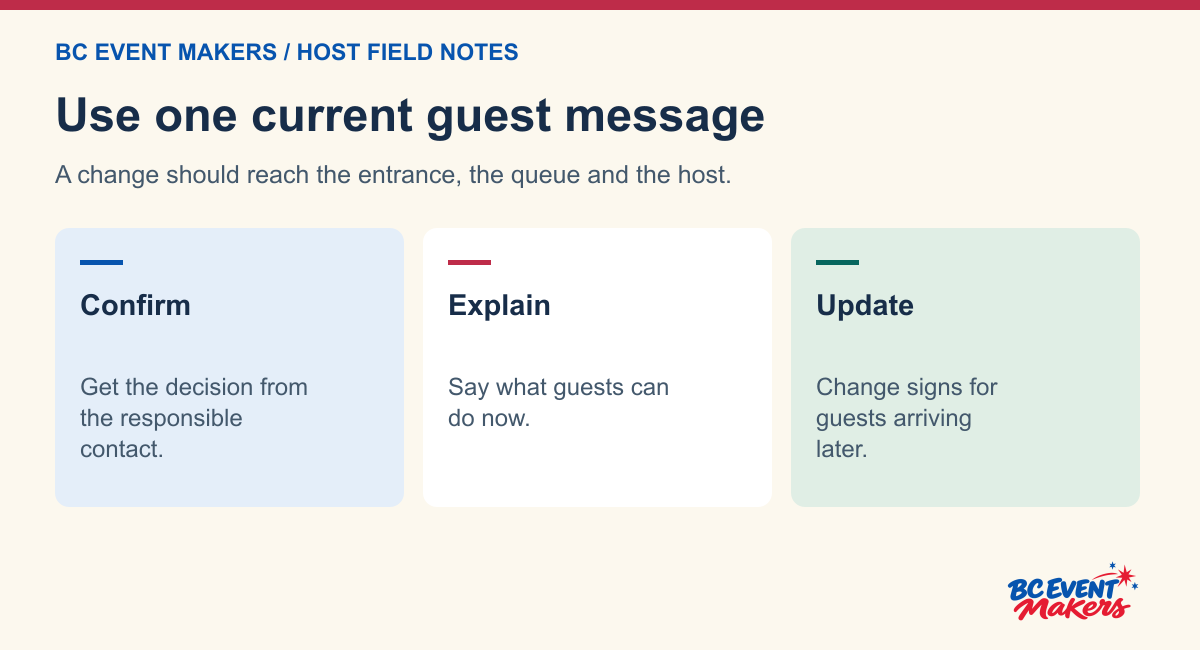
Consider how announcements will reach visitors away from the ride. The event organiser should be able to explain any pause and direct people toward another activity. Accurate information reduces confusion when guests return for a turn later.
4. Confirm the site handoff before opening
Send photographs of the proposed location and the delivery approach. Confirm setup and collection access with the property owner, including any gates or vehicle restrictions. Ask how weather or a site issue would affect operation and who will make the announcements.
Explore Adventure Attractions, then send a Mission event enquiry. Include the participant group, operating schedule and site images. Ask for the equipment, staffing and guest-information responsibilities to be clear before the event is promoted.
Walk the visit from the public entrance to the meeting point
Give someone who has never seen the venue a simple drawing of the event. Ask them to find the mobile zip line, decide where they would ask about participating, locate the end of the waiting area and choose a meeting point for a friend. A pause in that exercise tells you more than a brightly coloured arrow on the map. It shows where the next guest will need a little help.
Start the drawing at the public entrance. Label the information point, other confirmed activities and the route to food and washrooms. Only then add the proposed waiting area and the place where friends can regroup after a turn. Ask the venue contact and supplier to review the relationship between the guest route and the equipment’s working space.
For a City of Mission property, the City’s facility and booking information can help identify the appropriate contact. A school or private site has its own administrator. Explain the actual equipment and site use when asking about permission. The supplier separately assesses the mobile zip line and the arrangements for the selected site.
Design the point where a guest decides
Guests need useful information before they reach the front of a queue. Use the attraction name, confirmed public window and where to direct equipment-specific questions. Some guests will want a turn immediately. Others will want to watch a friend first or spend the afternoon at another activity. The sign should leave room for all of those choices.
Ask the operator or responsible supplier contact which participation information belongs on the sign and which needs an individual conversation. A general event volunteer can welcome a guest and point them to the agreed contact. They should not be asked to assess someone’s suitability, interpret technical requirements or guarantee a particular turn time.
Now read the sign from the direction a guest actually approaches. Can they find the waiting area before walking into a group of spectators? Is the route to an alternative activity clear? If the information is only visible once someone joins the line, move the relevant public wording to an earlier point on the guest route with the venue’s agreement.
Three people, one mobile zip line, three different visits
The person who wants to ride
A guest arrives at the Mission fair ready to try the mobile zip line. They want to know where the line starts, how to ask a question and where they will meet the rest of the group afterwards. They may also have a lunch time or school pickup to consider. Give them the confirmed programme information without promising a wait the host cannot know.
Try a staff cue such as “The waiting area starts beside [landmark]. The activity contact can answer questions about taking part. The meeting point after a turn is [confirmed location]. If you need to leave for lunch, the programme board shows the other open activities.” Fill in the true site details after the review.
If the guest is uncertain about taking a turn, give them time to observe from the agreed viewing place. Participation can remain optional even after someone has joined the waiting area. A volunteer should know how to help a guest return to the public path without directing them through a space reserved for operation.
The friend who wants to watch
A companion may want a clear sightline, somewhere comfortable to wait and an obvious place to meet afterwards. Draw their journey separately from the rider’s journey. Do they have to enter the queue to stay involved? Can they reach the meeting point without crossing the operating area? Can they leave for a snack and return without making their way through waiting participants?
Choose the viewing place with the venue and supplier, especially if a stage or another attraction already uses nearby space. The closest point to the activity is not always the best place for spectators. A location with an understandable public route and room for friends to gather can make the visit easier for everybody.
Use a meeting point that can be identified without detailed directions. “Meet at the information tent” or “meet beside the named picnic area” works only if the map and staff use the same landmark. A vague instruction to meet “near the ride” can send one person to the waiting area and another to the opposite side of the event.
The guest who stays on the ground
Someone attending for the picnic, conversation or a different game should be able to move around the mobile zip line without feeling like an obstacle to the queue. Walk their path from the entrance to seating and from seating to the washrooms. Mark any place where riders, watchers and other guests all have to squeeze through the same opening.
Offer a genuine part of the gathering that works without taking a turn. It could be a confirmed game, a social seating area or a shared welcome. Give that option space in the invitation and programme. “Join us for the picnic and open activities; you can ride, watch or catch up with friends” is useful when each of those choices has a real place on the site plan.
Build an arrival plan for groups
An all-day guest total can hide the busiest moment. A class may arrive together after an assembly. A staff picnic may release several teams for lunch at the same time. A community event may receive visitors in smaller groups throughout the afternoon. Tell the supplier which pattern you expect so it can discuss the appropriate guest arrangement for the actual equipment.
| Arrival pattern | What the host organises | What the supplier or venue confirms |
|---|---|---|
| A class arrives together | A meeting point for the teacher and a cue for the next group. | Where the group can wait and how the agreed operating arrangement works. |
| Families drop in | Clear directions from entrance to waiting area and other activities. | The proposed space for waiting, watching and passing. |
| Guests arrive after a shared meal | A way to release people without moving the lunch queue into the activity. | Current activity status and any change to the guest route. |
Before opening, ask a teacher or group lead to repeat the plan in their own words. Where should they bring the group? Who tells them when to come forward? Where do children or colleagues who prefer to watch stay with their group? A clear answer does not require the group lead to make any decision about how the mobile zip line operates.
Example. The meeting point disappears behind a food queue
The information tent was easy to see in the morning. By lunchtime a food queue has formed across its entrance, and friends finishing a turn cannot easily reach the original meeting point. The attraction itself has not changed, but the visitor’s route has.
Speak with the site contact and the activity contact about an alternative public meeting place. Once a new location has been agreed, tell the entrance team, waiting-area volunteer and host together. Replace the old map cue where feasible and give groups already waiting the new direction. An announcement at the stage alone may never reach a spectator standing near the activity.
Walk the trip again from the point where a person actually leaves the ride area. Can they find the new landmark before reaching the busiest part of the food line? If the new meeting point solves one crossing but moves the crowd into another public path, bring that finding back to the venue team.
Example. A group arrives while the activity is paused
Give the arriving group the status confirmed by the responsible contact, an agreed place to wait if appropriate and a clearly available alternative. Avoid telling the teacher or host that the mobile zip line will reopen at a particular time while a decision is outstanding. “We’ll update you at [time]” is a commitment the event lead can manage; it should never be used as a disguised promise that operation will restart then.
The person responsible for the group may choose to visit another activity. Tell them how they will hear the next confirmed update and where the group should meet if the programme changes. Keep the waiting area clear for the arrangement approved by the venue and supplier. The event team’s job is to help people navigate the programme, not to solve equipment questions through improvisation.
Example. The venue offers another location after the quote
A venue contact may suggest an area with a better view or more room for a crowd. Share the new address or exact on-site position, delivery route, surface information, access hours and proposed guest route with the supplier. Ask which parts of the existing review still apply and which require a new decision.
A different site can change the meeting point, waiting area and collection route even when the same mobile zip line is proposed. Date the new drawing and mark the previous version as superseded in the staff file. Update the invitation and public map only when the relevant decisions have been confirmed.
Give volunteers a short, usable handoff
Put the venue contact, supplier contact and event lead at the top of the private sheet. Add the roles for welcoming groups, managing the public waiting area and updating the sign. Make sure one person is not expected to meet a delivery vehicle at the same moment as greeting the first class.
At shift change, introduce the next volunteer to the person who can confirm operating status. Point to the end of the queue, the agreed viewing place and the meeting point. Show them the message to use for a pause or closure. If an incoming volunteer can repeat those directions without referring to a long procedure, the brief is ready for a busy afternoon.
Record the last-entry cue as well. Who tells the host when the public queue should close? What can people arriving afterwards still do? Who keeps collection access available for the supplier and venue contact? Work backwards from the site handback rather than asking the guest timetable alone to determine when another participant can join.
A site enquiry for the Mission guest plan
We’re considering a mobile zip line in Mission for [date and venue]. Guests will arrive [pattern], and our proposed public hours are [times]. Site access is available [window]. We’ve attached a route from unloading to setup, the waiting area, the viewing place and the proposed meeting point. Can you confirm service, site-review requirements and the guest information the host should share before the event?
Include the venue decisions already received and the questions still being checked. If the committee wants a particular view or guest experience, explain why. A supplier can give a more relevant response when it knows whether the aim is a shared attraction for a class, an optional activity for a company gathering or a meeting point for families visiting a larger fair.
Test the public message once
Ask a colleague unfamiliar with the plan to read the invitation and explain how they would attend without riding. Then ask them where a participant and a spectator will meet afterwards. If those answers are hard to find, change the guest wording or map before printing. Keep the programme accurate, specific and easy for a first-time visitor to use.
Ask them one final question about the end of the event. If they arrive after the mobile zip line queue has closed, where will they learn what is still available? A closing sign at the operator’s position may be invisible from the public entrance. Put a second update where a new visitor chooses their route, using the same confirmed wording as the host.
Keep a copy of the map actually used and note the one direction guests asked for most frequently. For example, a repeated question about where to meet after a turn may point to the name or visibility of the meeting point. Bring that observation to the next site review rather than copying last year’s layout wholesale. The next venue, participant group and access window still need their own decisions.
Review the BC Event Makers Zipline listing and send the event brief for confirmation of the date, equipment and address.