
A mechanical bull can draw as many spectators as riders at a Coquitlam event. Give each group a comfortable place in the plan. Start with an opt-in invitation and a room walk before committing the entrance, seating or catering route to an activity.
BC Event Makers lists a Mechanical Bull in its catalogue. Ask about the equipment’s availability and requirements for the participant group and venue. Confirm the operating plan before turning the activity into a competition or publishing entry information.
1. Decide how guests join the mechanical bull activity
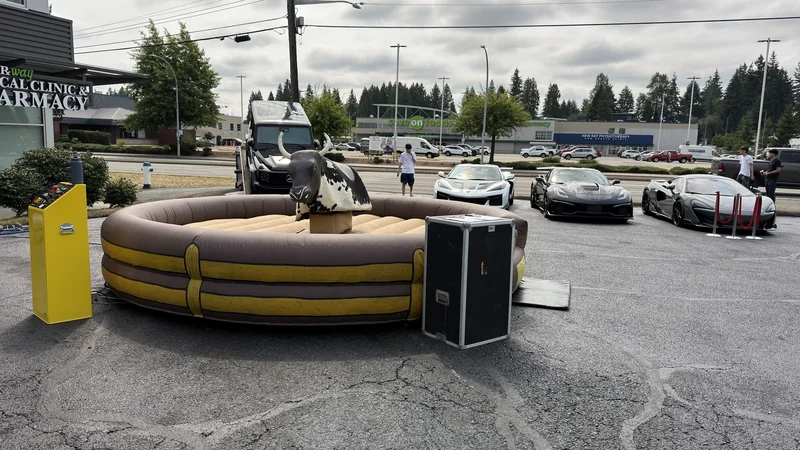
A casual riding activity and an announced contest need different organisation. If you want a competition, discuss whether the proposed format fits the equipment’s permitted use. Agree how turns will be managed without inventing performance targets or participation limits.
Give guests a clear choice about riding. Publish the supplier’s confirmed requirements and avoid pressuring anyone to take part. People who watch or join another activity should still feel included in the event.
2. Draw the spectator area as carefully as the queue
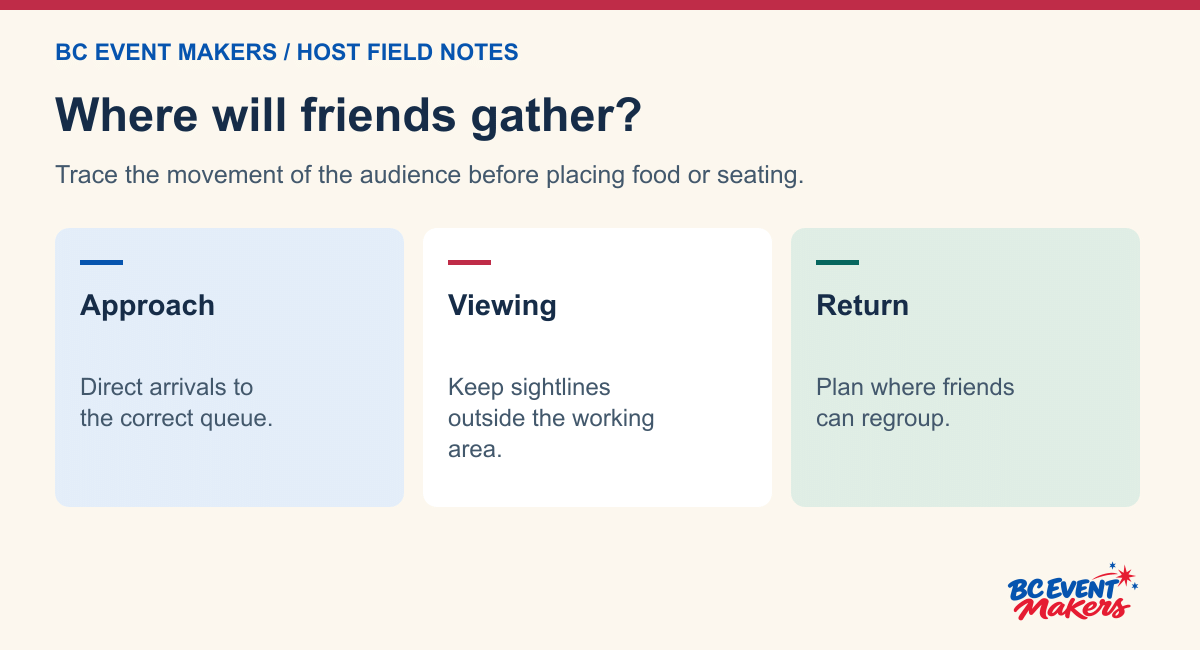
Mark a spectator position outside the required operating area. Ask the supplier to review the full layout, including the queue and the route riders use afterwards. Keep refreshments and the event’s main circulation path away from places where people will stop to watch.
If an announcer will introduce riders, consider where that person will stand and how sound reaches the audience. Their enthusiasm should support the activity without replacing the operator’s instructions. Agree who has authority to pause an announcement when operating information needs to be heard.
3. Compare indoor and outdoor site requirements
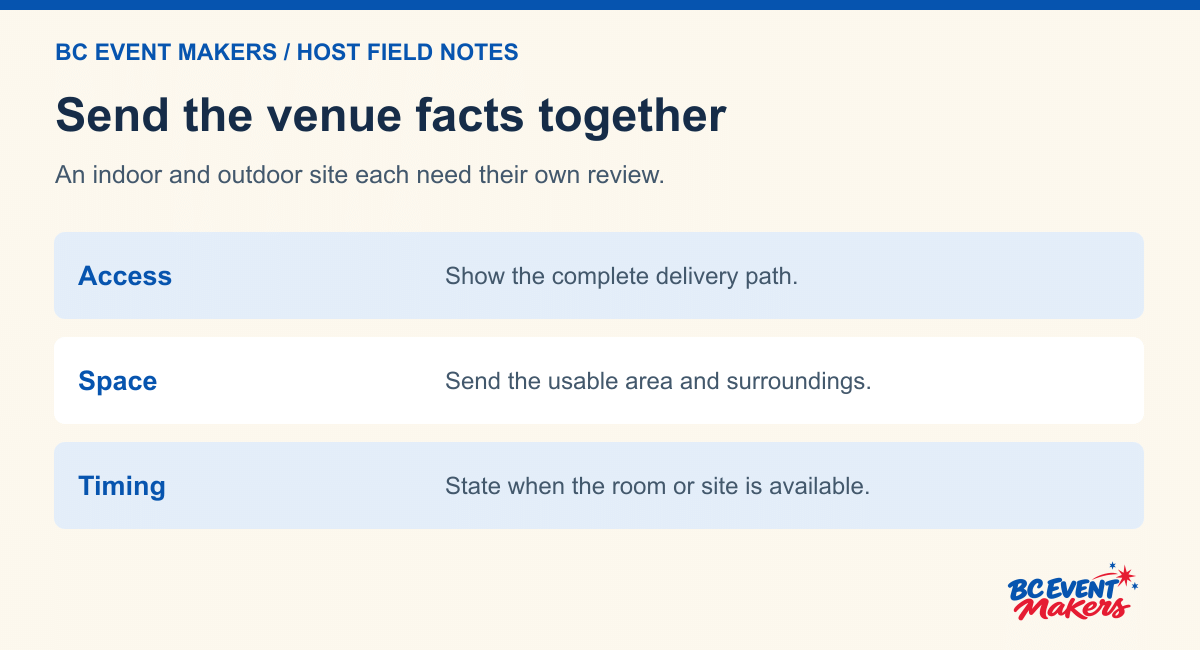
For an indoor venue, provide the room details and the complete delivery route. Describe doorway and ceiling restrictions, and mention any stairs on the delivery route. A space that appears large enough in a photograph still needs to be assessed for the actual equipment and its setup.
For an outdoor site, share surface photographs and ask about weather arrangements. Confirm power and the applicable operating-space requirements. Do not assume that a covered area permits use in every condition or that a backyard is suitable without review.
4. Give the host an activity window and a closing cue
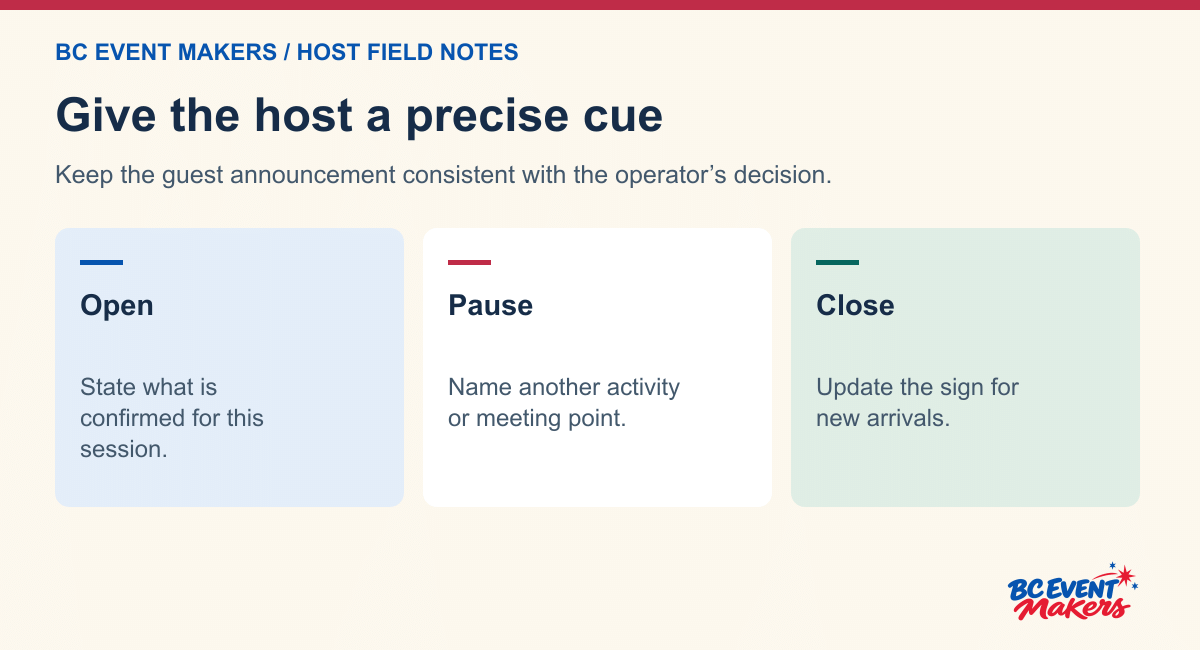
Confirm the opening period and how the last turns will be handled. Leave space in the schedule for speeches or meals without making riders wait through unexplained interruptions. Name an event contact who can coordinate changes with the supplier.
See the rental catalogue and request a Coquitlam quote. Describe your intended activity format and participant group, and include the venue details. Ask for the operating and staffing scope so your guest information matches the arrangement being supplied.
Write the invitation as if nobody has to ride
Start with a sentence that an employee or family member can accept without agreeing to take a turn. “Join us for the afternoon gathering. The mechanical bull will be one optional activity once the supplier and venue confirm the booking.” Update the invitation after the decisions are made. If you want a guest to feel comfortable watching, the rest of the programme has to give them a good place to do it.
Compare two invitations at the committee table. One says every department will nominate a rider. The other invites colleagues to try the activity, watch with a friend or spend the time catching up. Which one fits the purpose of your event? A staff appreciation afternoon need not put a colleague on display to give the team something to share.
Ask the operator what information should reach potential participants and where they can ask private questions. The event host can share confirmed guest information and direct people to the responsible contact. Keep equipment decisions, participation requirements and operation with the appropriate supplier staff under the booking.
Give spectators an actual destination
Draw the spectator area before deciding where the tables will go. Friends may want to see someone take a turn and then meet immediately afterwards. Place their viewing and meeting points where the venue and supplier can review them. A spectator area that spills into the queue, catering route or operating space will be hard to manage when the room fills.
Ask a colleague to walk from the entrance to the spectator area and then to lunch. Can they make the trip without squeezing behind people standing in the ride queue? Now walk as a participant looking for a friend after a turn. If both journeys use a narrow doorway in opposite directions, review the arrangement while the map is still easy to change.
Give the meeting point a name visitors can recognise. “Meet by the information table” is better than “near the bull” when the actual room has more than one approach. Use that name on the map and in the welcome script. If you move it after the venue walk, replace older instructions before guests arrive.
Example. The audience grows just before the welcome speech
Imagine that several colleagues gather to watch at the moment the speaker needs the room’s attention. The obstacle is the timing, not necessarily the popularity of the mechanical bull. The host should ask the supplier how the activity window can fit around the welcome and check when catering needs the same route.
If everyone needs to hear a short announcement, agree on a clear cue before the operator opens the activity or during a suitable planned break. Tell the room what will happen next. If open play and the welcome can coexist, give people who choose to listen a suitable place to stand or sit. Avoid promising that the operator can stop and restart at a particular moment until the supplier confirms the arrangement.
Put the cue on the host sheet and tell the person managing sound. A microphone announcement that reaches only the front of the room can leave the spectator area unaware of the next step. Ask the venue how it normally communicates with guests in that part of the space and use the agreed method.
Compare an indoor room with an outdoor site
A room may offer dependable shelter but have a restricted arrival route or limited usable height. An outdoor space may be open yet have competing traffic or a surface the supplier needs to review. Name the exact property and proposed area in each version of the enquiry. The team can then assess the actual site rather than trying to decide whether a generic “hall” or “field” is suitable.
For a public gathering, Coquitlam’s festival and special-event guidance is a starting point for the municipal process. A private property or independently managed hall has its own contact. Describe the actual mechanical bull activity, the guest hours and the access period when you ask the venue about approval.
| Site question | Indoor version | Outdoor version |
|---|---|---|
| How does equipment reach the site? | Identify the loading entrance, turns, lift or door restrictions and access window. | Identify the approved vehicle route, gates, surface and collection access. |
| What space is actually usable? | Show the room after seating, catering and any stage have been placed. | Show the proposed area after tents, other attractions and guest paths are included. |
| Where can spectators gather? | Review the viewing area and return route through the room. | Review the viewing place, public through-route and neighbouring activities. |
| What happens if the site changes? | Ask the venue and supplier to review any replacement room. | Confirm the applicable change process and who will update guests. |
Take photographs from the point where the supplier would arrive. A room photograph taken from the stage can show an impressive amount of floor space while leaving the doorway and turn outside it invisible. An outdoor photograph from the guest entrance can hide a separate vehicle gate required for collection. Label the direction and identify what remains to be confirmed.
Example. The hotel changes the room
Suppose the venue offers another ballroom with more floor area. The entrance is along a narrower corridor, the caterer uses a different serving door and the replacement room is available later in the afternoon. Each change matters to the mechanical bull proposal even if the guest count stays the same.
Send the supplier the new location, access window, route photographs and a revised guest layout. Ask which aspects of the original proposal still apply and which require a new review. Give the venue contact the exact unit name and expected activity. Put the new decision date beside the point when invitations or guest maps must be updated.
Until that review is complete, keep the activity marked as provisional on the internal plan. Guests can still receive confirmed details about the event itself. The host should not advertise the earlier activity window or direct arrivals to a former room after a change of address or entrance.
Example. A spectator wants to nominate a colleague
At a lively company event, someone may offer a colleague for the next turn. The queue host can keep the atmosphere friendly while giving the potential participant space to decide. “Anyone who wants to ask about taking part can speak with the operator here. You’re welcome to stay and watch as well” communicates the arrangement without putting the person on the spot.
Use the same principle when taking photographs. A guest’s willingness to ride does not automatically answer how they want their image used afterwards. Follow the organiser’s actual photography arrangements and ask before singling someone out in an announcement or public post. A spectator who prefers conversation should still have a comfortable place at the event.
If the gathering includes different ages or participant needs, do not infer eligibility from enthusiasm, appearance or another mechanical bull used at an earlier party. Ask the operator about the actual equipment and share its confirmed information in the appropriate place. Give a person who chooses another activity a clear direction rather than asking them to explain why.
Build a run sheet around a few reliable handoffs
Keep the activity window, shared remarks, food service and supplier access on the same page. The useful question is what has to happen before the host announces the next step. An equipment listing does not tell guests that a particular site is ready. The responsible supplier contact confirms the operating status for that booking.
Begin with the access handoff. Name the venue contact who can open the agreed entrance and the host contact who meets the team. Include the time the route will be available for removal. If a second supplier uses the same access, agree how the two bookings will be coordinated. A timetable prepared only for guest hours can hide a conflict at either end of the evening.
Next, identify the cue for welcoming the audience. Has the operator confirmed the activity is open? Does the spectator area have the agreed route in and out? Has the host been given the correct participation information and the name of the person who can answer questions? Once these are clear, the welcome can be short.
A sample host script for three moments
For opening, try “The mechanical bull is open during [confirmed window]. The queue starts at [location]. If you’d like to watch, use [approved spectator area]. The operator can answer questions about taking part.” Put the words on a card if the host is also introducing several other activities.
For an interruption, say “The activity is paused. We’ll give the next confirmed update at [time]. You can still join [available programme] at [location].” Use a follow-up time the event lead can meet and avoid promising a restart until the responsible person confirms it. Change the sign at the queue entrance so guests arriving later see the same information.
For the final entry, tell new arrivals whether they can still join and where the rest of the event continues. The guest route to the next activity should remain separate from the supplier’s collection access. Guests already in the spectator area may need different directions from people approaching the queue for the first time.
What goes in the quote request?
We’re considering a mechanical bull for [date] at [Coquitlam venue]. Our guests are [group and arrival pattern]. The site can be accessed from [time] to [time], and the public programme runs [hours]. Attached are the delivery route, proposed activity area and spectator area. Please confirm suitability for the site and participants, the staffing arrangement and anything we need to change before sharing the guest plan.
If the proposal is one of several options, say what the committee values most. A recognisable activity, room for an audience and a flexible drop-in format are different requirements. Ask the supplier how the proposed unit and arrangement will meet the actual brief. Keep final availability, pricing and participation information tied to the written proposal for the date.
Check the room after the programme is drawn
Invite a person who has not attended your committee meetings to use the guest map. Ask where they would go if they wanted to watch a friend, how they would reach the food table and where they would wait after the shared welcome. Mark the point where the map made them hesitate. A single changed label can be more valuable than adding another arrow to an already crowded plan.
Do the same with the event lead and the supplier’s collection contact. Can both identify the route that needs to be available at closing? Who can communicate a change to catering, the queue host and the welcome desk? Keep these private details on the staff copy. The guest copy should show the experience people came to enjoy.
Record one observation for the next organiser. “Spectators gathered near the main entrance because the meeting point was hard to find” is a concrete fact worth reviewing. It does not require guessing how many guests rode or how much attention a photograph attracted. Use the observation when the venue and supplier assess the next site.
If the committee wants a leaderboard
First ask what a leaderboard would add to the gathering. It might give a group something to follow, or it might draw attention to a person who expected an informal turn. Ask the operator whether the proposed format is appropriate for the booking. If there is an agreed scoring method, explain it before people choose to take part and ask whether they want their name displayed.
Give a guest the same welcome if they prefer an ordinary turn or a place in the spectator area. Keep recognition separate from pressure to ride longer, attempt a particular movement or ignore an operator instruction. A host can recognise encouragement, volunteer help or a good team moment without ranking individual performance. Once the committee knows what it wants to celebrate, it can choose language that supports that purpose.
Review the Mechanical Bull and send your event details to BC Event Makers for written availability and site review.